Pages

Showing posts with label genre. Show all posts

Friday, November 18, 2016

Lessons from Anime- Loving Parody in Ouran Highschool Hostclub and Assassination Classroom

Parody is a lot harder than you think.

It’s actually very hard to parody any movie, book, genre etc. in a consistently clever and interesting way. Films like ‘epic movie’ and ‘Scary Movie 1,000’ often beat the same jokes into the ground, throw in some gross humor and call it smart satire.

Often, poorly written parody can invoke eye rolls, especially if it doesn’t have a solid story of its own. If its just parody without a well written plot and characters, then it’s a house built on sand. One of the reasons I’m not that big a fan of the first Shrek movie is that at the base of its parody of fairytales is a plot that is predictable and old as time. Which makes it kinda boring.
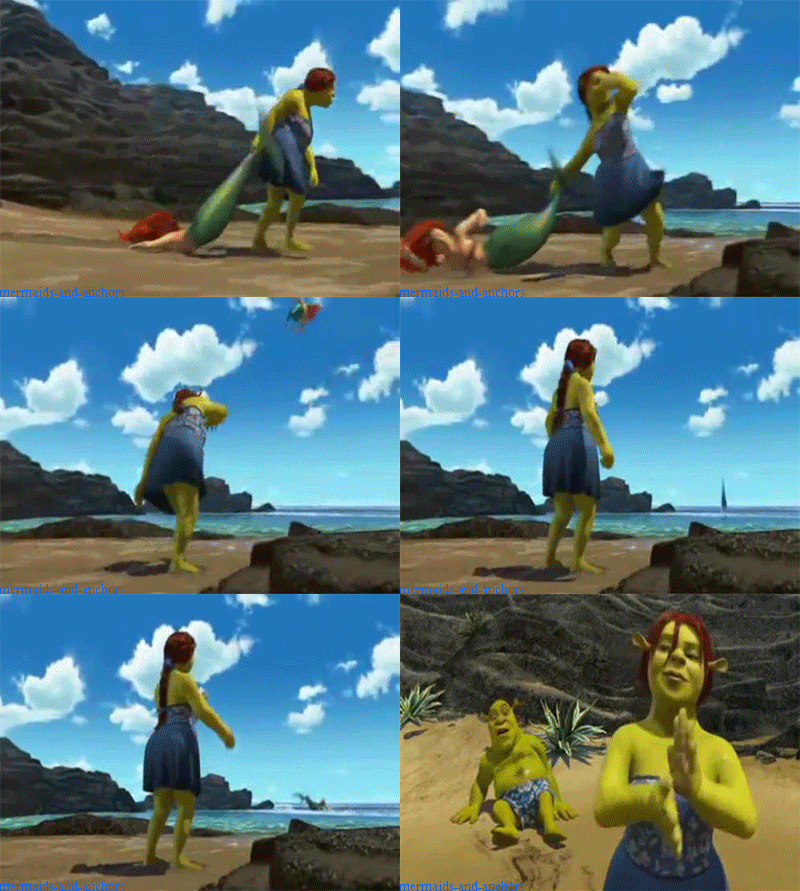
Image result for Shrek gif

But there’s another reason I’m not as big a fan of Shrek, and that’s the point about parody I really want to emphasize today. There are two types of parody. The most common, and often the easier to write, is hateful parody. This satire is biting and vicious to its original source material. It hates it. Many of the jokes are intensely mean spirited because of the deep seeded hatred on the part of the authors. In the case of Shrek? Well maybe Dreamworks wanted to crush Disney down to size after Jeffery Katzenberg broke ties with them. Maybe. Shrek 2 actually improves upon the first by being less intensely bitter.

But while hateful parody would seem the most likely, there is another form of parody that is just much harder to pull off. And that is the loving parody. Loving parody truly adores the genre or movie it is parodying. But that doesn’t keep it from making fun of its target at every turn. And at the end of the day, rather than trying to take the subject down a peg, they’re celebrating it for its tropes and its good qualities.

Image result for ouran highschool host club gif

Ouran High school Host Club is one such satire of reverse harem and shojo manga, about a poor honor student who accidentally breaks an expensive vase and falls in debt to her school host club. Thinking she’s a guy because of her appearance, the host club promises to forgive her debt if she becomes a host herself and gets one hundred girls to ask for her. And of course half the guys end up falling for her, though especially Tamaki.

Image result for ouran highschool host club gif

The main male love interest, Tamaki is obsessed with the role of being the main love interest but is cripplingly insecure about it. The rest of the guys are also embodiments of various tropes, but they manage to break out of them at various points for both comedy and drama. And the lead, Haruhi, has no interest in the guy’s vying for her attention and is the most down to earth of everyone.
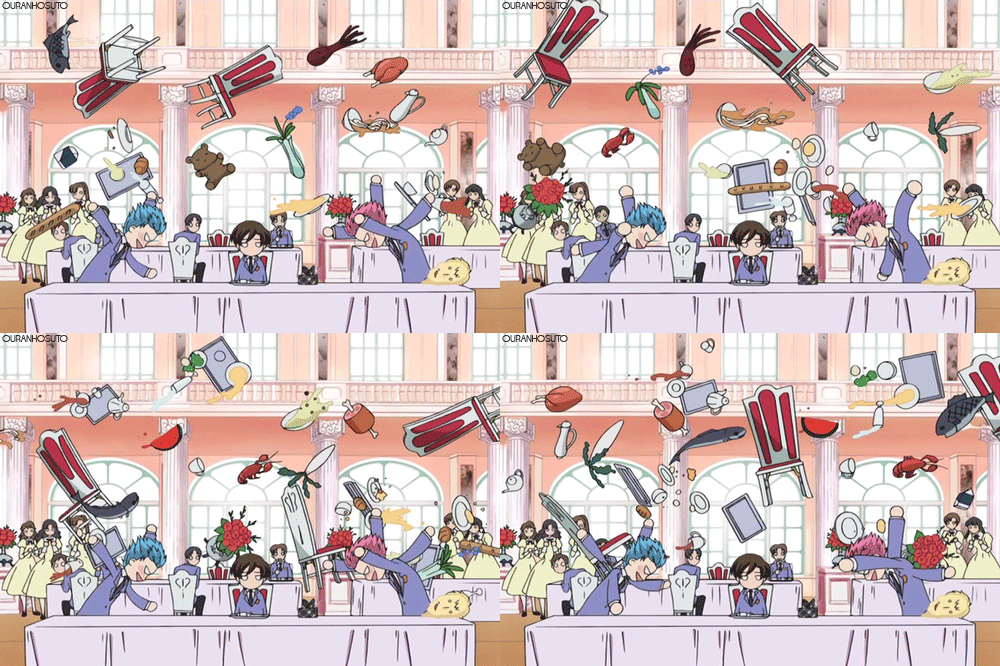
Image result for ouran highschool host club gif

This show has a great understanding of its trope but it’s not trying to break its characters down. It loves them. And at the heart of the anime is a lot of emotional sincerity. Melodramatic? Oh god yes, but that’s the fun of it. Its melodrama with enough fourth wall jokes and loving pokes to make it quality parody.

Image result for Assassination classroom gif


Then there’s Assassination Classroom which is a stellar parody of the ‘Teacher goes to a dead end class and inspires them to believe in themselves and go for their dreams’ narrative. Except for in this case, the teacher is a mutant balloon looking creature that blew up the moon and is going to blow up the earth in a year. And in between inspirational lessons, the students are trying to kill their teacher, honing their skills as assassins and trying to raise their grades.

Image result for Assassination classroom gif

And it’s just…its hilarious. The situation is treated rather casually and despite being constantly under fire, the teacher never stops believing in his students. At every episode he helps at least one of them step out of their shell and realize their strengths. It’s amusing to hear the lesson coming from a yellow, tentacle balloon monster, but also oddly emotionally heartwarming. The show isn’t condemning the subject of its parody. Its embracing it but flooding it with humor at the same time. And the show concludes with one of the most cry worthy scenes I’ve seen in any show.
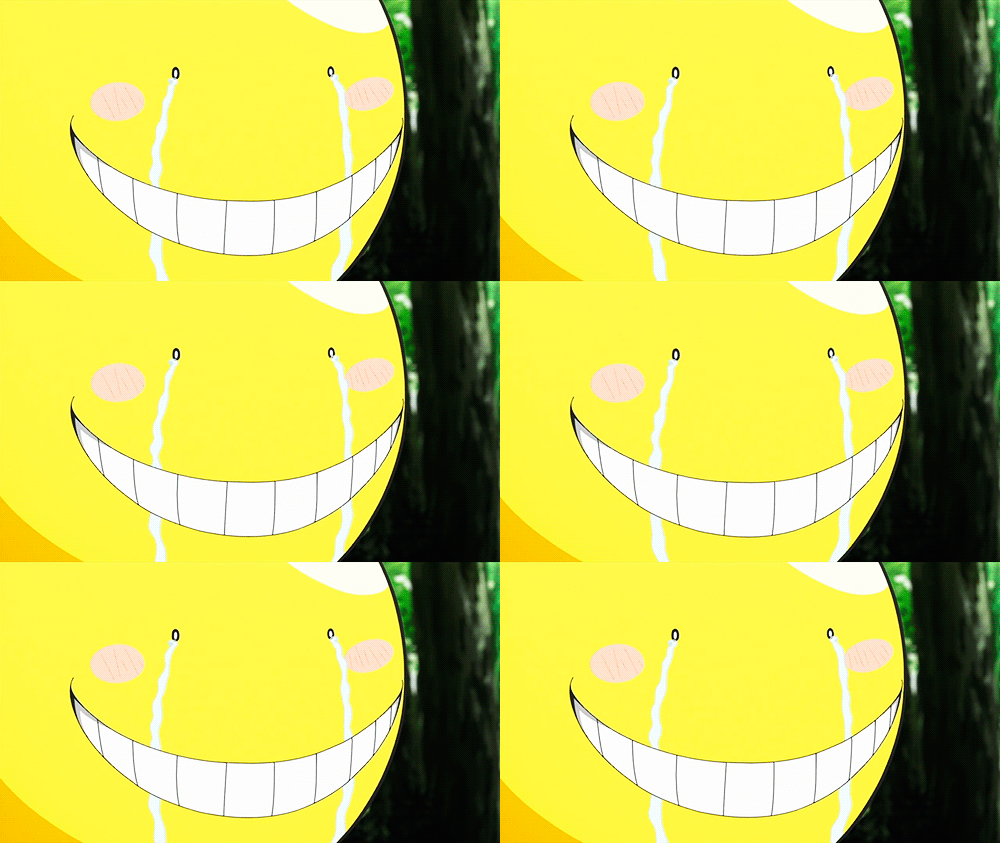
Image result for Assassination classroom ending gif


Loving parody is just as funny as hateful parody (in my opinion more so) but it also manages to remain sincere. Because it cares about its characters, we care about them too when they’re in trouble. We don’t laugh at their pain we feel it with them. And then we laugh at them in the very next scene. It’s certainly a harder method to pull off, but it’s worth it and ultimately so much more rewarding.

Wednesday, November 16, 2016

Notes from New York: The Importance of Comparative Titles

Welcome back to Notes from New York. Today we talk about a querying tip rather than a writing tip: specifically ‘comparative titles’, or as I always heard them referred to ‘comps’.

Comps are something that a lot of people write in their queries. In many ways, it’s a good idea. If you can compare your book to a certain title, that gives the agent some idea of what to expect and also how they might market your book in the future. If you do get an agent, part of submitting to editors is making a list of comparative titles to show where your book stands in the industry.

However, while comps can be a good thing in a query times they can work against you. So here’s a list of dos and don’ts with comps.

1. Don’t aim to high

Your book is not the next Harry Potter. Even if it somehow, spectacularly, is the next Harry Potter, you have no way of knowing that at the time of querying. Some people comp really well known, best selling titles because they think it shows their books money making potential. Really, all it does is show you don’t know the industry or you way overestimate the selling power of your work. Most books don’t sell like Harry Potter. In fact, just about all books don’t sell like Harry Potter. So don’t aim too high.

2. Do aim at the middle

It never hurts to comp a relatively well known, but not unbelievably popular title. There are a lot more of these, and chances are, it will be easier for you to find an accurate comp to your work in this category. This will better show that you know where your book stands within its genre

3. Don’t comp books your agent already represents

Mostly because, the agent already has a similar book for their list and might be less interested. An agent will love the authors that they have taken on, which means that you’re fighting an uphill battle when you claim they will love your book just as much. Additionally, they might not have room for more similar titles on their list.

4. Do comp an agents favorite books

Most agents have blogs or websites or twitters where they talk about their favorite books and TV shows. They write about these things so that people will know what to send their way. You still may be fighting an uphill battle because they have high expectations, but if they are looking for something in the vein of their favorite work, comping said work can be a way to get you noticed. Just be sure its accurate and back it up with great writing.

5. Don’t feel the need to include comps

Comparative works in the query really aren’t necessary. If you don’t have good ones or you’re not sure what to compare your book to, leave them out. The most important part of the query is the part about your book. If your query is good, you don’t need to add comp titles if you’re not sure what you’d put

6. Do still be aware of comparative titles
When you are querying you should none the less be aware of your genre, category and marketability. This will help you enormously in the querying and publishing process. Read a lot in your genre to find some comparative titles. Even if you don’t put them in your query, they will help you down the line.

Good luck querying and I hope everyone has hit the midpoint of NaNoWriMo :)

Friday, September 30, 2016

Queries, Rejections and the Overflowing Inbox

Back with a new episode! Okay, USUALLY, this series will only update every Wedensday as I plan to start up Lessons from Anime again. However, this time, since I only gave you an intro on Wedensday, I'mma give you actual content. Away we go!

Okay so…agents get a lot of queries every day. A lot. And if you consider the fact that reading queries is basically something they do in their free time, they don’t have a lot of time to comb through the slush every day. In the case of one of my internships, it was my job as the intern to comb through the slush and look for queries that fit the agents taste.

When I came to the office there were about six hundred queries in the inbox with more coming in every day. That's A LOT.

You just don’t have time to carefully read all of those queries so you have to find ways to get through them quickly.

Its easy to throw away stuff that doesn’t follow the query guidelines, but here are some other reasons that I tossed a query into the no folder soon after I started reading.

1.       Lots of errors
Really, if you want your work to look good, edit it ten or twenty times before pressing the send button. A lot of errors quickly tells an agent that you have some basic developing to do and that you’re not great at self-editing. Put your best foot forward.

2.       Cliché premise

Some stories, we’ve heard before, and there are plenty of queries that sound as dull as they come. Nothing original sticks out about. It sounds like a conglomeration of other plot lines that have been done before. Now, of course there aren’t many original ideas out there, but most works do have a stand out element. Find what stands out about your work and feature that in your query

3.       Played out genre

The agent basically told me to put anything dystopian and paranormal romance in the ‘no’ folder unless it was REALLY good. When you’re writing in a genre that’s been played out, it has to be something truly special, so sometimes you’re fighting an uphill battle. That’s not to say that some agents won’t still be on the lookout for your genre, but if an agent says that they’re tired of something…they probably aren’t the right one for you.

4.       Similar to something already on their list

A lot of times it’s good to submit to an agent who reps titles comparable to your work. But if they’re too comparable, then the agent isn’t going to take it on. Simply put, they’re already working on something similar so unless yours blows their socks off, they’ll let it go

5.       Just not right

More than once, I forwarded a submission that I thought was original and really knocked my socks off. But sometimes that would still get rejected because it wasn’t right. A picture book that was a little too long for instance, or just something that didn’t peak the agents interest. It happens, to be sure. And you want someone who is fully passionate about your book, so its for the best.

6.       No Voice

Sometimes a book lacks a certain feel. A certain life. This life is usually imbued by voice and there are plenty of submissions that don’t have that. Often they come from more inexperienced writers who haven’t found their voice yet. Its one of those things that come with practice.

7.       Just…average

I read plenty of submissions that were well written with nothing technically wrong with them but none of them grabbed me. An agent wants to be pulled off of their chair (figuratively. I don't recommend actually pulling an agent off their chair) and into the story. When something is just ‘good’ then it goes in the no folder.

8.       I’ve seen something similar that day that was better

Sometimes a submission raises my standards for the day. Then I might stumble across a similar submission that isn’t as good. Because of the first, brilliant submission, the other submission might pale in comparison.

As you can see, a lot of this stuff is situational. It depends on the day and the other things the agent sees. Agents are biased people. They have good and bad days. Their tastes and interests shift. That’s what makes the trenches a difficult place to navigate.

The point is: sometimes rejection isn’t your fault. Don’t go running off to change your query after a few rejections. But several rejections may tell you that your query isn’t standing out.


No matter what, put your best foot forward and do whatever you can to help your novel stand out. But always follow the query guidelines ;) 

Friday, December 19, 2014

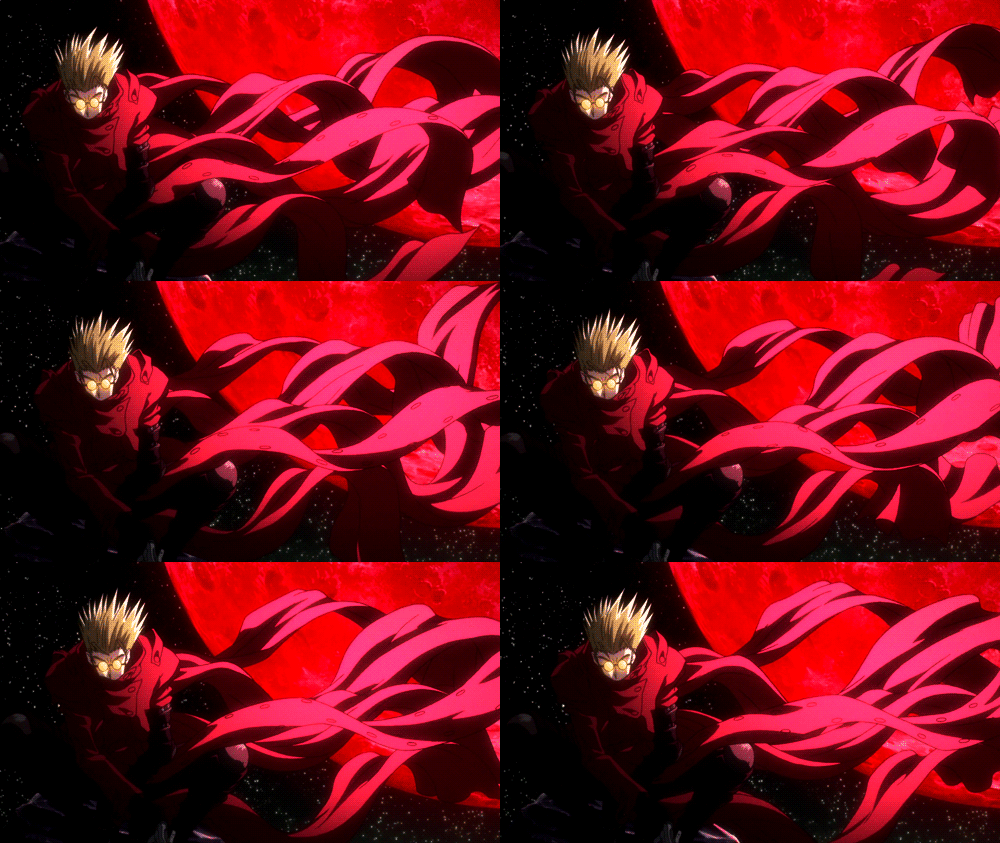
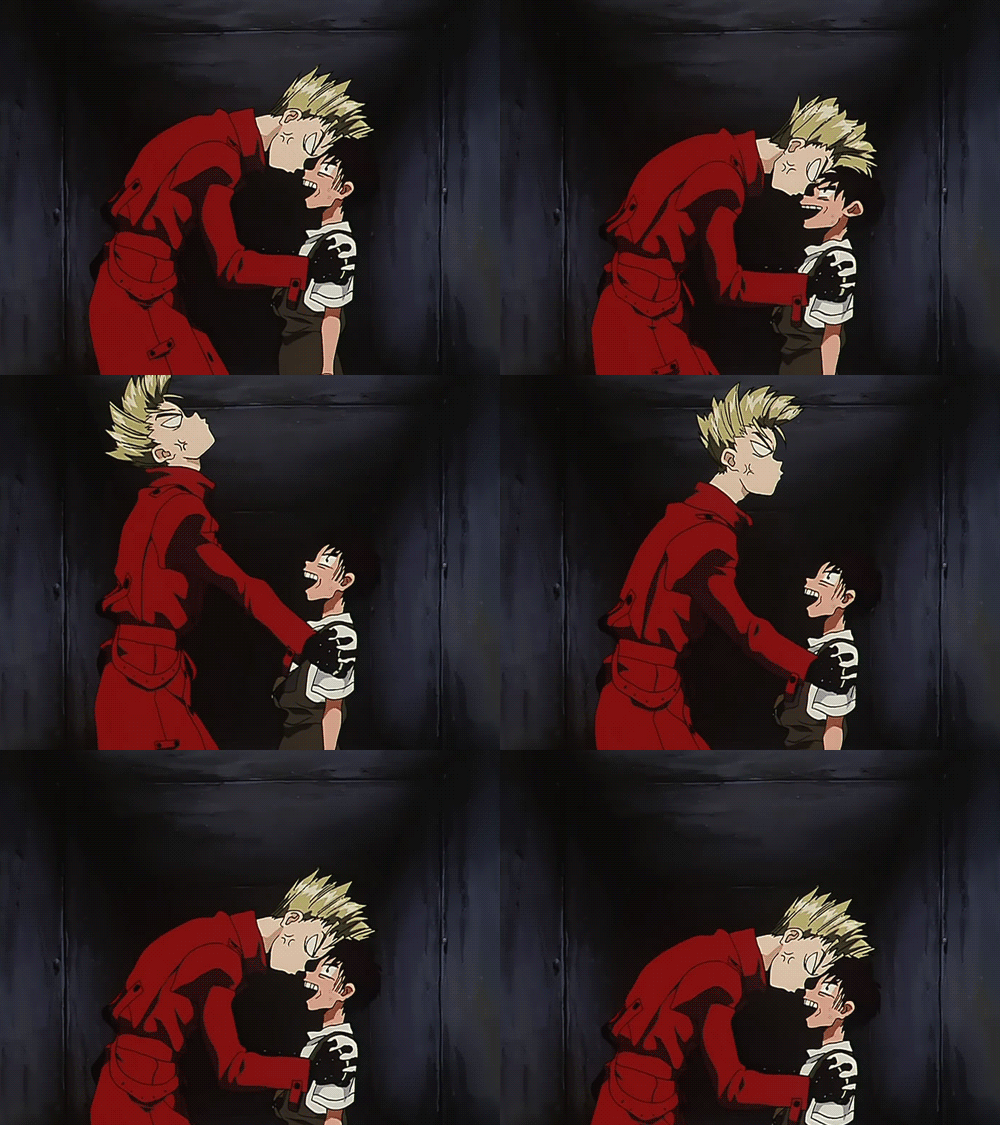
Lessons from Anime: Trigun

So today I want to talk about an anime that is close to my heart and a theme that is even closer. Violence is a big thing in American culture. We have a lot of it in our media and a lot of us are desensitized to its effects. Rare is the piece of media that comes along and presents a main character who is an awesome, gun toting badass… but also a pacifist. Hear me out. I’ll explain it to you.


In the genre of space western animes—and yes there are surprisingly a lot of them—Trigun is one of the most well-known. It centers on a man known as "Vash the Stampede" and two insurance company employees, Meryll and Milly, who follow him around in order to minimize the damages inevitably caused by his presence. However, most of the damage surrounding Vash is actually the fault of the bounty hunters in pursuit of the huge bounty on his head for the destruction of the city of July. But Vash cannot remember the destroyed city, and in person he is not the kind of guy to cause destruction. In fact he promotes love and peace, traveling around the planet and saving lives through non-lethal force. 
Love and Peace!
As the series progresses, more of Vash’s past is revealed and he must wonder if is idealistic pacifism can actually win out against the show’s villain, Knives, or if his idealism ever worked in the first place.

There are lots of awesome fight scenes in this anime. What sets it apart is that the main character is always working to prevent loss of life. It’s similar to Batman in a way, but it dives even more into the ideology of whether or not one can actually save lives without taking them. Many of Vash’s opponents certainly try to prove him wrong in often terrible ways. But what was important about his anime, to me, is actually changed the way I looked at things. In short, it made the peaceful option the cooler option.

I think a lot of middle school kids go through a violence and action phase. And I did as well. I thought that concepts such as an eye for eye were actually legitimate. But Vash’s absolute refusal to play by those rules… that was inspiring. You wanted him to succeed. Now that didn’t mean his views weren’t still questioned. Half the show wars over when it’s okay to take a life if it is ever okay. It’s thought provoking stuff for a show that starts out… kind of goofy.


Really goofy.


I blame this show and a few others for my hatred of some pieces of media. For instance, I really hated TAKEN. I was just kind of… violence for violence sake disguised as some 'noble' revenge plot. I wanted it for a more enriching purpose.


Trigun gave me a lesson in pacifism as an important ideal as well as how to explore complex idealism in conjunction with the real world. And it’s a lesson that continues to find its way into my writing today.

Friday, November 21, 2014

Slushpile Musings: Why Agents Only Rep Specific Genres

Why do so many writers send their manuscript to agents who don’t represent their genre? Its just a waste of time for both parties. Despite what some people might think, the submission guidelines are not the pirate code from Pirates of the Caribbean. They are, in fact, rules to be followed.

Sometimes I think these mix-ups happen simply because a writer doesn’t do their research. But I think some writers make the mistake of thinking that their manuscript will be so good that the agent’s genre preference doesn’t matter. So to dispel this way of thinking, let’s talk about why agents represent specific genres.

1. Connections
When you get an agent, it’s the agent’s job to find someone to publish the MS. If they’ve been in the business a long time, or they’re new agents with an established agency, they have certain connections. That is, editors they go to first with projects. These editors specialize in certain genres just like agents do, partially because the publishing process is very different depending on the genre. Agents specialize in genres because they have strong connections built up with publishing houses who publish the same. If you send them something they don’t represent, they might not know the best way to get it published. Simple as that. Look for an agent who knows your genre and your audience. They’ll be the best match.

2. Specialization
Agencies have different agents for different genres and categories. Some agents represent young adult, some adult. Some represent speculative fiction and some represent contemporary. There is often an overlap, but an agency tries to cover a lot of different genres with different agents. That way a writer looking to query the agency can find a good match. An agent who doesn’t rep adult fiction might very well read adult fiction. But its not what they represent for their job. Again, pick your best match. That’s what will take you far.

3. PASSION
In the end it’s all about passion. Agents read ALL KINDS of books. But they have preferences and certain tropes that really stick with them and tickle their fancy. An agent reps a certain genre or type of book because they have to LOVE the book. Not just enjoy reading it. They have to love it enough to read it over and over again and champion it as it goes to publishers. They need to want to fight for it. And they can’t do that for a genre they don’t love no matter how good the book is.


Bottom line: You want someone to fall in love with your book. There are many reasons agents only represent specific genres but the other thing is, there are agents who love your genre. Great agents. Seek out the ones who will be passionate enough to champion your book. It will work out best for everyone in the end.