Pages

Showing posts with label characters. Show all posts

Wednesday, April 19, 2017

Notes from New York- Quiet Middle Grade

Today on notes from New York, I want to talk about a category of book that I don’t see often, but wish I did, because of how visceral and charming it can be: quiet middle grade. Because middle grade novels are aimed at kids turning teenagers, a lot of books in this category are fast paced and action packed, or filled to the brim with humor. Sometimes both! That’s all great. I love a fun middle grade like Percy Jackson. But quiet middle grade is another beast entirely and quite hard to pull off.

When I say quiet, I don’t mean slow or boring. Quiet stories are often extremely engaging on an emotional level. They tug at the heart strings and envelop you in the ambiance, completely drawing you in even though the plot isn’t racing by at the speed of light. Rather, the plot is drifting, and you’re content to watch it pass.

Image result for Kiki's delivery service gif

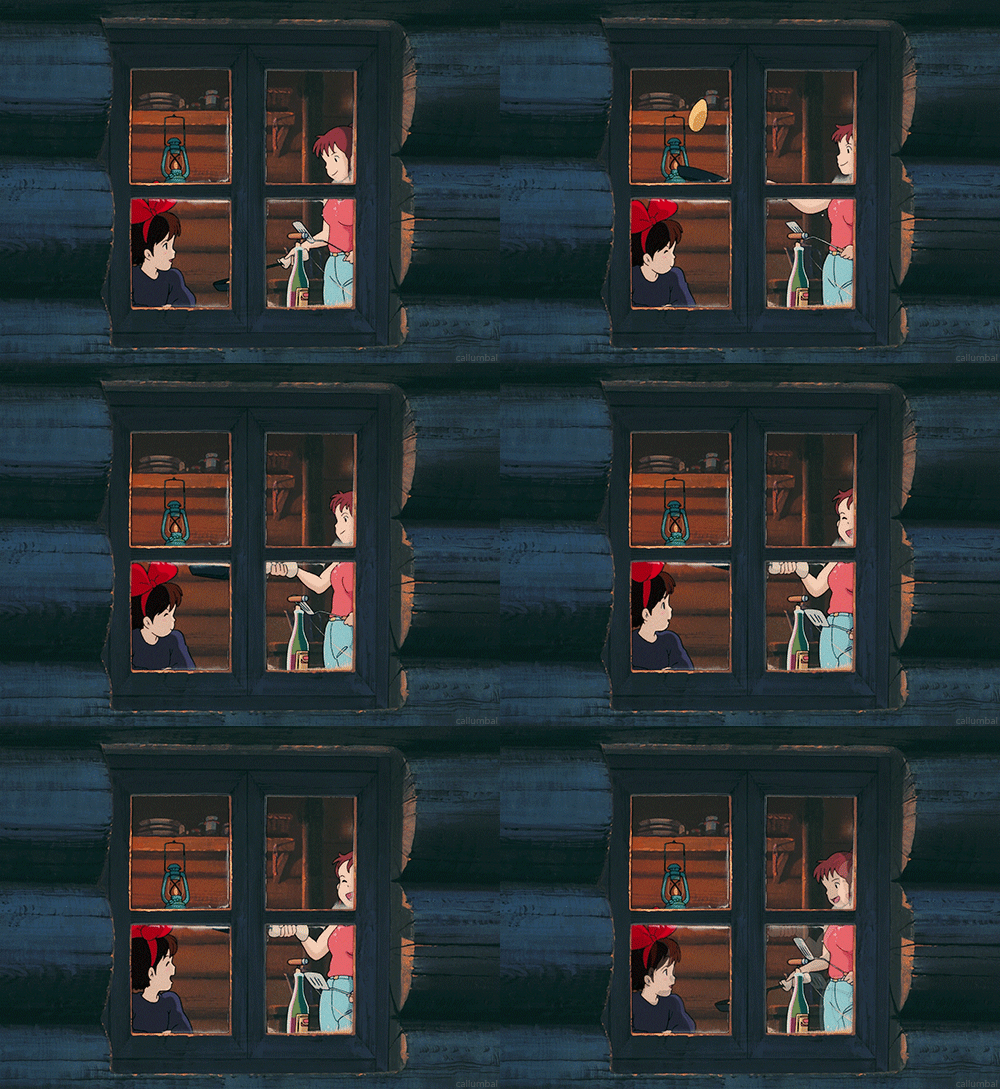
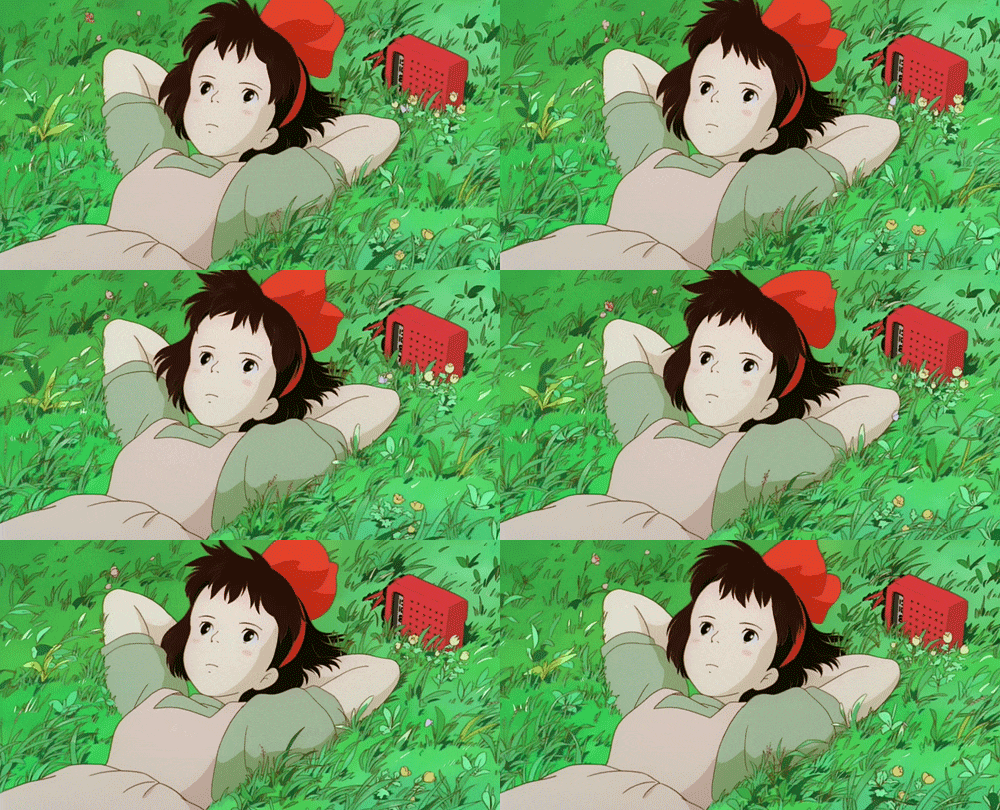
A good example of a ‘quiet’ story for younger viewers is Kiki’s delivery service, which is an incredible little movie from Miyazaki. Though the main character is a witch, the film isn’t an action fest. Rather, its about a young girl moving to a new place and starting a little business. There are so many quiet moments in this movie but they’re often pleasant, calming...even moving. The film isn’t afraid to sit in silence and let the moment pass.

Image result for Kiki's delivery service gif

When I was interning in New York I read a submission that fit under this umbrella. Because it was set on the gulf coast I was utterly transported to my childhood vacations to Florida, so much so that I could smell it. I could feel it. It was oddly emotional and it made me home sick for the beach. That’s the kind of power that quiet middle grade can have.


So, if you have an idea that you think might be “too slow” for a younger audience, give it a go anyway. There are lots of kids who don’t mind a calmer plot, and you can trust them to sit still in a moment without getting bored. We all need our special, quiet stories to relax with on a lazy Sunday when we just want to watch the world drift by. 

That's all for now. Happy writing!

Friday, October 21, 2016

Lessons from Anime- Ensemble Casts in Angel Beats, Durarara and Assassination Classroom

Welcome back to Lessons from Anime! This week, we’re looking at another group of shows that all share one key element: ensemble casts.

There are lots of different ways to tell a story. For instance, you can take the Harry Potter route and root the narrative firmly in the perspective of one character. But, on another hand, you can write a story that is about a group of people, like in Mistborn, or even hundreds of people, like in Game of Thrones. When you have several main characters and just as many stories, it can be a tremendous balancing act. If you’re not careful, the scales will tip and you’ll give way too much focus to a few characters while letting others become practically nonexistent and unnecessary. Today we’re going to look at three anime that sport ensemble casts to varying degrees of success.
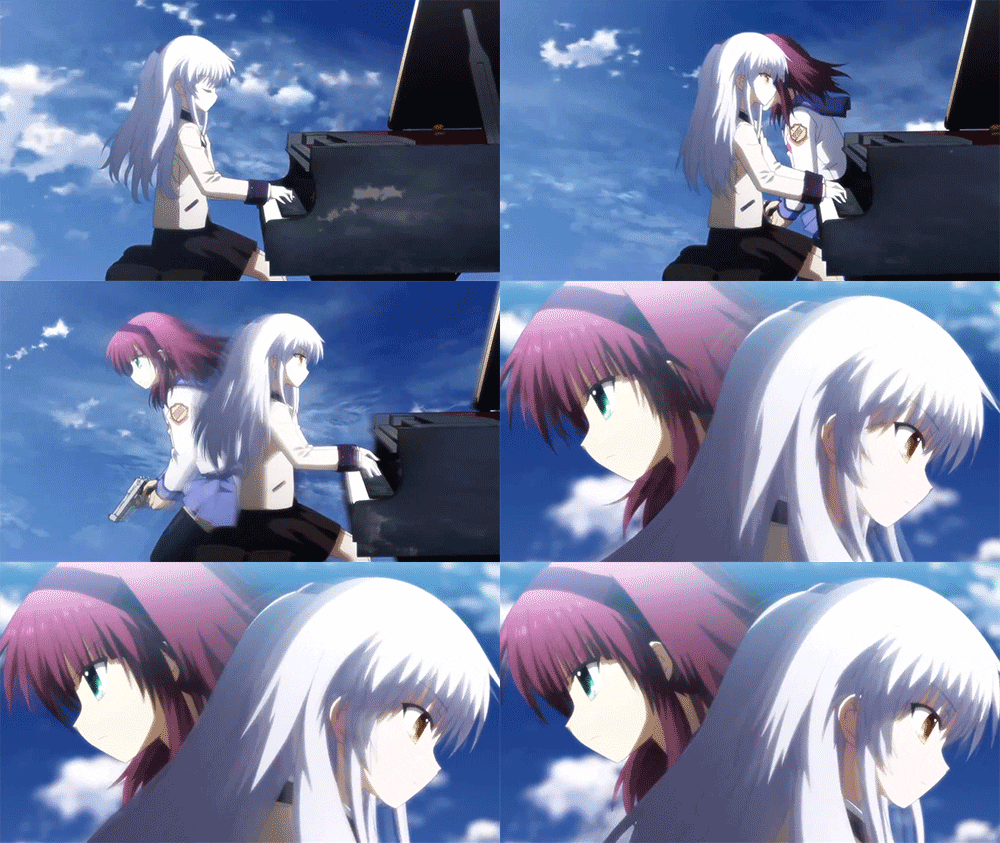
Image result for Angel beats gif

First off, there’s Angel Beats, a well-known tear jerker and a show that sports quite the large cast in its group picture at the closing song. This show relies on a wide range of characters. Even though it has its main characters, it clearly wants you to focus on the group as a unit, especially when the show takes its more feelsy turns later on. Does it succeed?

Image result for Angel beats gif

Not…really. Outside of a group of about five characters, none of the other cast get any noticeable screen time. They are reduced to typical anime caricatures, good for a laugh but not as their own people. They are sometimes indistinguishable from each other. The show just didn’t have balance in its writing and at only thirteen episodes, it really didn’t have time to keep such a large cast afloat. If you’re going to have a lot of characters, make sure they actually need to be there for more than a one off joke.
Image result for Durarara gif

Then there’s Durarara, which yeah, I know, this is the third time in a row I’ve brought it up, but its relevant. Durarara also supports a large cast with a few clear leads in the mix. However, each of its characters are involved in different stories that collide at different points. The characters aren’t a collective unit. They’re a series of moving pieces that pass each other in the street. This is more the Game of Thrones approach of having several different storylines that eventually converge.
Image result for Durarara gif

But while Durarara does a decent job with its cast of thousands, it still lets a few plots go by the wayside, including some twin sisters that are good for a laugh but have absolutely nothing to do with any of the plot. There are plenty of one off characters that felt like they needed more screen time. But, to be honest, I’m surprised Durarara managed its juggling act as well as it did. It goes to show that when you give yourself several plot threads, make sure they’re well integrated and they all reach some sort of resolution. That way they won’t fall off the map and leave your readers wondering why they were there in the first place.

Image result for assassination classroom gif

The last show I want to talk about is perhaps the most effective of the  bunch, called Assassination Classroom. Like Angel Beats, this is about a group as a unit, focusing on a classroom of twenty eight students and their teacher (a mutant who is going to blow up the world in a year). It has a main character lending his narration to the events, but the show is conserned with all of the characters. And I mean all of them.
Image result for assassination classroom gif


Of the twenty eight students about half get a significant part of an episode dedicated to them and every single one of them has a starring moment. And none of the kids are anime caricatures. They’re real, relatable kids. They’ve all been put in the dead end class for failures for various reasons. Some of them are lazy geniuses, others struggle with academics, some face pressures at home. But they all have their own interests and passions that their teacher ultimately uses to their advantage. Many characters don’t get much of a spotlight, but they work as they are supposed to: as part of a unit. And by the end, they really do feel like a family.
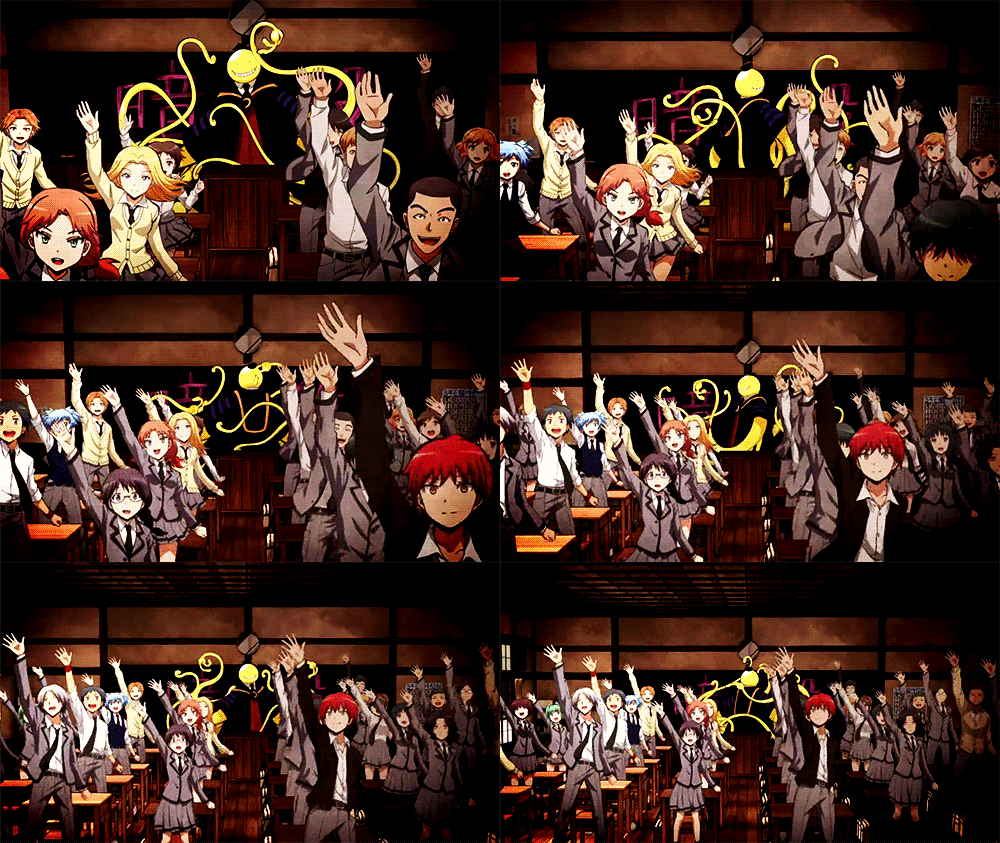
Image result for assassination classroom gif

Assassination classroom has 48 episodes to work with of course, plenty of time to give its characters their rightful places. But it uses those 48 episodes exceedingly well, and I don’t remember the last time I’ve seen anything handle such a large cast so expertly, especially when they’re all in the same area for most of the show, following the same plot thread.

Image result for assassination classroom gif
Its also hilarious

As you can see, there are many ways to handle large casts, with multiple plotlines or just one. Your mileage may vary, but make sure you know your characters and just how much time they deserve in the spotlight. Balance is the key and we want to love your characters as much as you do!
Friday, September 23, 2016

Hero Spotlight: Chihiro and Coraline

Today lets look at two of my favorite child characters. Both of these girls abscond to other worlds for fantastical adventures. But both of their adventures have a dark twist to them and they must fight to conquer their fears in order to get out alive (a pretty apt metaphor for entering adulthood, when you think about it).


In Spirited Away, a young girl named Chihiro finds herself in the spirit world with her parents turned into pigs. In order to avoid becoming food for the spirits herself, she must get a job at the bath house, working for the witch Yubaba. Before being placed in this situation, Chihiro is a normal ten year old, pretty selfish and lazy but also wholly relatable. And over the course of the movie we get to see her growing stronger and putting her wits to overcome many different challenges.


Chihiro must work for the first time in her life, solve tough issues and even travel on her own through the spirit world to help a friend in need. We see her grow from a kid who doesn’t know how to fend for herself to a confident young woman, who can take responsibility and fight for her loved ones. Of course she must go back to the real world, but she takes everything she has learned with her. I adore this movie so much. Its one of my favorites and Chihiro is one of the best examples of a child character out there.


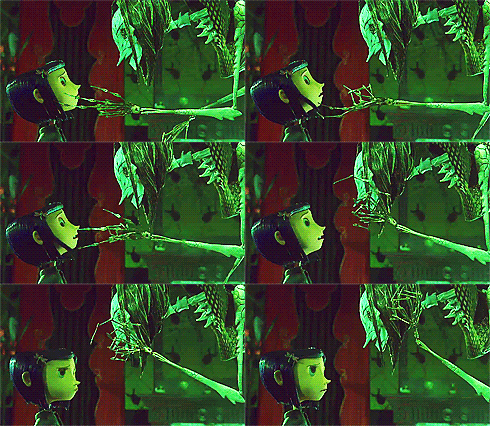
On another end, we have Coraline, whose story is less obviously about growing up and a few shades darker than the previous story. Most people know this tale. Its about a dissatisfied child named Coraline crawling through a door into another house where all of her dreams come true. However her Other Mother might not be so benevolent as she seems.

In fact she is pretty terrifying

Coraline is a very realistic child, smart and adventurous, but also selfish and attention seeking. She likes the focus of life to be on her and in her dream world, she gets just that. However, she must fight to keep her soul from the Other Mother’s clutches (You know. For kids!) as well as save the souls of other children who have been trapped before. Growing up, for Coraline, is accepting that life can’t be exactly as she wants it and taking responsibility for her mistakes. In the end, she must save her parents and others from the Other Mother and ignore the temptation of a so called ‘perfect life’. Life isn't perfect, and everyone must accept that some point. In many ways, Coraline learns the shades of grey of adulthood in this, also learning to treasure her real parents, ordinary life, and the change of moving to a new town, even if there are still challenges.


Children vs. growing up can be as vague and symbolic as Coraline or specific as Peter Pan. But they all capture the need of a child to eventually step into their own shoes and take control of their life for the first time. I love both of these stories for that reason.

Wednesday, June 8, 2016

Heroes and Heroism: The Anti-Hero vs. The Line

This week, let’s look at what many might consider the opposite of the moral center: the anti-hero. I’m a villain lover as many of you know from all my fangirling during the villain series I did a little while back. Which means I’m also a fan of a complex hero who walks the line between the dark side and the light. Simply put, an anti-hero is a hero in a story that lacks the typical heroic attributes. However, they are still considered a hero and not a villain because of a few key redeeming features.

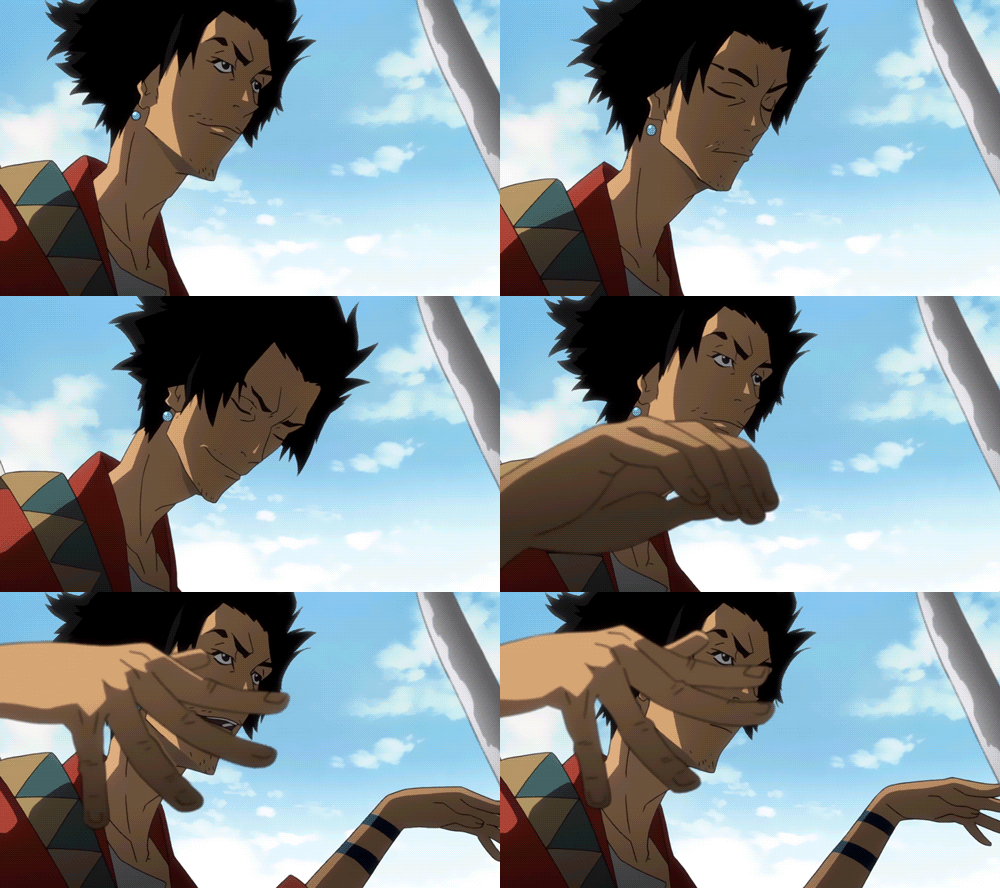
It follows then that the anti-hero’s main obstacle would be the moral line between good and evil. This line can affect them on an external or internal level. On an external level they might work outside of the normal moral bounds of society. They could be a thief or a cold blooded assassin. Or they could just be a general asshole. Mugen from Samurai Champloo is a good example of this. 


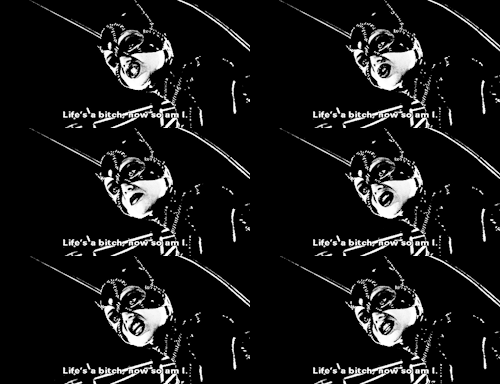
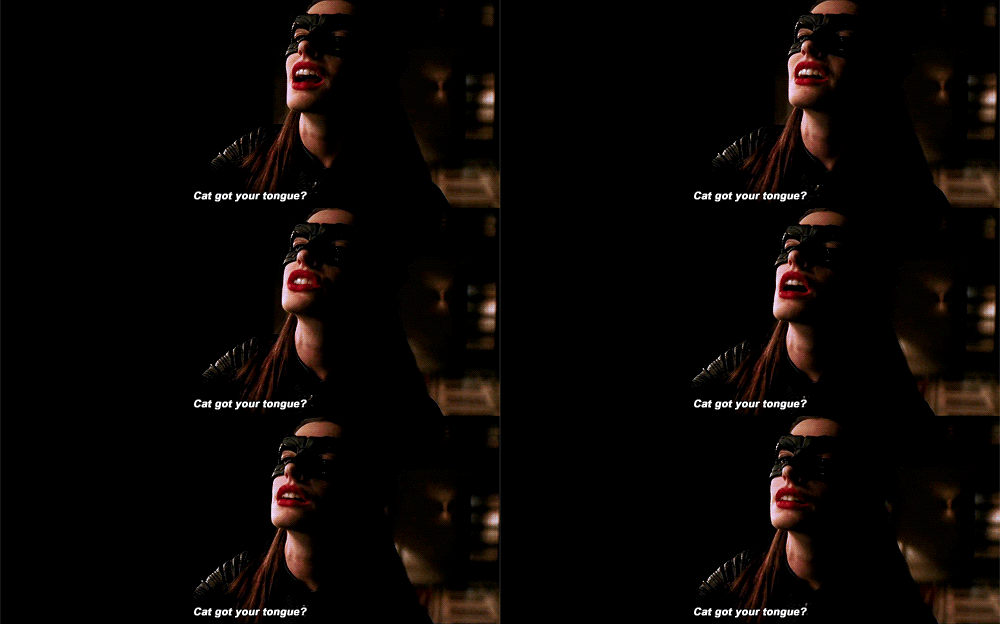
So is Cat Woman from the batman universe, who finds herself on the hero side of things as much as the villain side.


But that moral line also is present on an internal level. The hero might struggle with becoming a monster or, depending on what side of the line they tend to, going soft. Hei, the hero of Darker than Black, struggles with being a contractor, which are said to be monsters by nature. He works for a shady organization dealing with difficult contractors, but he often doesn’t follow orders directly, being softer than he lets on.


This moral line provides a lot of interesting conflicts, both internally and externally, but a key part of the antihero’s journey is that they ultimately do the heroic thing in the end. That’s what makes them an anti-hero rather than a tragic villain. Its this ultimate move toward the lighter side of thing that gives them their arc. 

Even if they’re still kind of an asshole, it’s the results of their actions that ultimately make a difference.

Friday, April 29, 2016

Hero Spotlight: L and Hermione

Today let’s look at two examples of great intellectual characters, one who meets their intellectual match in the form of a person, and one whose intellect is tested by more extenuating circumstances.


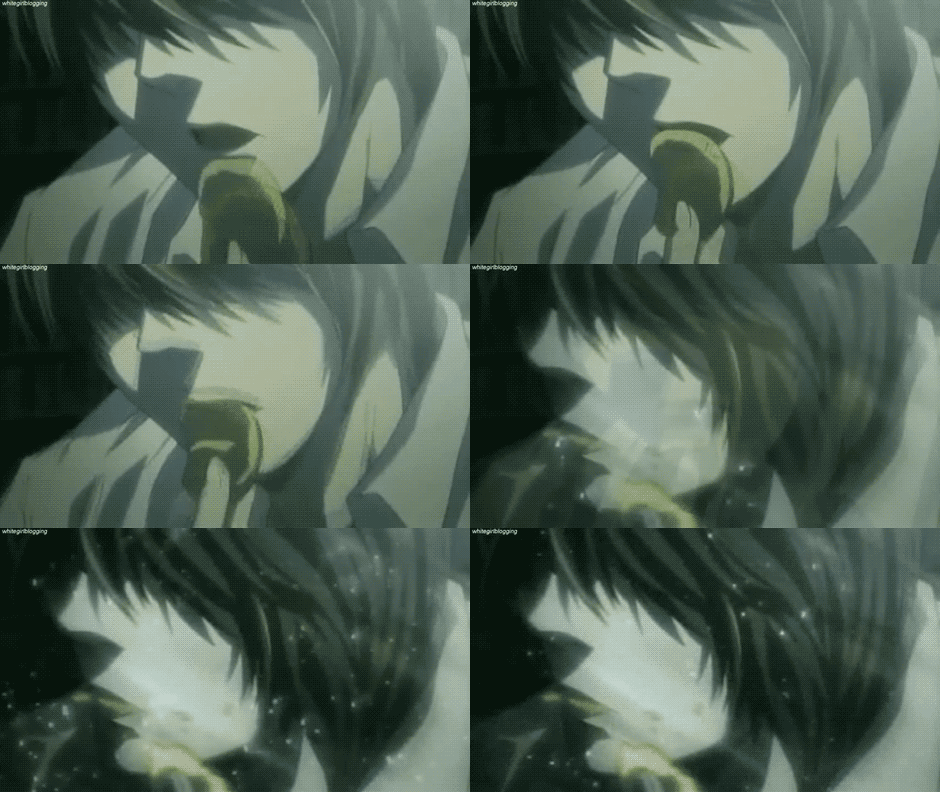
First let’s look at L. Yes just L. L is the hero of an anime called Deathnote. I know some of you may be thinking that Light is the hero, but he is clearly the villain in this pair. This sherlockian relationship is what happens when Moriarty is your main character. And he gets a magical notebook that can kill anyone just with a name. And he likes potato chips.


Yeah, this was my first anime.


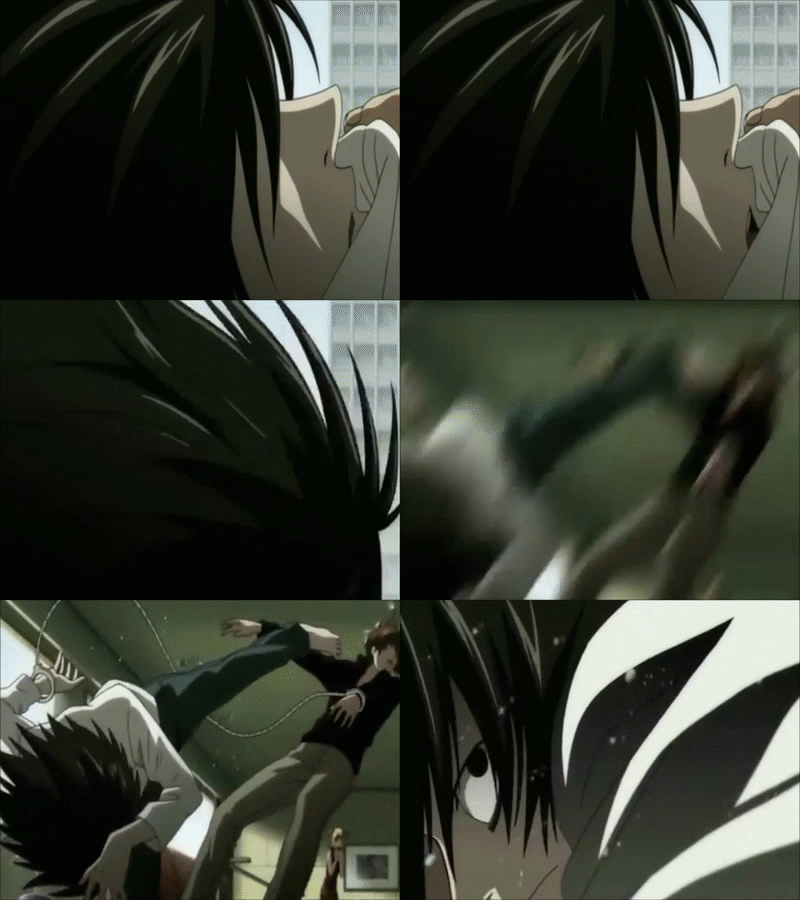
L, however, is the detective assigned to his case and the entire first season of Deathnote is devoted to their amazing back and forth. He is intellectually similar to Light but distinguished from him in his commitment to Justice. L at many turns, is too smart for Light and it takes a stunningly complex, long, overarching plan for the villain to finally get the jump on him. L is an awkward sort of genius utterly committed to justice, or what he believes is justice, but it’s also clear he respects Light in a lot of ways.
Despite kicking him in the face
Since the anime isn’t from L’s perspective, we don’t get to see into this head, but we root for him until the end. L remains one of my favorite anime characters. Episode 25 is exceedingly painful for me. Those who have watched the anime know why.


Another character near and dear to my heart is Hermione. Any bookish girl who grew up reading Harry Potter looked up to Hermione in all of her brilliant awesomeness. And while of course she is brave and tough and many other things, her chief quality is her amazing brain. She knows just about everything about magic and is at the top of all of her classes. And of course, this intellect gets her friends out of trouble many times. They would actually be dead without her.


Hermione’s intellect is constantly tested by the situations around. Sometimes her brain power isn’t enough, which she even admits in the first book. And she’s certainly not the best at everything. Harry beats Hermione in potions with the help of the Half Blood Prince’s book and she struggles in divination. Her greatest fear is failing her classes. In many ways, her intellectual match can also be her high expectations for herself.


But what makes Hermione such a strong character is her bravery. She is a Gryffindor after all, and even in spite of these fears and failures, she fights tirelessly to protect her friends, eventually evolving from a know-it-all, to a woman wise beyond her years.

And she punches Draco in the face

That's all for now! See you next week as we tackle our next hero archetype: the lovers. Until then, happy writing!
Thursday, April 21, 2016

Heroes and Heroism: The Fighter Vs. When Strength is Not Enough

Here we are, a day late with this post! Let's hop to it!

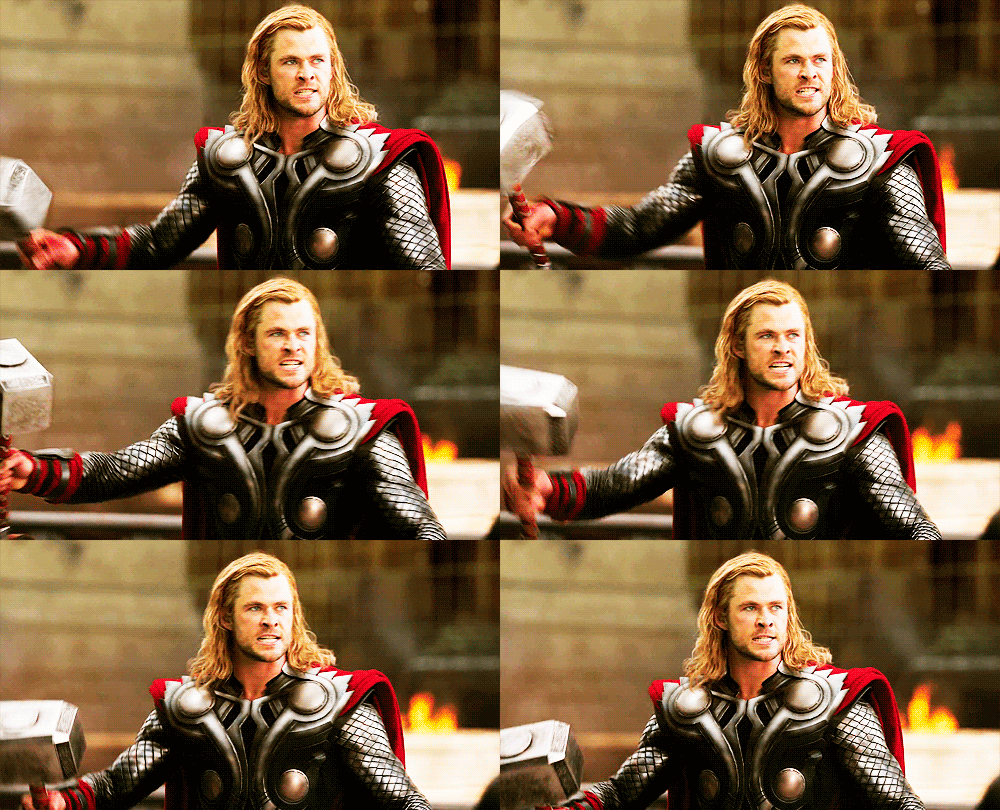
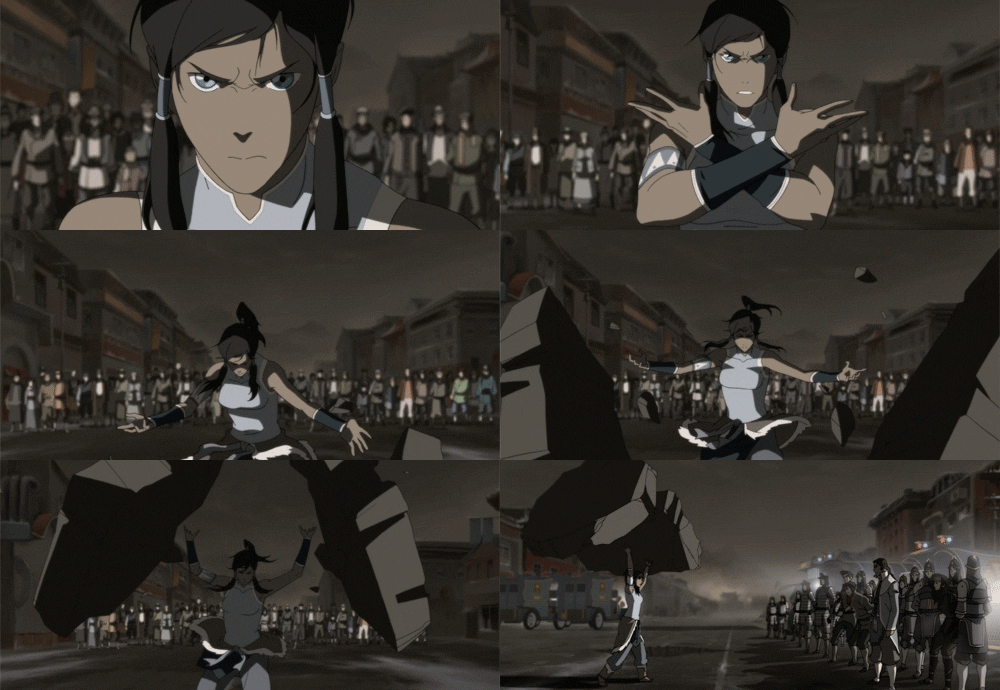
Across every genre, there are a wide variety of heroic types, all with their different specialties and skills. One of those skills is ‘brawn’. Brawny characters jump to fighting above other avenues, relying on their strength to get them through a situation. They are often impulsive, stubborn and jump into fights they aren’t prepared for. In older action films, this brawn might be enough but in newer books and films, authors have explored this character type, looking into what happens when their nature results in serious consequences. Thor is an example of this kind of hero, as is Korra from the Legend of Korra.


What is the worst thing you can do to a character to relies on their strength? Put them in a position where their strength is not enough. These characters are often used to being in control, masters of their physical being. So taking away their strength, or putting them a place where their strength is useless, is their greatest test. This is one of the reasons that physical heroes are pitted against more intellectual villains because they are opposites, and brains can often trump pure strength. More well-rounded heroes ultimately triumph in the end.

And that is of course the point of placing these heroes in difficult positions where their strength is not sufficient. Because they must then learn to overcome, therefore becoming stronger in the process.
Thor finds himself in this position when he is thrown to Earth and can no longer heft his hammer. Superman might be crippled by kryptonite.

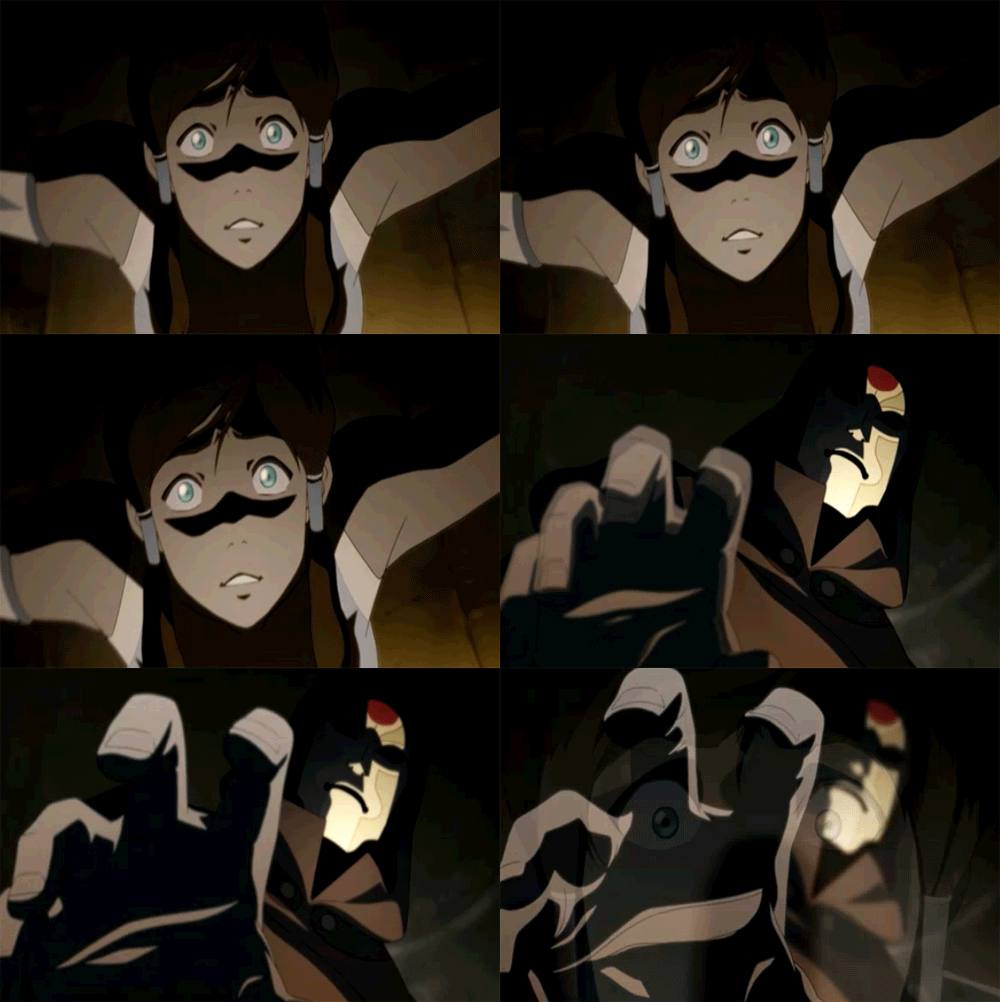
Korra is put through this test over and over again, though most noticeably when she faces Amon, a villain with the ability to take away her bending.


However, the real strength of these characters is revealed when they overcome. This often comes from  a since of inner strength and self-discovery. Thor finds himself worthy of his hammer again and Korra, who has struggled to find the inner peace required by air bending, is able to air bend in the end to save those she loves.


The importance of this kind of hero is that it shows that no matter how strong you think you are, you can always get better and improve yourself in other ways. Seeing characters such as these discovering this is inspiring in a novel, as it gives the characters much needed depth.

Join me tomorrow for our character spotlight. Happy writing!


Friday, April 15, 2016

Hero Spotlight: Aragorn and Kelsia

So let’s talk about some excellent examples of heroic leaders.


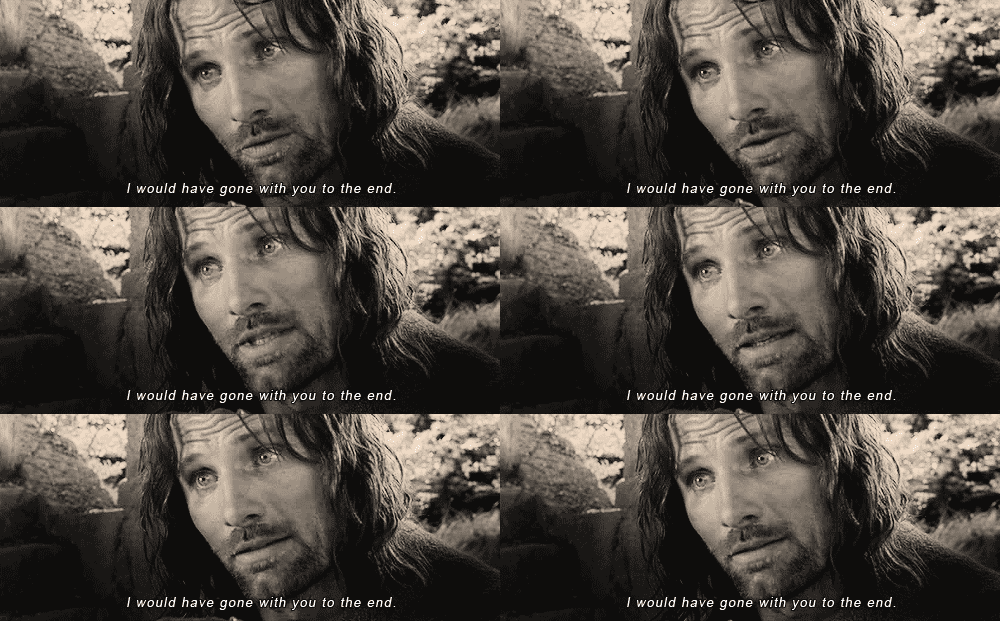
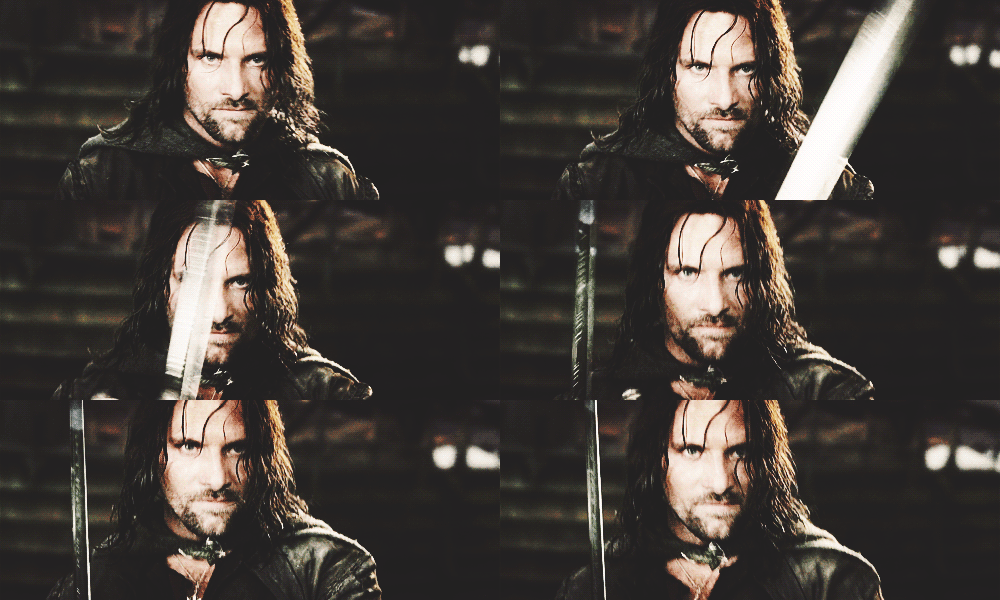
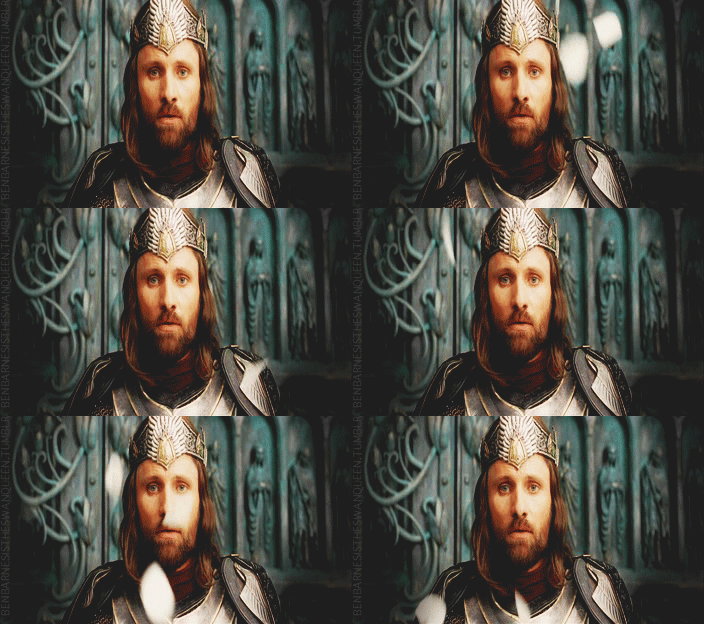
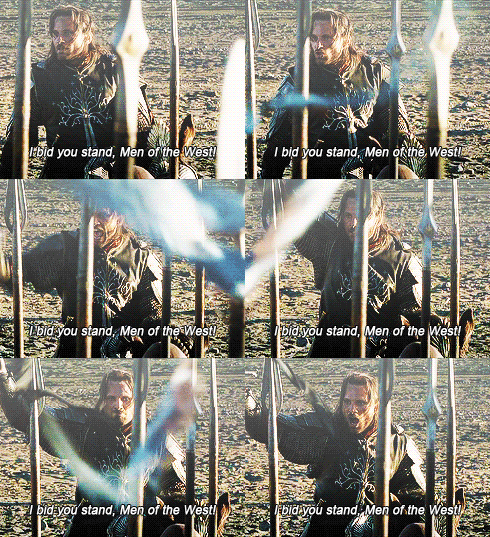
From the moment my brother introduced me to the Lord of the Rings films, I adored Aragorn. I loved him for his subtle complexities, his strength in battle, but also his leadership and his noble qualities. He is a ranger by trade but a king at heart, leading with skill and looking out for his companions at all costs.


But of course, Aragorn isn’t eager to be a leader. He prefers to stay in the shadows, never acknowledging his strength or status. He didn’t claim to be superior than anyone else. In fact he feared his heritage, worrying that he was destined to suffer the same fate as Iseildur.


Yet, when the world needs him to step up, he takes on the responsibility, conquering his inner demons and fears of failure. So often rulers must live in the shadow of their predecessors, either living up to their successes or in spite of their failures. Aragorn is a great example of the second and he remains one of my major character crushes. I love me some quiet, noble strength.


Kelsea is the leader of another sort, from a newer fantasy work, Queen of the Tearling by Erika Johnson. I appreciated this book because it focused on a lot of the technicals of being a leader, especially those that arise from not growing up in the court. Kelsea has been protected for years from those who might have her killed. When she comes of age she is spirited back to the throne and must quickly prove her metal over those who would see her deposed or killed. 

Kelsea deals not only with possible invaders from other countries but with threats from within the council. She often has to tiptoe around issues, walking a thin line between wisdom and foolishness. But she ultimately makes the right decisions, proving herself to her people along the way.


I really respect Kelsea because she isn’t an idealized female ruler. She has her flaws and often is in way over her head. But she acknowledges her weaknesses, turns to others for help, and works logically through problems, as any good leader would. 

Hope you enjoyed the spotlight this week! Come back next week for a look at our next hero archetype: The Fighter. Until then, happy writing!

Wednesday, April 13, 2016

Heroes and Heroism: The Leader vs. Their People

Haha, well I've been gone awhile. Insert various life is busy excuses here. I just got back from New York term, however, so I have a long summer ahead of me to continue updating. So, without further ado, shall we jump right back into the heroes series?

Today we look at one of the most common heroic types, especially in fantasy or dystopian novels. The Leader. Honestly, every book has a character who acts as a leader, whether it’s of a sports team or a nation. Leaders step up, take charge and work to lead their people to victory.

And that really forms the crux of the leader’s dilemma. Their people. At all turns, the leader must live up to the expectations of their most loyal supporters and defy the doubts of dissenters. In many ways, they are expected to be perfect.

Trouble is they never are.

All leaders have doubts about whether or not they can live up to the tremendous pressure. Sometimes they are placed in positions where they must make tough moral calls for the good of their people. Sometimes they are wrong and hundreds of lives are lost. Whatever choice they make, its big, which means the fallout is also huge.

Leaders also have to put on a mask of sorts in front of their followers. Take Kelsier from Mistborn (fangirlish scream). He’s a complex hero with lots of baggage but he wears a face of utter confidence even in the face of impossible odds. It makes his crew feel more confident. But, as they discover, there will always be something Kelsier doesn’t tell them.

In a lot of ways, leaders are in the easiest position to become villains if they don’t watch their actions. Ruling is complicated, and if they don’t watch their step, they’ll end up on the wrong side of the history book.

The most heroic leaders, however, pull through. That’s what separates them from their more villainous counterparts. They have stronger moral instincts and act more selflessly in order to make things best for their people. They don’t grapple for power but treat it with respect. It’s another ‘with great power comes great responsibility dilemma’.

A good, heroic leader inspires you to follow them to victory, no matter the odds. They also know how to make a rousing speech.


Always a plus.

Wednesday, June 17, 2015

Villains and Villainy- The One you Hate

Remember how last week I talked about villains you just can’t hate? And how in general I’ve discussed a lot of villains on this series that I also love to hate or hate to love for all their delicious villainy.

Well this week, we’re covering the opposite of that category. Because there are some villains that are, objectively, great villains. They do evil things and they advance the plot wonderfully.
But oh my god, you’ve just got to hate them.

Just wait for the spotlight on Friday. Its coming

This week is less a type of villain and more a… category of response to villains. The spine tingling, stomach roiling disgust that you feel when you walk on screen? That’s one of these villains. And this is probably different for everyone honestly. Everyone responds differently to certain villains. But there are definitely some baddies that… no one likes.

Like Lady Tremaine from Cinderella. Don’t you just want to smite her when she gives one of those looks to Cinderella.
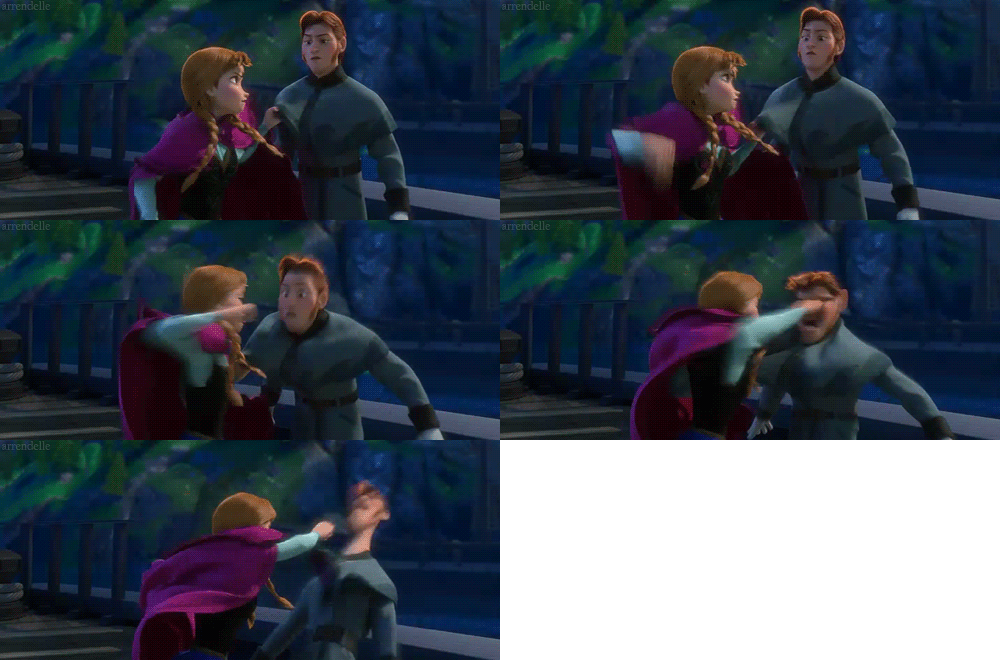
Or Hans. Does anyone not want to punch Hans in the face for deceiving us with his charm?

Get him Ana
These villains are, however, in a lot of ways, some of the best villains. Because in the end, aren’t you supposed to hate the villains? These are the ones that actually do their job. Often I’ve found myself in the position of liking a villain more than a hero because they’re more interesting.


With these baddies? I never have that problem. I guess it’s good to know that I have standards.

Friday, June 12, 2015

Villain Spotlight- Maleficent and Azula

So… Maleficent and Azula are fabulous.

Like, I know I should hate them but… I just can’t. They wear their evil so well. Something about animated villains just gets me, man. So let’s talk about why I like them. 

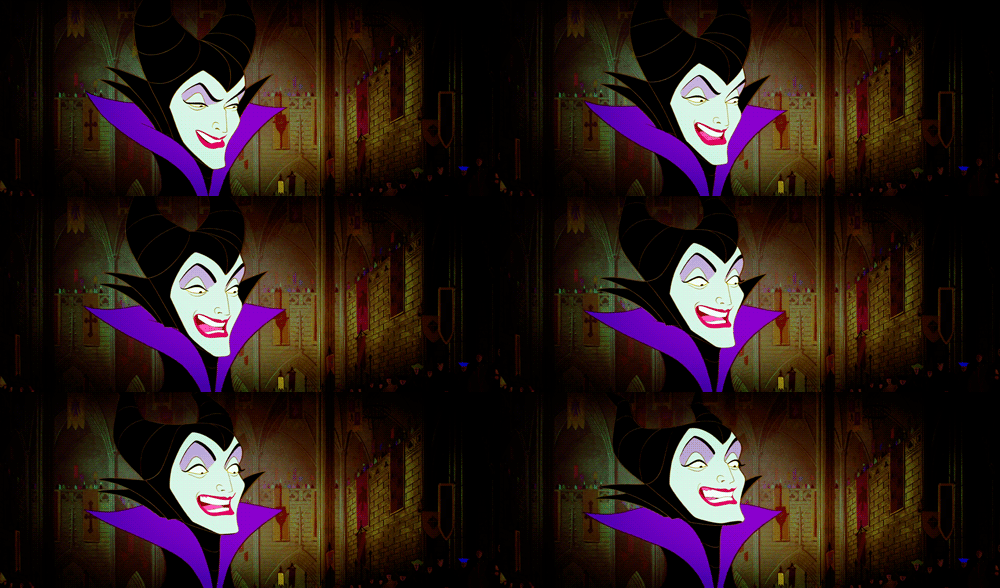
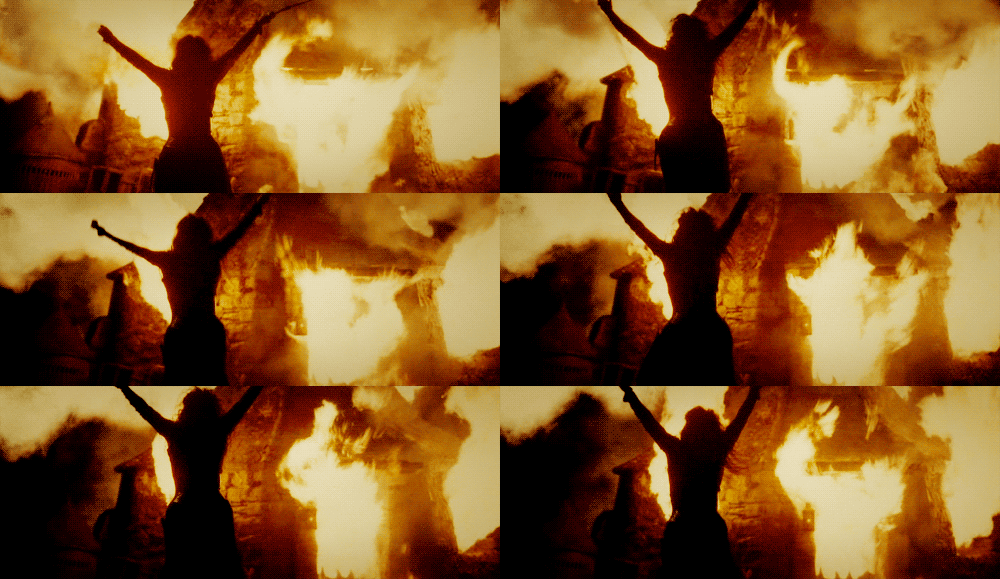
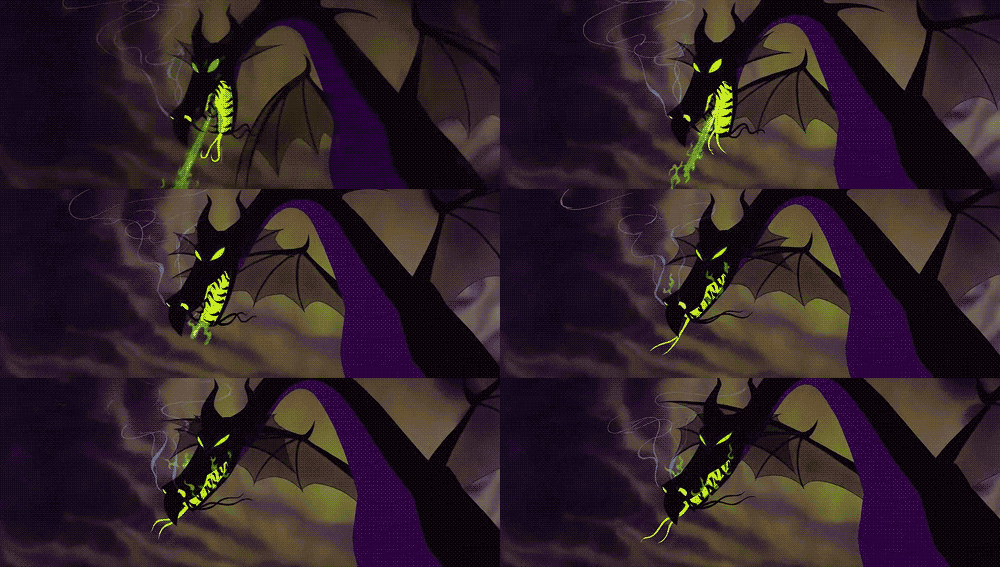
First off, Maleficent. The evil queen might be the first but Maleficent perfected the art. She cursed Sleeping Beauty because she wasn’t invited to a birthday party (which was actually a pretty serious snub back in the day). Petty, perhaps, but she was a little justified based on medieval customs. And she really knows how to leave a party


Maleficent is one of those villains that embodies class. She knows how to carry herself, how to speak, and even when she loses her cool, she never seems like a child throwing a tantrum. She’s scary and maintains her dignity.

Also, SHE TURNS INTO A DRAGON!


Where were you on that one live action remake?
She’s just one of those powerhouse villains that will go down in history. And she’s still probably one of the best Disney villains of all time.


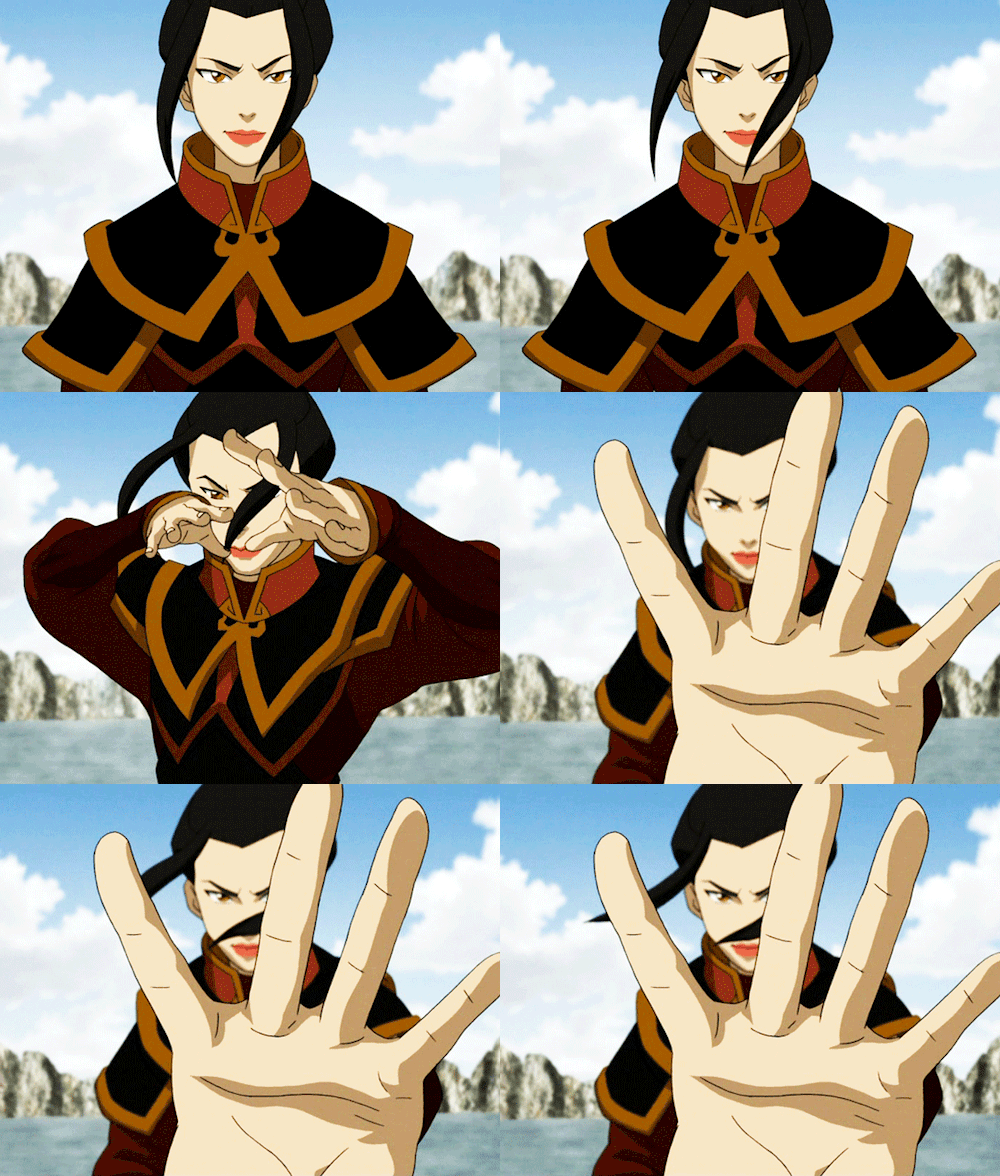
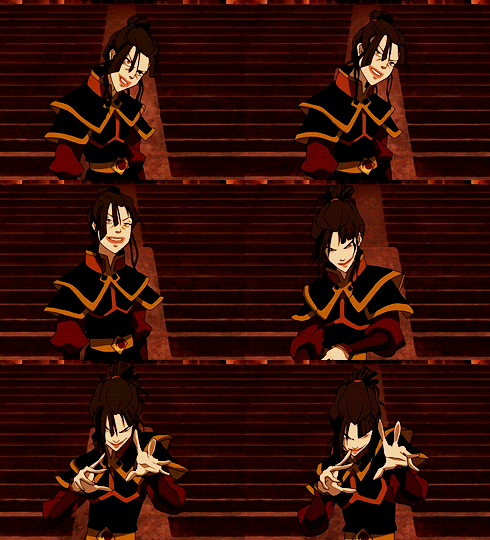
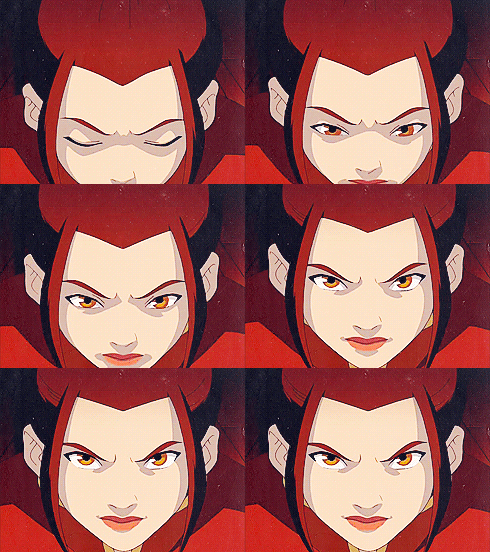
Another monarch I adore is Princess Azula, from Avatar the Last Airbender. She was raised in a life of privilege but rather than act like a spoiled brat, she is a genuinely capable strategist. She knows how to play the game better than most of the other characters, often outwitting the adults of other nations. And she’s only fourteen! This was a Maleficent in the making if you ask me.
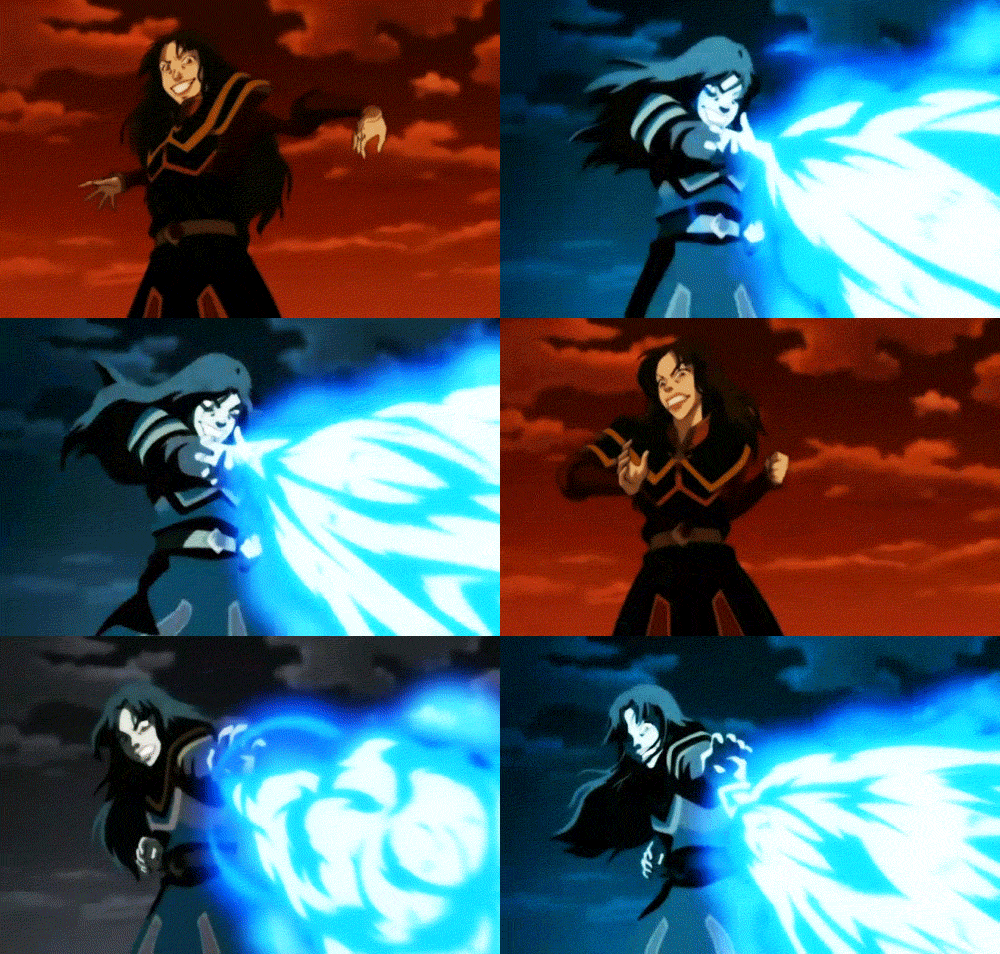
She’s also completely nuts.


Azula is pretty much unlike any other villain I’ve ever seen before. Young but intelligent, crazy but put together the next minute, a capable villainous with her own backstory. I could go on forever about how much I adore this show in general, but Azula is the star today. And I just cannot hate her. Its so much fun to watch her play off the heroes and there are points she even draws sympathy from you.


What I appreciate about both of these female villains is that neither are motivated by men or beauty as so many evil women seem to be in the media. Not that some aren’t but its nice to see villains who are strong and own their femininity without compromise or reliance on men. Maybe that’s why I like them so much.


Maleficent and Azula. Fabulous villains you just can’t hate.

Monday, April 27, 2015

Book Reviews: Vicious by V.E. Schwab

I’ve done posts before on my reader weaknesses and one of those particular weaknesses are characters with super powers. I’m especially fond of stories that play with the struggle of having power and show the dark underside of the issue. Villains and antiheroes with power always intrigue me. So I was of course drawn to Vicious by V.E Schwab. But did it appeal to my already high expectations?

Plot- Victor and Eli started out as college roommates—brilliant, arrogant, lonely boys who recognized the same sharpness and ambition in each other. In their senior year, a shared research interest in adrenaline, near-death experiences, and seemingly supernatural events reveals an intriguing possibility: that under the right conditions, someone could develop extraordinary abilities. But when their thesis moves from the academic to the experimental, things go horribly wrong. Ten years later, Victor breaks out of prison, determined to catch up to his old friend (now foe), aided by a young girl whose reserved nature obscures a stunning ability. Meanwhile, Eli is on a mission to eradicate every other super-powered person that he can find—aside from his sidekick, an enigmatic woman with an unbreakable will. Armed with terrible power on both sides, driven by the memory of betrayal and loss, the archnemeses have set a course for revenge—but who will be left alive at the end?

The Characters- What I love about Victor and Eli is that neither is necessarily the villain or the hero. I mean, we see things from Victor’s perspective but he and Eli are morally on equal ground as far as I’m concerned. But one fights to destroy others with powers and the other fights to protect them. But they’re still both morally ambiguous. The closest thing to a moral center is Sydney, a girl with the stunning ability to bring back the dead. She is likable and I enjoyed her as much as I enjoyed her considerably darker sister. Over all each character is distinct and likable even through the unlikable things they do. And I love how the book approaches power and how it corrupts ambitious young minds.

The Good Points- I’ve raved about the concept and the characters, but I really have to continue on that front. The characters are the focus of this book and the concept surrounding them makes the novel. This novel reads like something out of a comic book and yet far more cynical than most would approach heroes. And don’t get me wrong, I love superheroes. I’m a Marvel girl at heart. But stuff like Vicious gives me life. It dives into the psychology of flawed human beings and lets the intrigue of the characters stand tall. The book is also just really cool. The writing is cool. The images are cool. The story is cool. I found myself whispering that over used word under my breath at many parts. The pacing and jumps through time are handled deftly and never feel forced or confused. A well-crafted story on every level.

The Bad Points- I wanted more. This is the kind of world I could get lost in but as far as I can tell, it ends with no intention of a continuation. I almost wanted a more expansive story so I could meet more of these super powered humans. And I guess my demand for more ultimately means the book was doing something right.

Overall, Vicious is a fun, intriguing and super cool book for any lovers of super heroes and contemporary fantasy. It made not have an optimistic view of human nature, but its exploration is fascinating. Read it and see for yourself!


Final Rating- 5/5 stars 

Friday, April 24, 2015

Villain Spotlight: Bellatrix Lestrange and Zane Venture

For our villain spotlight this week, I’ll be looking at two very different characters that both, none the less, fall into the ‘crazies’ category.

First is Bellatrix Lestrange, of Harry Potter fame. In the books and especially the movies, Bellatrix is sadistic, crazy and loves every minute of it. As one of Voldermort’s top death eaters, she is a force to be reckoned with it. And she is nuts. 


Helena Bonham Carter brought her perfectly to life in the movies, having her skip about, laugh and sing at all the most inappropriate moments. The aftermath of Sirius Black’s death and Dumbledore’s death are noticeable examples. And she’s so happy, it’s almost hard not to laugh. And you feel terrible for it.


She’s makes you hate her and love her all at once, drawing in your interest. Which is what any good crazy should do. They should fascinate you and make you want to know more.

The second villain is just as much an interest magnet. Zane Venture, from the Mistborn trilogy, is a mysterious, powerful character plagued constantly by voices telling him to kill everyone around him. He has a great presence every time he’s on the page and you want to know more about him. Also, everyone should read that trilogy, because I said so.

Unlike Bellatrix, however, Zane tries to suppress his madness. He is a much more serious character and has a lot of elements of a mastermind in him. But I still place him in the category because he really is pretty off his rocker. A little less obviously than Bellatrix, and he carries himself entirely differently, but he is none the less a crazy.


That’s the key to a crazy villain. They don’t have to make sense, but they should tempt the audience to want to make sense of them. Get that right, and you have a solid villain like these two baddies. And a little excitement for any plot.