Pages

Showing posts with label hero's journey. Show all posts

Friday, September 23, 2016

Hero Spotlight: Chihiro and Coraline

Today lets look at two of my favorite child characters. Both of these girls abscond to other worlds for fantastical adventures. But both of their adventures have a dark twist to them and they must fight to conquer their fears in order to get out alive (a pretty apt metaphor for entering adulthood, when you think about it).


In Spirited Away, a young girl named Chihiro finds herself in the spirit world with her parents turned into pigs. In order to avoid becoming food for the spirits herself, she must get a job at the bath house, working for the witch Yubaba. Before being placed in this situation, Chihiro is a normal ten year old, pretty selfish and lazy but also wholly relatable. And over the course of the movie we get to see her growing stronger and putting her wits to overcome many different challenges.


Chihiro must work for the first time in her life, solve tough issues and even travel on her own through the spirit world to help a friend in need. We see her grow from a kid who doesn’t know how to fend for herself to a confident young woman, who can take responsibility and fight for her loved ones. Of course she must go back to the real world, but she takes everything she has learned with her. I adore this movie so much. Its one of my favorites and Chihiro is one of the best examples of a child character out there.


On another end, we have Coraline, whose story is less obviously about growing up and a few shades darker than the previous story. Most people know this tale. Its about a dissatisfied child named Coraline crawling through a door into another house where all of her dreams come true. However her Other Mother might not be so benevolent as she seems.
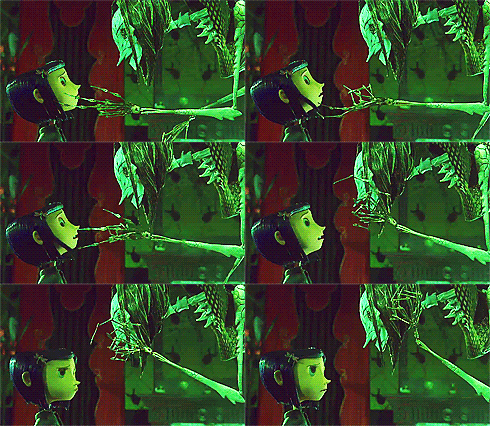
In fact she is pretty terrifying

Coraline is a very realistic child, smart and adventurous, but also selfish and attention seeking. She likes the focus of life to be on her and in her dream world, she gets just that. However, she must fight to keep her soul from the Other Mother’s clutches (You know. For kids!) as well as save the souls of other children who have been trapped before. Growing up, for Coraline, is accepting that life can’t be exactly as she wants it and taking responsibility for her mistakes. In the end, she must save her parents and others from the Other Mother and ignore the temptation of a so called ‘perfect life’. Life isn't perfect, and everyone must accept that some point. In many ways, Coraline learns the shades of grey of adulthood in this, also learning to treasure her real parents, ordinary life, and the change of moving to a new town, even if there are still challenges.


Children vs. growing up can be as vague and symbolic as Coraline or specific as Peter Pan. But they all capture the need of a child to eventually step into their own shoes and take control of their life for the first time. I love both of these stories for that reason.

Wednesday, May 11, 2016

Heroes and Heroism: The Moral Center vs. the Moral Grey Area

Now this right here is one of my favorite tropes. We’ve talked about the brawny heroes and the brainy heroes but what about the moral center? The moral center is often defined as the most virtuous of the heroes, always working to do what is right, no matter what. They have a very defined sense of justice and morality, and often have firm convictions. They will always stand up for what they believe, for good or for ill.

These are often very emotional characters at heart, and they keep the group together through tough times. They are very empathetic and caring, but often get flack for being too soft. In contrast, they also can get flack for being too harsh, if they judge others based on how the measure up to their convictions.

So what then is the Moral Center’s greatest enemy? Simply put: a moral grey area. This is the kind of situation that comes along and there is no easy answer. The situation doesn’t fit perfectly into the box set up by their beliefs and they must figure out how to overcome it, with mixed results. In this case, there are two possible outcomes- Either their values are changed forever, or their values ultimately triumph.


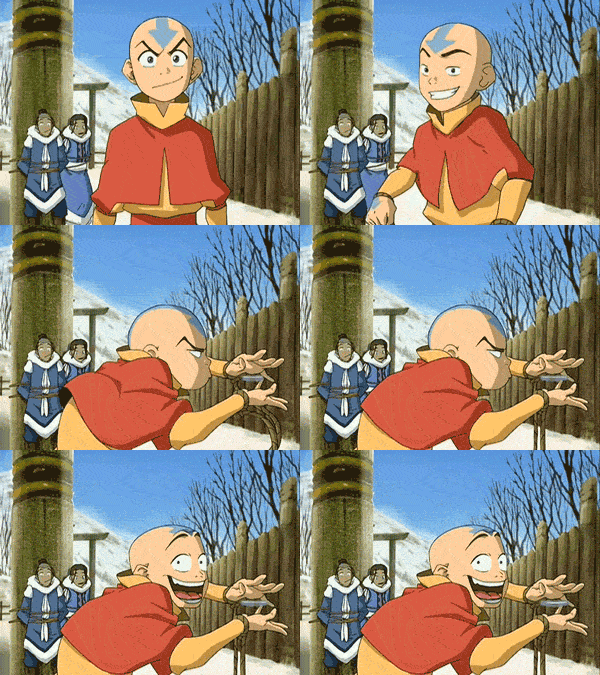
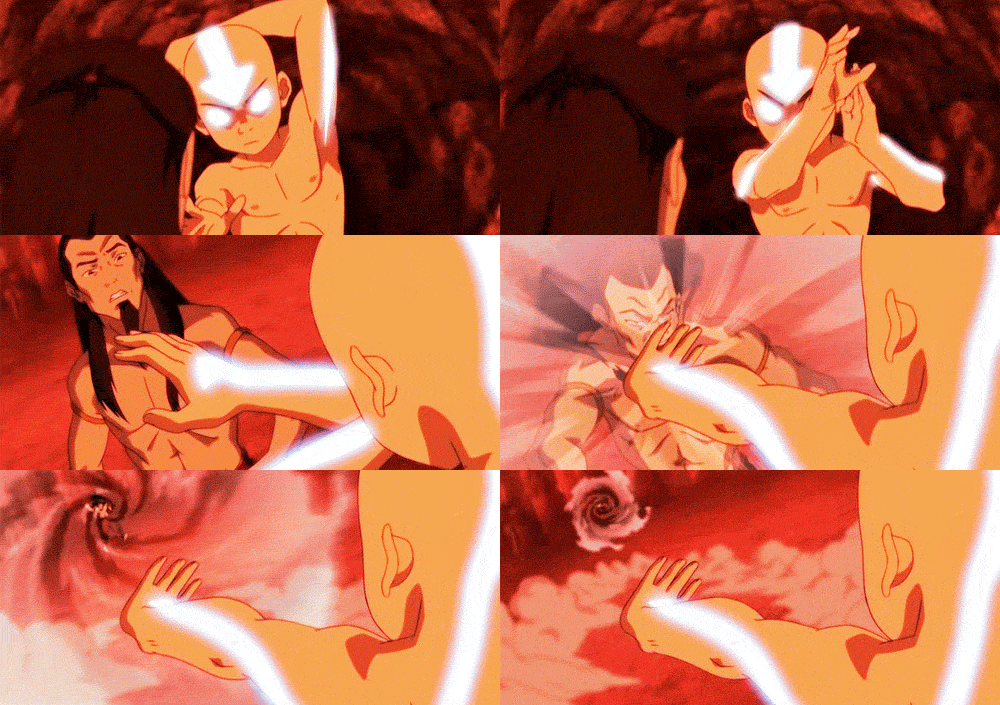
Aang, for example, a moral, airbending monk from Avatar: the last Airbender, most confront his aversion to killing people when he is tasked with killing the Fire Lord. Is it alright for him to break his beliefs if it means getting rid of a dangerous threat?


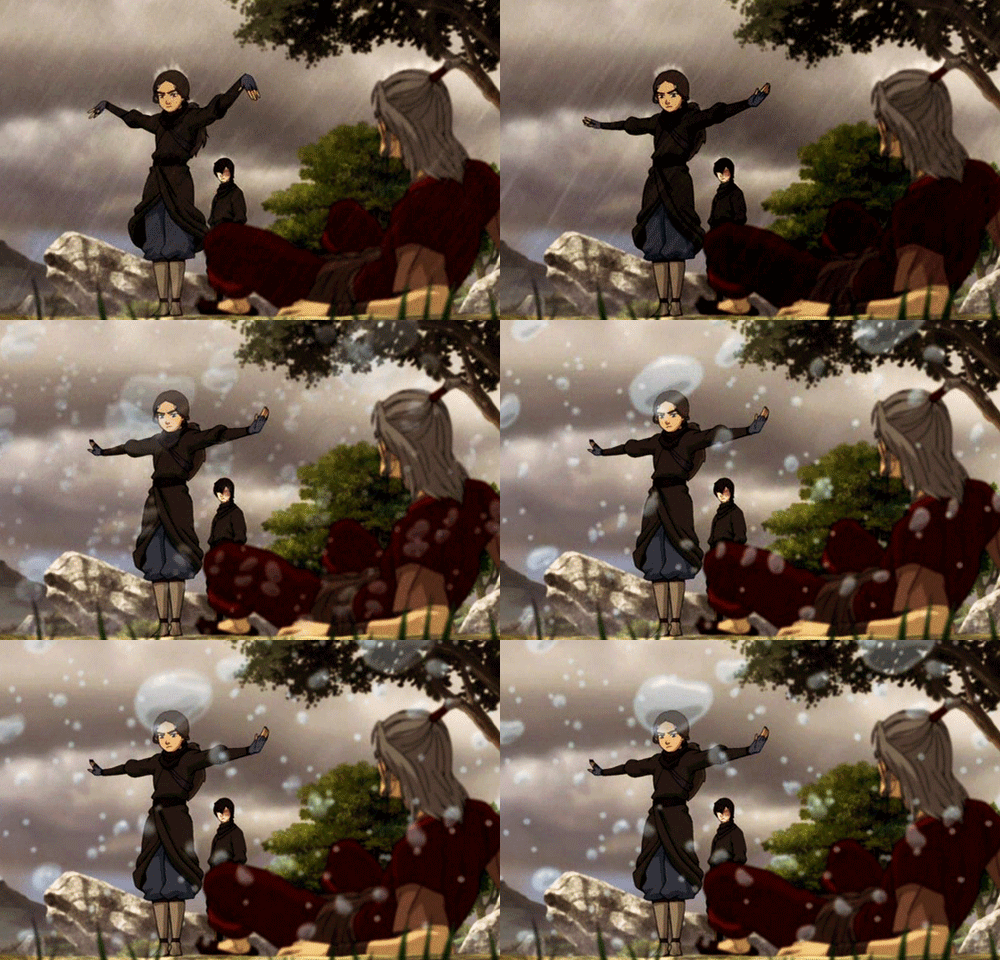
This show, in fact, has more than one moral center, as Katara often finds herself as the heart of the group, keeping everyone positive and together. But she is tested when she must face the man who killed her mother and choose between the revenge she so badly wants and what she knows is right.


Then there is Alphonse Elric from Fullmetal Alchemist. 


He is the moral center to his brother’s ambitious, intellectual nature, but he will do anything to help his brother and him return their bodies to normal. But will he be willing to sacrifice others for their cause?

These kinds of tough situation really show what your character is made of and if their beliefs are more flimsy than they let on, they will likely crack. Or perhaps they will stand strong under the pressure. This archetype is also great for observing the moral grey areas of everyday life, because while absolutes are easier to understand, we can’t pretend that everything fits into simple boxes. And that’s just one reason why I enjoy this archetype so much.


On Friday we’ll take a look at two characters who are truly changed by their confrontation with the moral grey area. Until then, happy writing!

Wednesday, April 27, 2016

Heroes and Heroism: The Intellectual vs. Their Intellectual Match

Last week we looked at the fighter so lets jump to the other end of the spectrum to those heroes that rely on brain rather than brawn. This is one of my favorite heroic types: The intellectual. 

The intellectual is, in many ways, the opposite of the fighter. They are more reserved and prefer analyzing a situation before rushing into it. Their greatest asset is their brains. And they have no problem bringing others down a peg with their superior knowledge.


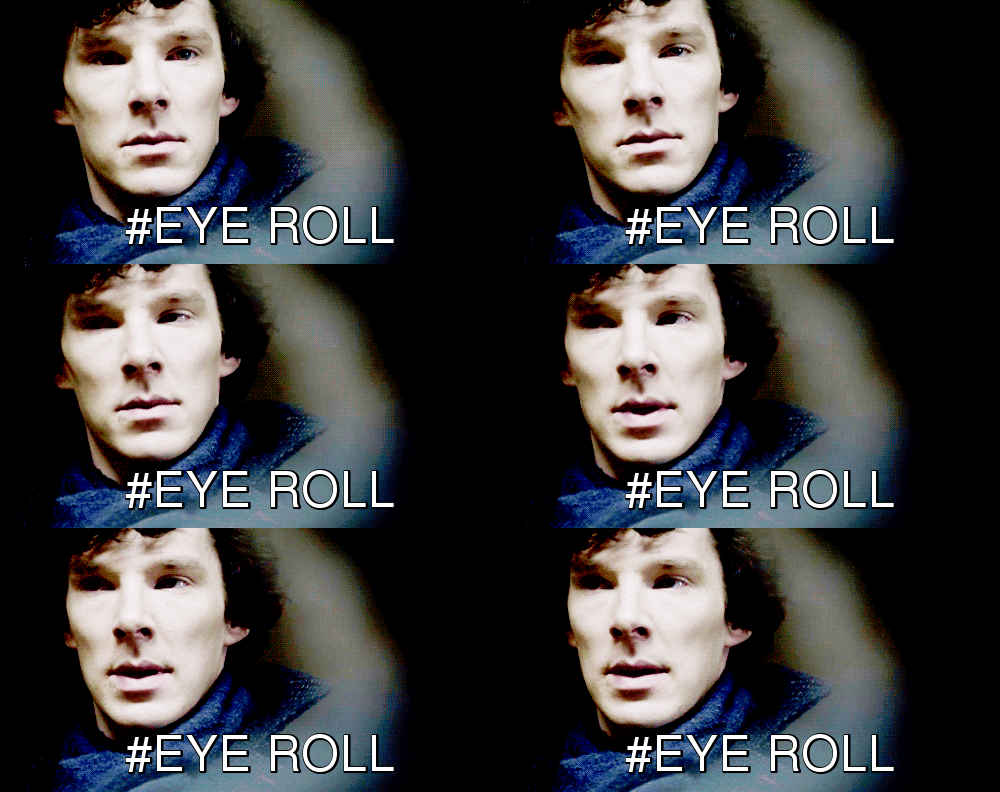
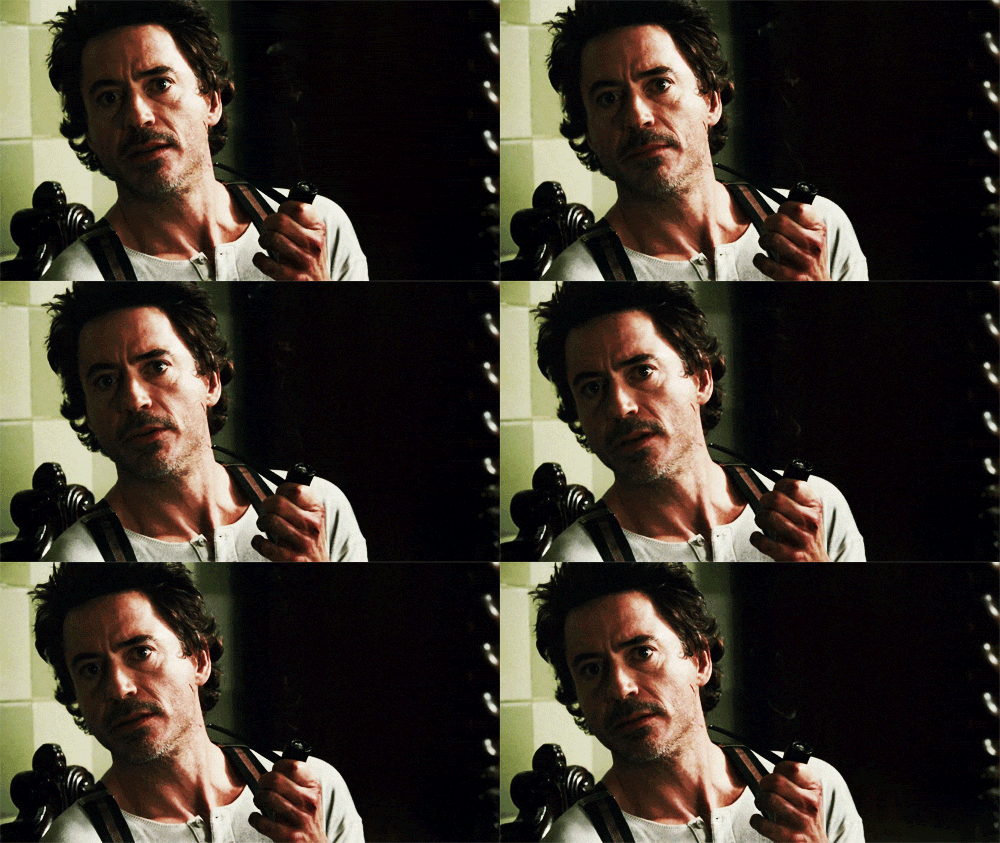
There are a million and two examples of the intellectual in fiction, movies and TV. Of course there are many, many different versions of the great Sherlock Holmes, from Robert Downey Jr.


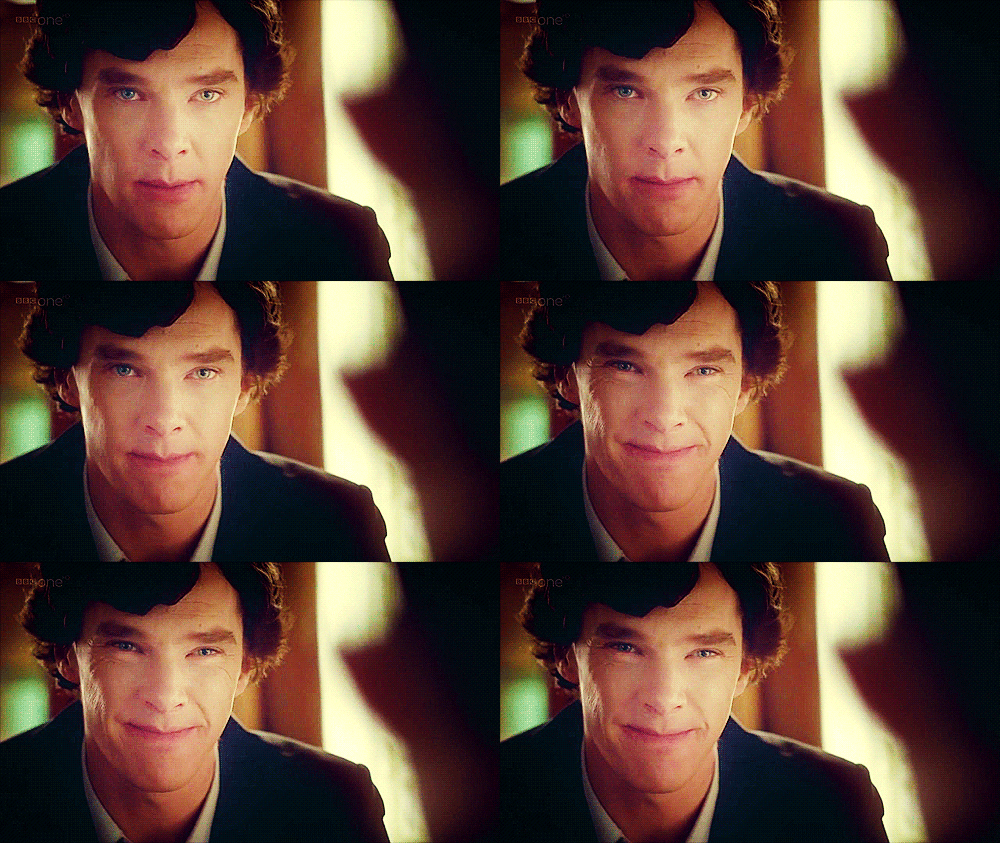
To Benedict Cumberbatch 

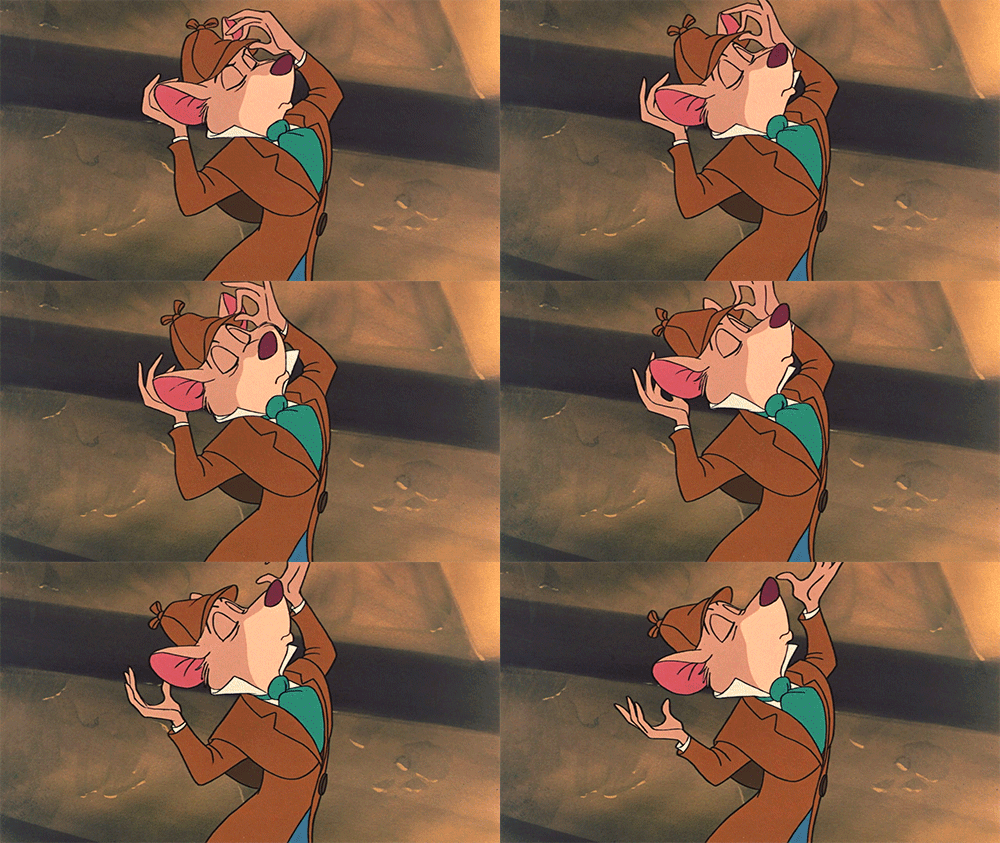
To the Disney version starring mice (main character is not named Sherlock, but he is basically Sherlock). 


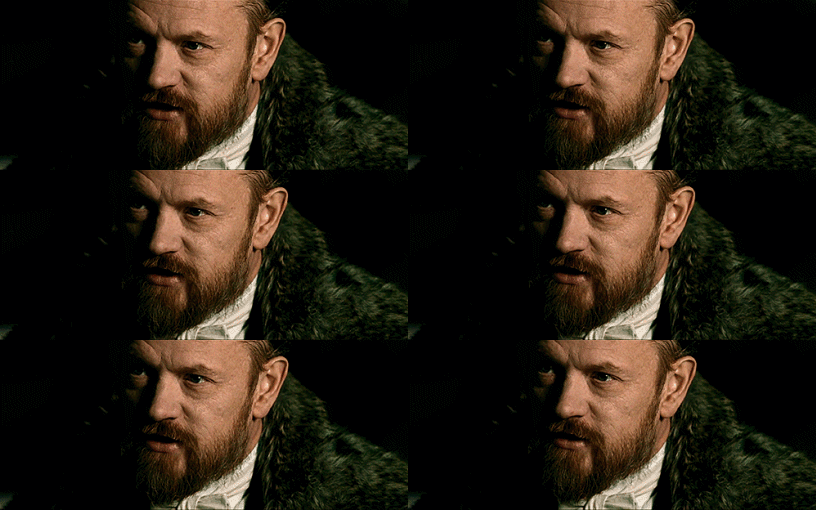
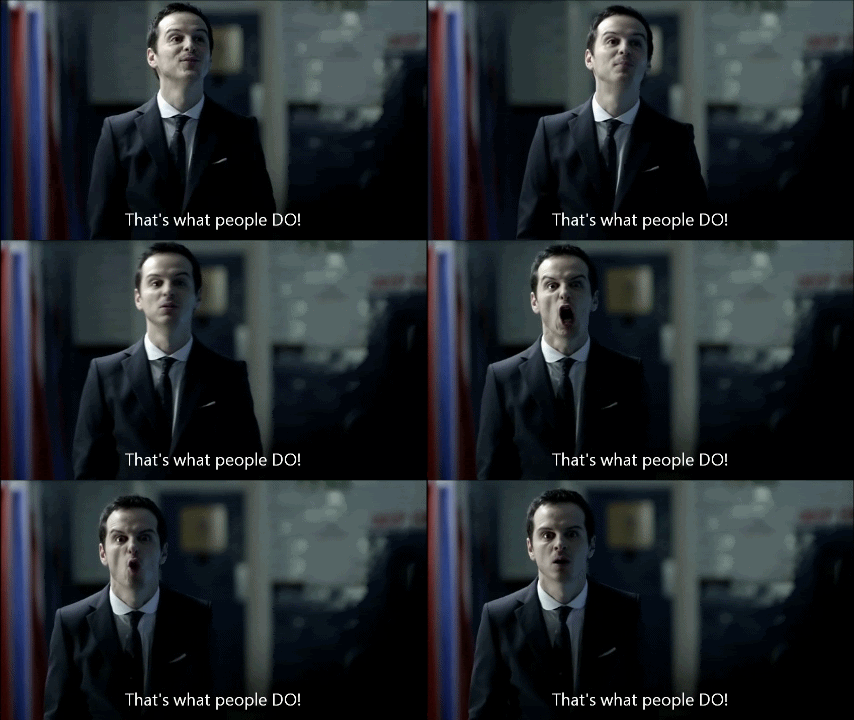
And all of them have their Moriarty, who puts them in their place and tests their intellect more than ever before.


But there are so many more shades to the intellectual archetype than Sherlockian heroes. Hermione is also an example of an intellectual as from the very beginning, her greatest strength is her bookishness and cleverness which saves her friends on many occasions. 

Sazed from Mistborn belongs to a culture of intellectuals, the Terrisman who collect history, religions, science and other areas of studies by way of Freuchemy.

So what ends up ultimately being the downfall of these heroes who are so brainy? They meet their intellectual match.

Now this could be a human being of course. A renown super villain or psychotic, smart enough to evade the hero and even out think him. The scary thing about this kind of intellectual match is it points out just how similar the hero and the villain are. This kind of match up can make the hero doubt their own humanity and wonder what really makes them so different. And I love complex psychological exploration like that.

But the intellectual match doesn’t have to be a villain. Sazed experiences an existential crisis after losing someone important to him. He decides none of his vast knowledge means anything anymore. The intellectual match can be circumstances beyond the hero’s control. Circumstances that make their vast knowledge irrelevant.


All of these situations put our brainy heroes through a test and, just like the fighters, they must overcome and become stronger than before.

Join me on Friday as we take a look at two very different intellectual characters! Until then, happy writing!

Friday, April 15, 2016

Hero Spotlight: Aragorn and Kelsia

So let’s talk about some excellent examples of heroic leaders.


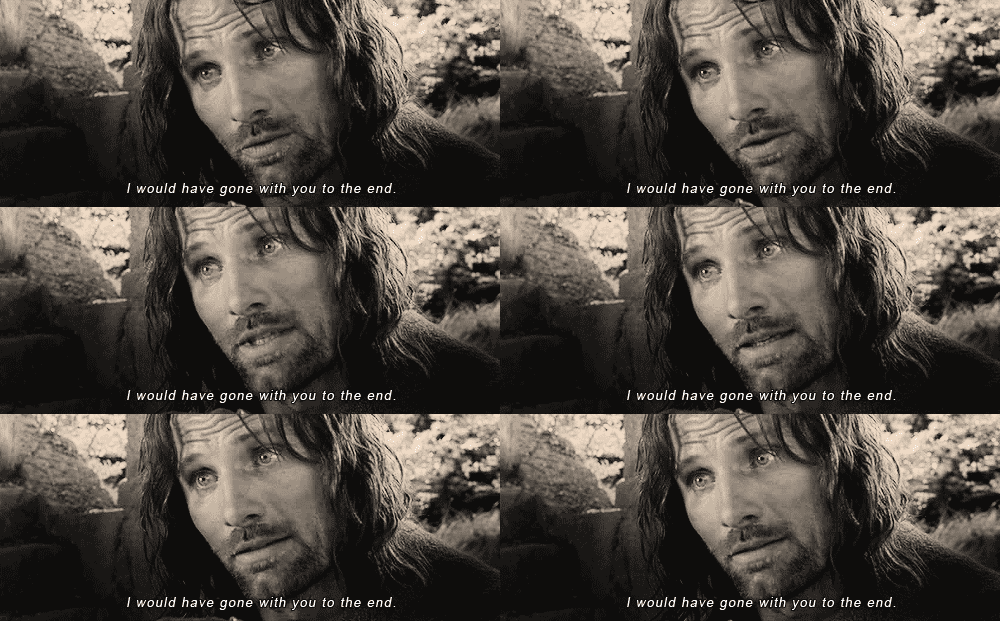
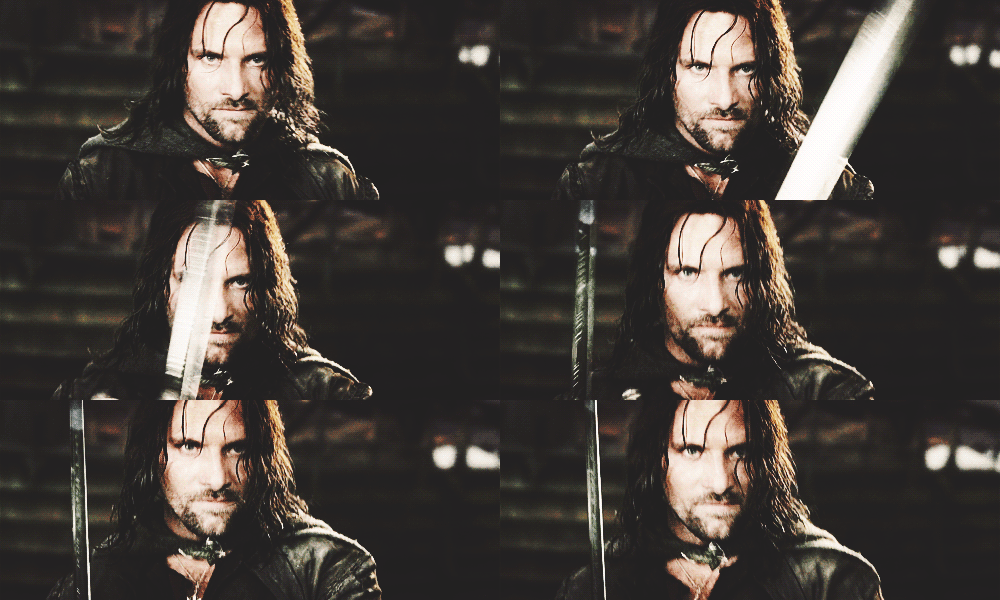
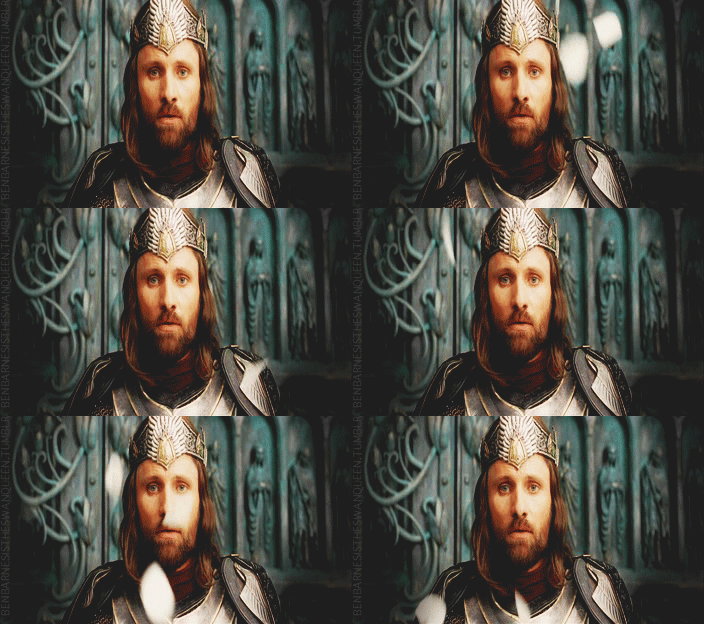
From the moment my brother introduced me to the Lord of the Rings films, I adored Aragorn. I loved him for his subtle complexities, his strength in battle, but also his leadership and his noble qualities. He is a ranger by trade but a king at heart, leading with skill and looking out for his companions at all costs.


But of course, Aragorn isn’t eager to be a leader. He prefers to stay in the shadows, never acknowledging his strength or status. He didn’t claim to be superior than anyone else. In fact he feared his heritage, worrying that he was destined to suffer the same fate as Iseildur.


Yet, when the world needs him to step up, he takes on the responsibility, conquering his inner demons and fears of failure. So often rulers must live in the shadow of their predecessors, either living up to their successes or in spite of their failures. Aragorn is a great example of the second and he remains one of my major character crushes. I love me some quiet, noble strength.


Kelsea is the leader of another sort, from a newer fantasy work, Queen of the Tearling by Erika Johnson. I appreciated this book because it focused on a lot of the technicals of being a leader, especially those that arise from not growing up in the court. Kelsea has been protected for years from those who might have her killed. When she comes of age she is spirited back to the throne and must quickly prove her metal over those who would see her deposed or killed. 

Kelsea deals not only with possible invaders from other countries but with threats from within the council. She often has to tiptoe around issues, walking a thin line between wisdom and foolishness. But she ultimately makes the right decisions, proving herself to her people along the way.


I really respect Kelsea because she isn’t an idealized female ruler. She has her flaws and often is in way over her head. But she acknowledges her weaknesses, turns to others for help, and works logically through problems, as any good leader would. 

Hope you enjoyed the spotlight this week! Come back next week for a look at our next hero archetype: The Fighter. Until then, happy writing!

Friday, August 14, 2015

Intro to Heroism: What Makes a Hero?

Well, after about three weeks away from the blog (oh life, you never fail to happen) I’m finally back and ready to kick off our new series on heroes.

This probably goes without saying but a hero is constructed differently from a villain. The hero is usually a force for good and the villain a force for bad, to put it in simple terms. But they’re also different in how they react to conflict. The villain creates conflict and the hero reacts.

While the hero starts off in their story having goals and plans for their life, the plot demands that their world be thrown off kilter. This is the classic hero’s journey. An inciting incident launches the story into motion and the hero must choose to accept the calling.

But there are a variety of different conflicts in every story. It is the personality and type of the hero that determines the obstacle they must overcome. Depending on the type of hero, they need a different obstacle to launch them on a journey of character growth. You only see a person for who they are when the world is crashing down around their ears. A hero is defined by their conflict and how they choose to face it.

So over these next weeks, we’re going to look different types of heroes, the conflicts they usually face, and how they must ultimately face them to complete a satisfying character arc and restore order. Know in advance that I could cover so many types of heroes but I’m choosing to stick with twelve basic archetypes. It should be fun so stick around and enjoy! Next week we’re kicking it off with SUPER HEROES!

Also, don't forget to check out HOUR OF MISCHIEF on goodreads and amazon!