Pages

Showing posts with label lord of the rings. Show all posts

Wednesday, October 12, 2016

Notes from New York- Forced Conflict

Last week we talked about spotlighting trivial conflicts over big, life changing dilemmas and how that can drag down. But today I want to talk about forced conflicts. These are plot threads that an author often adds just to spice up the tension but, ultimately, they just aren’t needed.

I spoke last time of a manuscript that gave focused to a character conflict over far more pertinent financial struggles and natural disaster fall out. Well this same MS also had its fair share of forced conflict. The characters always seemed to be clashing for really unnecessary reasons. All of the dilemmas were easily solvable by communication but instead the author dragged them out for as long as possible. It made the reading experience frustrating rather than engaging, and that it is a fine line you really don’t want to cross.

The Lord of the Rings movies, on a larger scale, also had some forced conflict that didn’t necessarily need to be there. There are enough stakes with the orcs and Mordor and a quickly developing, worldwide conflict. But changes like making Faramir an asshole honestly detracted from the movie rather than adding to it. Peter Jackson added this conflict because he didn’t want to lose the stakes but there were plenty of stakes to begin with. Also it didn't happen in the book.

So, how do you tell if your side conflicts are forced? Well here are a few hints.

1) They can be easily solved

If you have to use contrivances like misunderstanding and miscommunication to keep a conflict going, it’s going to feel forced. Misunderstanding can be an excellent story telling device in comedy but in dramas it is tiring, especially when the misunderstanding continues on for several pages without resolution.

Image result for Frustration gif

2) They are contrived

Good conflicts are built up over time. Bad conflicts are caused by contrivances like a character walking into the room at just the wrong time to hear just the wrong words, often out of context. Stuff like Shrek walking up to the house in time to hear Fiona’s words out of context and making him think she’s calling him an ugly ogre. It’s the kind of stuff that makes you want to mutter ‘are you kidding me’. Your third act tension should be caused by something legitimate, not just some easily avoided misunderstanding

Image result for Frustration gif

3) They are predictable

A long time ago I did a post on the ‘liar revealed’ trope, especially focusing on A Bug's Life. This plot usually begins with the telling of the lie and in your heart, the entire time, you know the lie must be discovered and then forgiven. Any tension created off of this plot is so predictable because we know the reveal will come and we know that ultimately the hero will be forgiven and it won’t matter in the end. So dragging out the lowest point as a ‘will they be forgiven’ plot point is so boring because we can see the resolution coming a mile away. I loved the most recent Star Wars movie because when Fin reveals he lied about being part of the resistance, Rey barely cares. There are more important things to worry about. It was beautiful.

Image result for star wars rey come with me gif

4) They are unnecessary

Sometimes, your book has plenty of tension. Really. If the world is ending or the town is flooding or someone is dying that is plenty of tension. Sometimes a forced conflict is just an unneeded crutch that holds the actually interesting plot back. And as we discussed last week, you want to focus on the right things. It’s not that you don’t need small conflicts and arguments along the way, but they shouldn’t outstay their welcome.

Image result for Frustration gif

Sometimes, small conflicts happen, in fiction and real life. And subplots, of course, are the spice of a novel. But if you find a side conflict dragging on too long, relying on contrivances or taking the focus from more important conflicts, it may be time to tone it down a bit. Your readers will thank you for it.

Wednesday, April 13, 2016

Heroes and Heroism: The Leader vs. Their People

Haha, well I've been gone awhile. Insert various life is busy excuses here. I just got back from New York term, however, so I have a long summer ahead of me to continue updating. So, without further ado, shall we jump right back into the heroes series?

Today we look at one of the most common heroic types, especially in fantasy or dystopian novels. The Leader. Honestly, every book has a character who acts as a leader, whether it’s of a sports team or a nation. Leaders step up, take charge and work to lead their people to victory.

And that really forms the crux of the leader’s dilemma. Their people. At all turns, the leader must live up to the expectations of their most loyal supporters and defy the doubts of dissenters. In many ways, they are expected to be perfect.

Trouble is they never are.

All leaders have doubts about whether or not they can live up to the tremendous pressure. Sometimes they are placed in positions where they must make tough moral calls for the good of their people. Sometimes they are wrong and hundreds of lives are lost. Whatever choice they make, its big, which means the fallout is also huge.

Leaders also have to put on a mask of sorts in front of their followers. Take Kelsier from Mistborn (fangirlish scream). He’s a complex hero with lots of baggage but he wears a face of utter confidence even in the face of impossible odds. It makes his crew feel more confident. But, as they discover, there will always be something Kelsier doesn’t tell them.

In a lot of ways, leaders are in the easiest position to become villains if they don’t watch their actions. Ruling is complicated, and if they don’t watch their step, they’ll end up on the wrong side of the history book.

The most heroic leaders, however, pull through. That’s what separates them from their more villainous counterparts. They have stronger moral instincts and act more selflessly in order to make things best for their people. They don’t grapple for power but treat it with respect. It’s another ‘with great power comes great responsibility dilemma’.

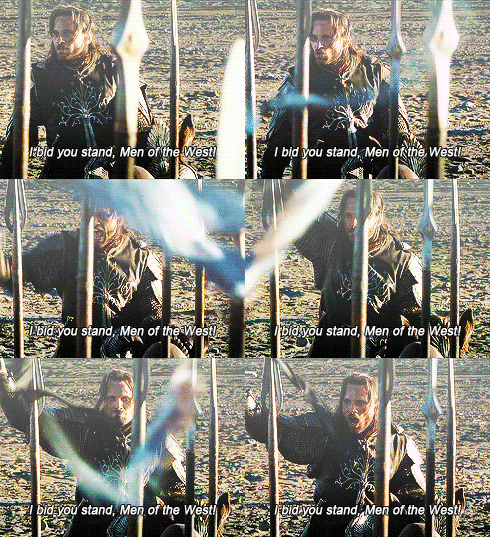
A good, heroic leader inspires you to follow them to victory, no matter the odds. They also know how to make a rousing speech.


Always a plus.

Friday, September 18, 2015

Hero Spotlight: Alice and Sam

Today on the spotlight we’re looking at two classic heroes, both Fishes out of Water in their own way. Alice and Samwise Gamgee.


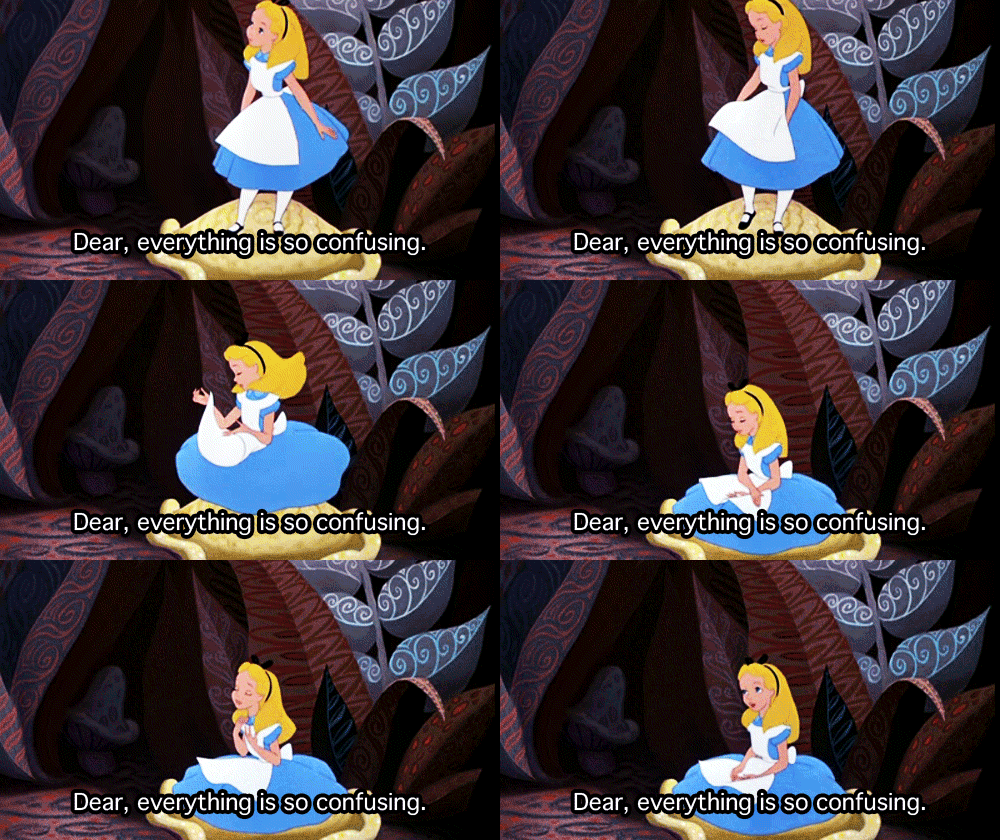
Alice is the classic fish out of water in Alice in Wonderland (and every remake, spinoff and sequel that spawned from it). She comes from the logic driven real world but wonderland operates on chaos and illogic. She must learn to handle each new creature she comes in contact with but for all her learning, the world never makes sense. Its really fun to watch her argue and reason her way through Wonderland and her journey inspired many other fish out of water stories in the process. 

Some retellings of the story change things up and make Alice actually from Wonderland, which I always thought steals the spark of the original. The reason wonderland works is it plays off a logical source. Madness is sometimes difficult to read if we don't have some sort of relatable, grounding character. In this case, Alice is that character.


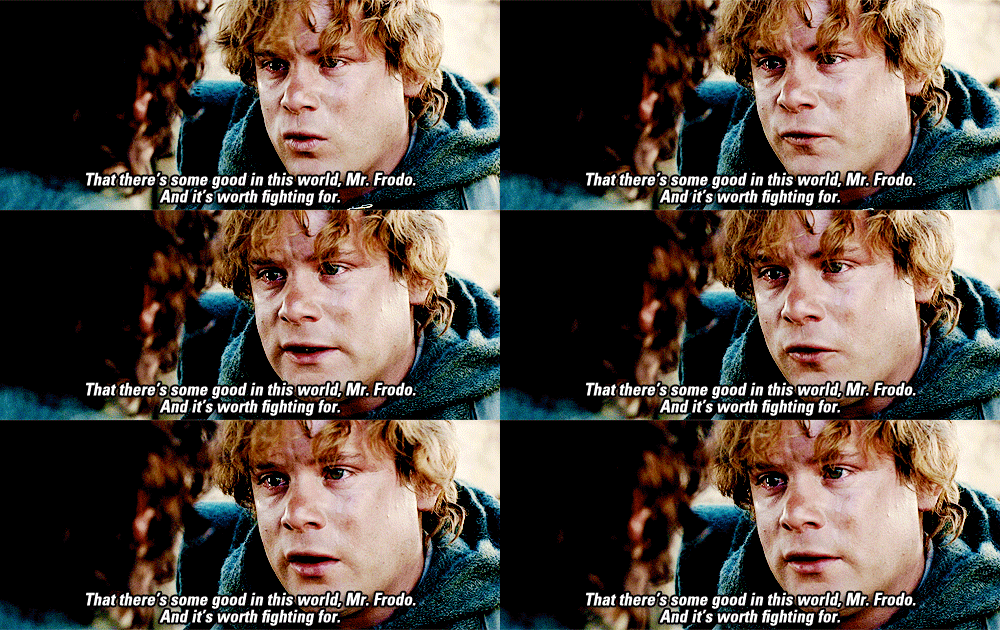
Samwise Gamgee is not the victim of a portal related accident, but he is a hobbit in a very big, new world. Hobbits, by nature, do not interact with the outside world, content with a simple existence. So when Sam joins Frodo on his quest to destroy the ring, he encounters all manners of unfamiliar things, including elves, dwarves and orcs. He faces this new world not only with fear but with wonder as well. He’s hopeful and tries his best to keep up with the others.

He is not a naturally heroic hobbit but he is a loyal friend and will push through all obstacles to protect Frodo. He fights Shelob for goodness sake. That’s a huge freaking spider. Only the bravest would do that.


And Tolkein always saw Sam at the most relatable character in the Lord of the Rings. That’s just what the Fish out of Water supposed to be. Relatable and willing to face change with a strong heart and a smile. 

Wednesday, July 1, 2015

Villains and Villainy- The Lucifer Figure

Hello and welcome back to the villain series where we’re tackling the many different shades of villainy and honoring some of the best representatives. Or… shaming them. Depending on how you look at it.

Today let’s look at the baddest of the bad. The trope that aims for hell more than any others. Yep, I’m talking about the Lucifer figure.


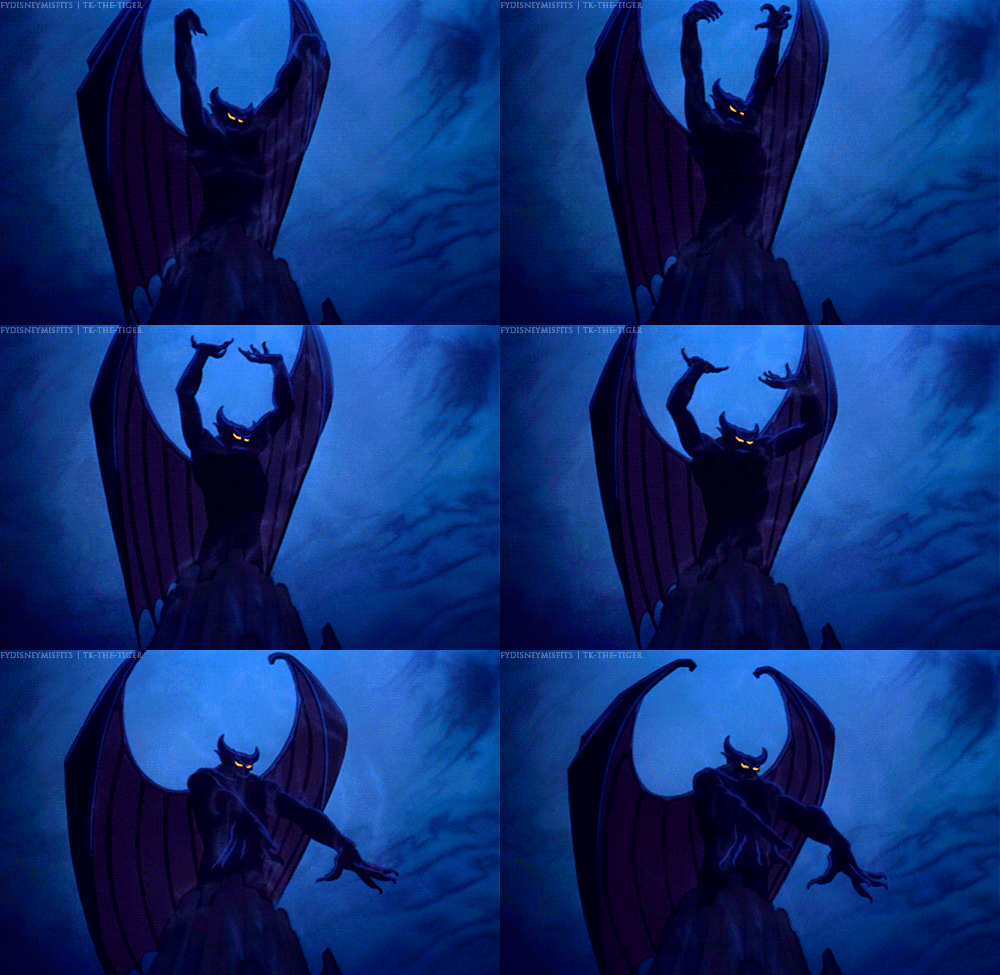
The devil is one of those things a lot of villains choose to emulate, mostly because he is the symbol of pure evil for many people. So many dark traits from this guy. He’s a deceiver and a trickster. He’s governed by pride and ambitious to a fault. He’s unrepentant and opposes all things good. A Lucifer figure is ALWAYS the big bad guy. Never a henchmen. They’re the one running the show and often the shadow on the wall, the puppeteer of all the other villains in the story.


Take Sauron for instance. We don’t see him much but we see his influence. We see the destruction his armies sew across Middle Earth. But we rarely see him or hear him speak really. It’s his presence that matters. It’s his work.


Or take Father from Fullmetal Alchemist Brotherhood. He controls the homunculi and is the driving force behind most of the wrong doings across Amestris. His servants do most of his dirty work and he rarely gets involved in the action himself (except at the end), but we feel his power none the less.
And that, I think, is the secret to pulling off a good Lucifer figure. Unlike other villains on this list, you’re not trying to make them human. If you want a straight up, pure evil, nonredeemable villain, keep them in the background.

Its easy to overplay your hand with a super evil villain and they can become ridiculous if they get too much page or screen time. But if instead you focus on the destruction of their evil, we’ll feel their presence without even meeting them. It will make them over all stronger.


Sometimes its okay to have a pure evil villain. But don’t leave them in the spotlight for too long or it will seem like you're trying too hard. Let their deeds speak for them.