Pages

Showing posts with label Durarara. Show all posts

Friday, October 21, 2016

Lessons from Anime- Ensemble Casts in Angel Beats, Durarara and Assassination Classroom

Welcome back to Lessons from Anime! This week, we’re looking at another group of shows that all share one key element: ensemble casts.

There are lots of different ways to tell a story. For instance, you can take the Harry Potter route and root the narrative firmly in the perspective of one character. But, on another hand, you can write a story that is about a group of people, like in Mistborn, or even hundreds of people, like in Game of Thrones. When you have several main characters and just as many stories, it can be a tremendous balancing act. If you’re not careful, the scales will tip and you’ll give way too much focus to a few characters while letting others become practically nonexistent and unnecessary. Today we’re going to look at three anime that sport ensemble casts to varying degrees of success.
Image result for Angel beats gif

First off, there’s Angel Beats, a well-known tear jerker and a show that sports quite the large cast in its group picture at the closing song. This show relies on a wide range of characters. Even though it has its main characters, it clearly wants you to focus on the group as a unit, especially when the show takes its more feelsy turns later on. Does it succeed?

Image result for Angel beats gif

Not…really. Outside of a group of about five characters, none of the other cast get any noticeable screen time. They are reduced to typical anime caricatures, good for a laugh but not as their own people. They are sometimes indistinguishable from each other. The show just didn’t have balance in its writing and at only thirteen episodes, it really didn’t have time to keep such a large cast afloat. If you’re going to have a lot of characters, make sure they actually need to be there for more than a one off joke.
Image result for Durarara gif

Then there’s Durarara, which yeah, I know, this is the third time in a row I’ve brought it up, but its relevant. Durarara also supports a large cast with a few clear leads in the mix. However, each of its characters are involved in different stories that collide at different points. The characters aren’t a collective unit. They’re a series of moving pieces that pass each other in the street. This is more the Game of Thrones approach of having several different storylines that eventually converge.
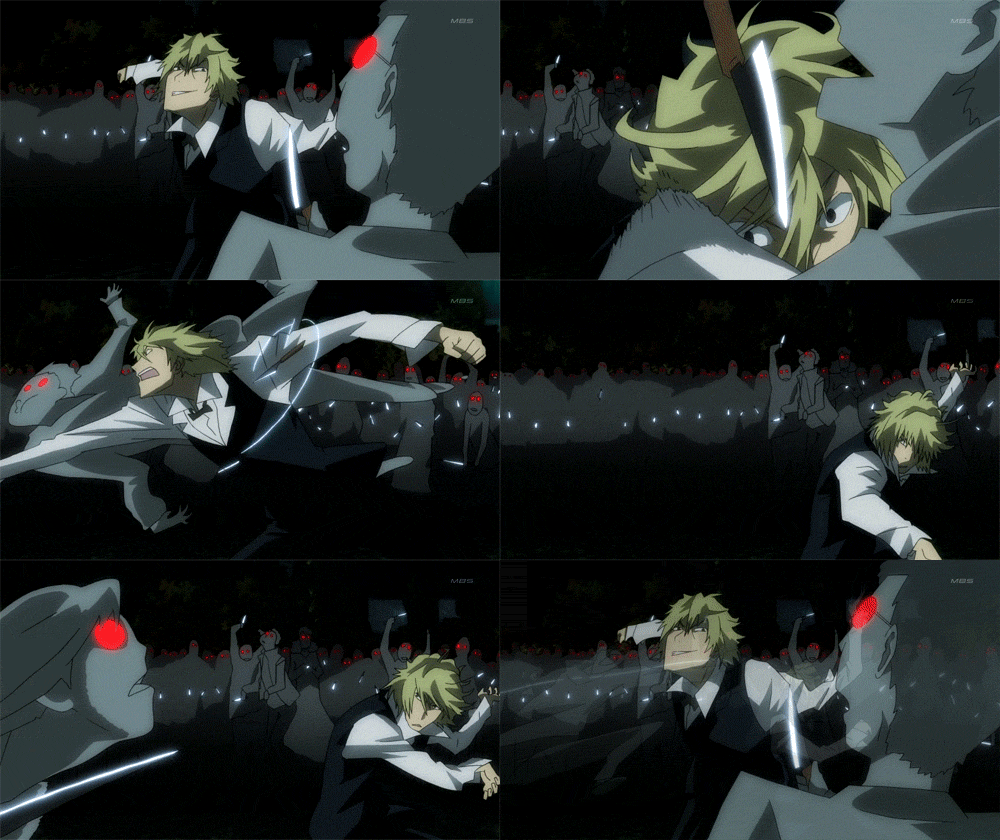
Image result for Durarara gif

But while Durarara does a decent job with its cast of thousands, it still lets a few plots go by the wayside, including some twin sisters that are good for a laugh but have absolutely nothing to do with any of the plot. There are plenty of one off characters that felt like they needed more screen time. But, to be honest, I’m surprised Durarara managed its juggling act as well as it did. It goes to show that when you give yourself several plot threads, make sure they’re well integrated and they all reach some sort of resolution. That way they won’t fall off the map and leave your readers wondering why they were there in the first place.

Image result for assassination classroom gif

The last show I want to talk about is perhaps the most effective of the  bunch, called Assassination Classroom. Like Angel Beats, this is about a group as a unit, focusing on a classroom of twenty eight students and their teacher (a mutant who is going to blow up the world in a year). It has a main character lending his narration to the events, but the show is conserned with all of the characters. And I mean all of them.
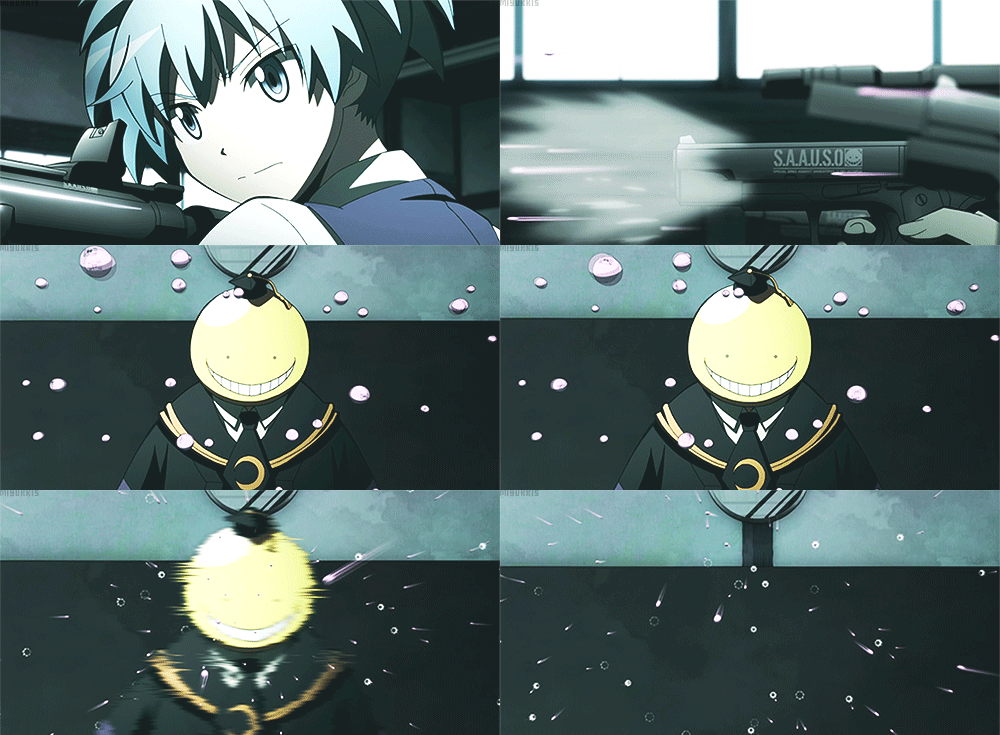
Image result for assassination classroom gif


Of the twenty eight students about half get a significant part of an episode dedicated to them and every single one of them has a starring moment. And none of the kids are anime caricatures. They’re real, relatable kids. They’ve all been put in the dead end class for failures for various reasons. Some of them are lazy geniuses, others struggle with academics, some face pressures at home. But they all have their own interests and passions that their teacher ultimately uses to their advantage. Many characters don’t get much of a spotlight, but they work as they are supposed to: as part of a unit. And by the end, they really do feel like a family.
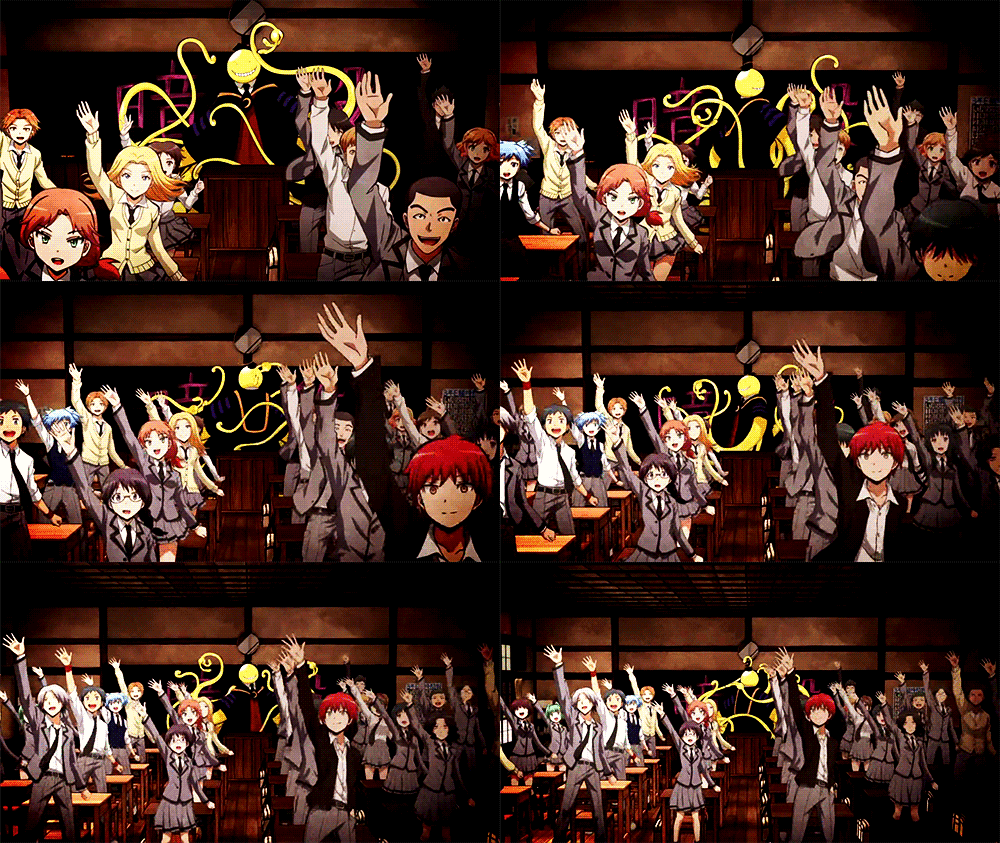
Image result for assassination classroom gif

Assassination classroom has 48 episodes to work with of course, plenty of time to give its characters their rightful places. But it uses those 48 episodes exceedingly well, and I don’t remember the last time I’ve seen anything handle such a large cast so expertly, especially when they’re all in the same area for most of the show, following the same plot thread.

Image result for assassination classroom gif
Its also hilarious

As you can see, there are many ways to handle large casts, with multiple plotlines or just one. Your mileage may vary, but make sure you know your characters and just how much time they deserve in the spotlight. Balance is the key and we want to love your characters as much as you do!

Friday, October 14, 2016

Lessons from Anime- Durarara and Rolling with the Punches

And we’re back with more Lessons from Anime!

I know I talked about Durarara last week, but honestly, I really have to talk about it again because I love this show. It honestly reshaped some of perspective on storytelling and showed me a different way to handle serious dilemmas, philosophical discussions and fantastical elements.
The fantastical elements are the focus of this particular lesson.

One of the pitfalls of any fantasy book, show or movie is the dreaded info dump. Its very easy to fall into because, hey, world building is hard and when you’re trying to bring the reader into a complex world, you just want to spout all of the information from the beginning. Its dfficult sometimes to trust your reader to follow you, or to know how much to give them at the front. I always struggle with this in my fantasy because I have a tendency to give myself over complicated worlds to work with. Thanks me.

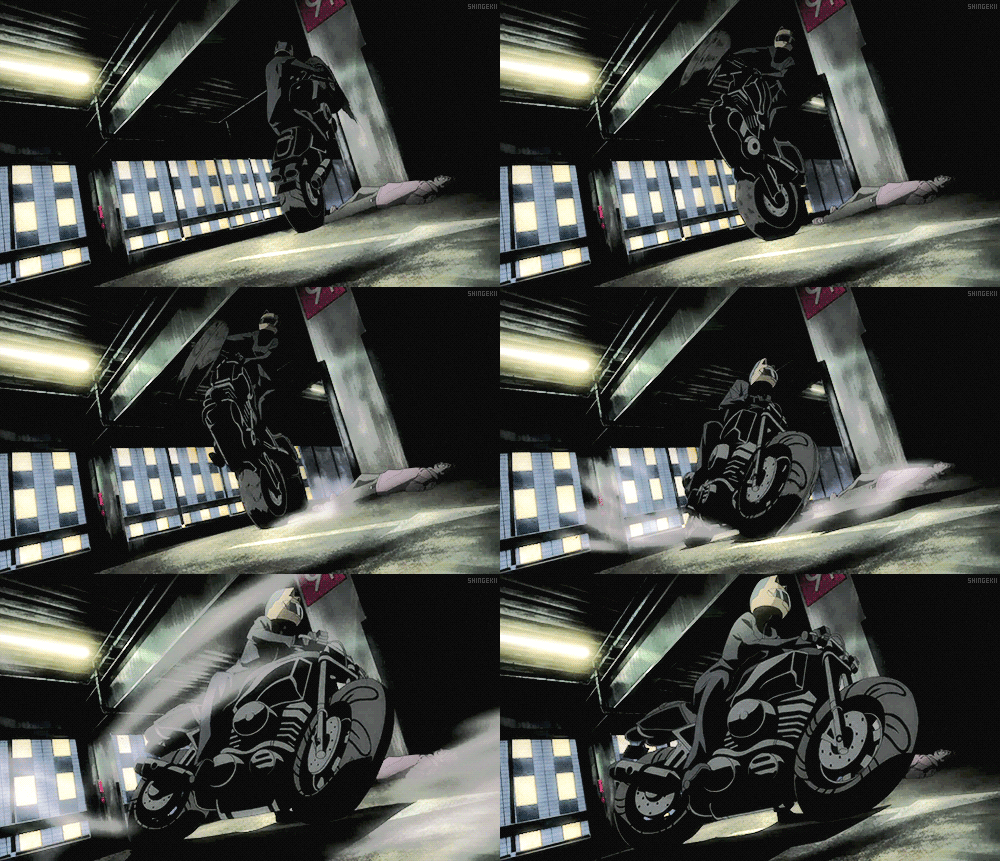
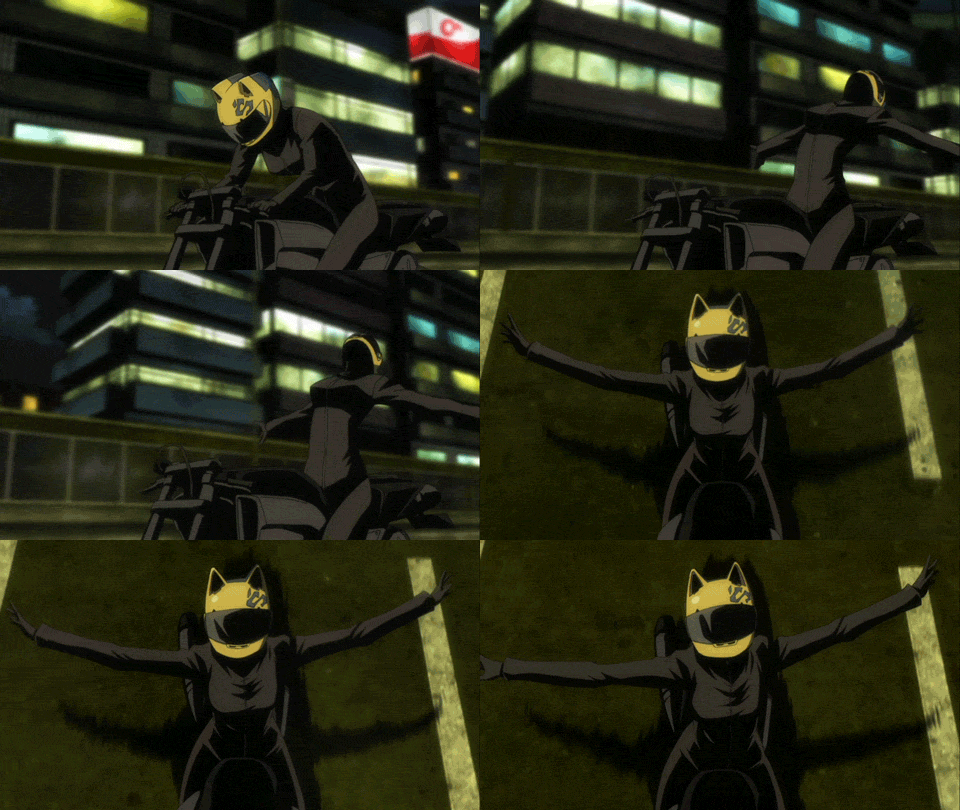
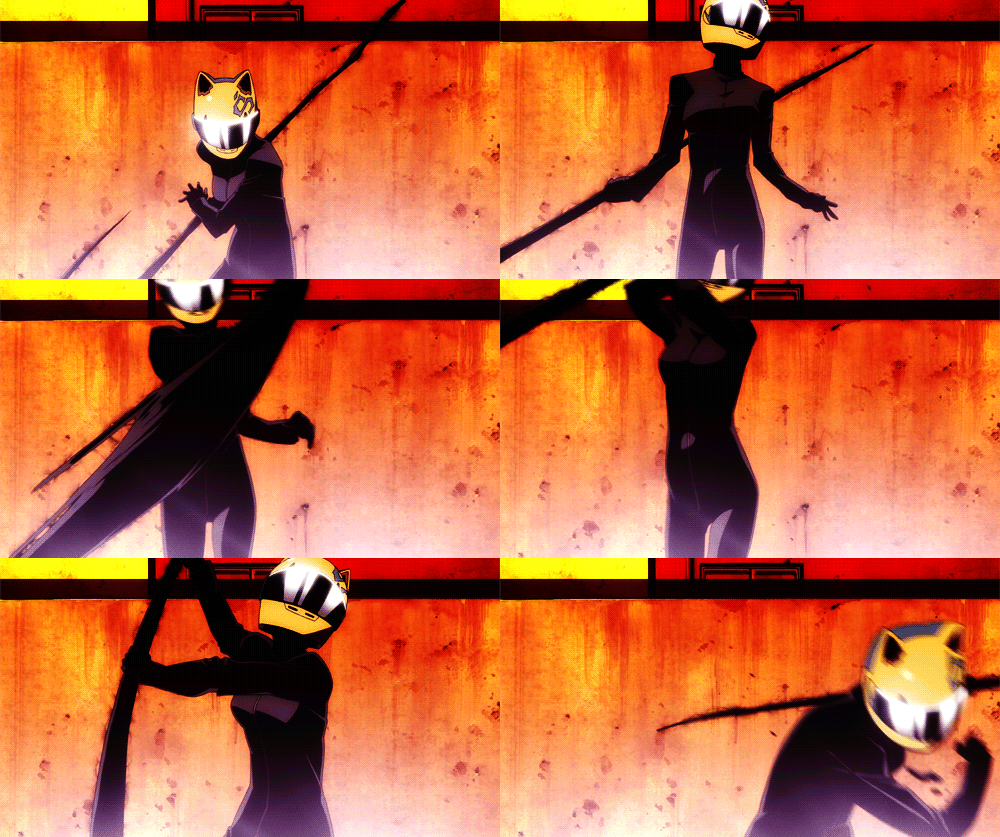
And then there’s Durarara. This show sports all sorts of fantastical things. A headless Irish fairy that rides a shadowy bike instead of a horse. 

Image result for Celty gif

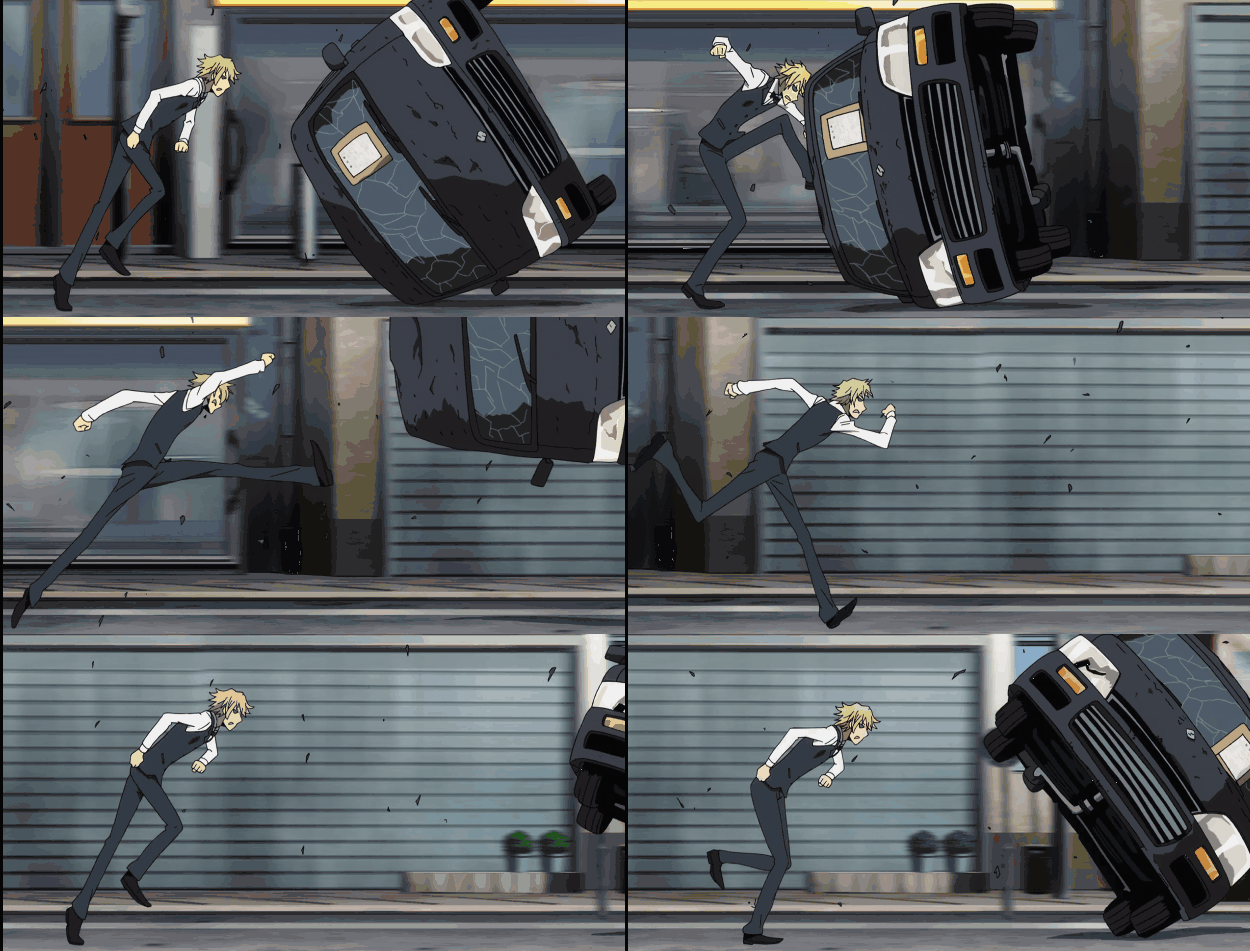
A man who’s body has no physical limits, allowing him to pick up and throw things like vending machines and light posts. 

Image result for shizuo gif

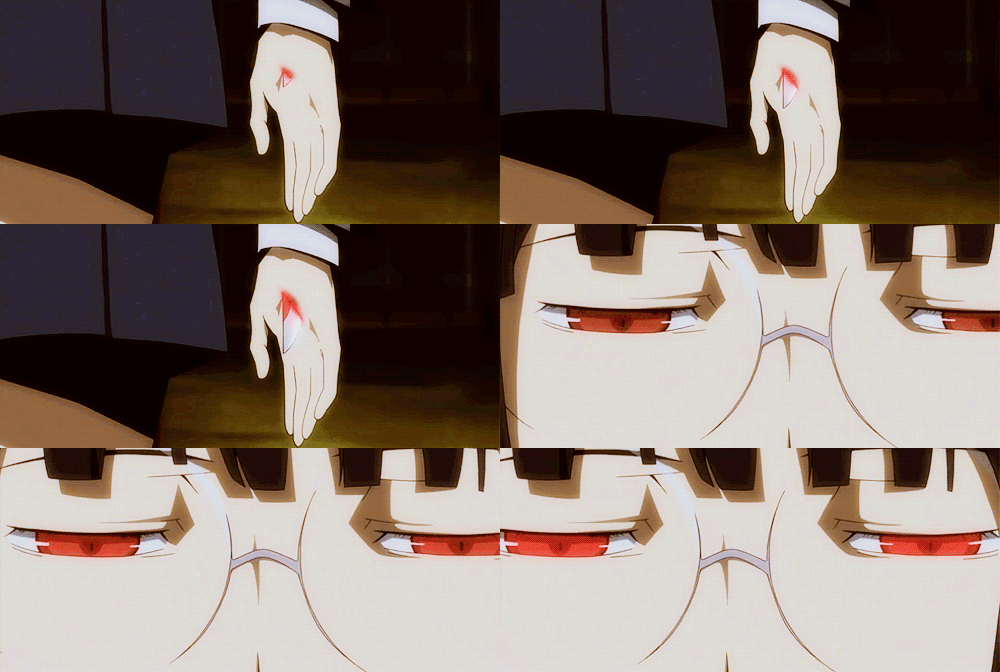
A sword that loves humans and can control everything it cuts. 

Image result for durarara saika gif

And that’s just the beginning of the strange residence of the city of Ikebukoro. Most stories would try to contextualize all of these strange beings and explain why they exist in this story. And while the characters themselves are given a fair ammount of backstory, the show never really tries to explain the fantastical elements. They’re just there. Because it said so.

And you know what, there’s something kind of wonderful about that sort of storytelling. While other books sit you down for a history lesson, Durarara grabs you by the hand and asks you to roll with the punches. The explanation doesn’t matter, it’s the story and how the characters bounce off each other that the audience cares about. Don’t get caught up in the details. Enjoy yourself and have fun!

Image result for Celty gif

Now I’m not saying that Durarara has no world building. It explores all of its fantasy elements from a psychological perspective. And all of its elements and characters, once introduced, remain consistent throughout the run of the show. Once or twice it forgets to adequately explain something or a strange character falls by the wayside, but for a sixty episodes show sporting a cast of thousands, it does a good job with what it has.


And I think we, as fantasy writers, can learn a lot from Durarara. So next time you’re about to info dump, remember to trust your audience to follow you. Be sparing with your information, grab them by the hand and yank them right in. They’ll be able to keep up. They’re smart. And the world ultimately isn’t the most important. It’s the story within it that matters.

Friday, October 7, 2016

Lessons from Anime: Why so Serious? (Baccano and Durarara)

Alright, we’re back with a new stretch of Lessons from Anime. I know some of you (many of you) aren’t anime watchers. I understand. Jumping into anime is as vague as jumping into movies. Because Anime is only a medium of Japanese animation and can cover every genre under the sun. Also, it has a tendency to explore some weird stuff. I usually don’t recommend people jumping into Anime without a world weary guide of sorts to give them recommendations.

However, once you’re into the anime craze, it’s hard to stop, and I’ve found that my writing has always been influenced by anime over everything else. Many of my favorite stories from any medium come from anime. So as we pick up this series again, we’ll be looking at why exactly I take so many different writing lessons from these shows and how you can too, even without watching them (Though I highly recommend many of the shows discussed on this series). With that said: Let’s jump in.

Ever heard the phrase ‘why so serious’? Of course you have. It’s hard to escape the Dark Knight or the legions of joker cosplayers that smear makeup on their face and call it a day. I love the Dark Knight, of course. Its one of the only Christopher Nolan films I remotely enjoy. That’s because Christopher Nolan films take themselves extraordinarily seriously to the point of being boring and melodramatic. The joker, the chaotic evil villain of the evening, is the only one to lend even a hint of humor, however dark. He brings up a good point in ‘why so serious’. Namely, why is it that violent, action movies have to take themselves so gosh darn seriously?

Image result for Baccano gif

Image result for Durarara gif

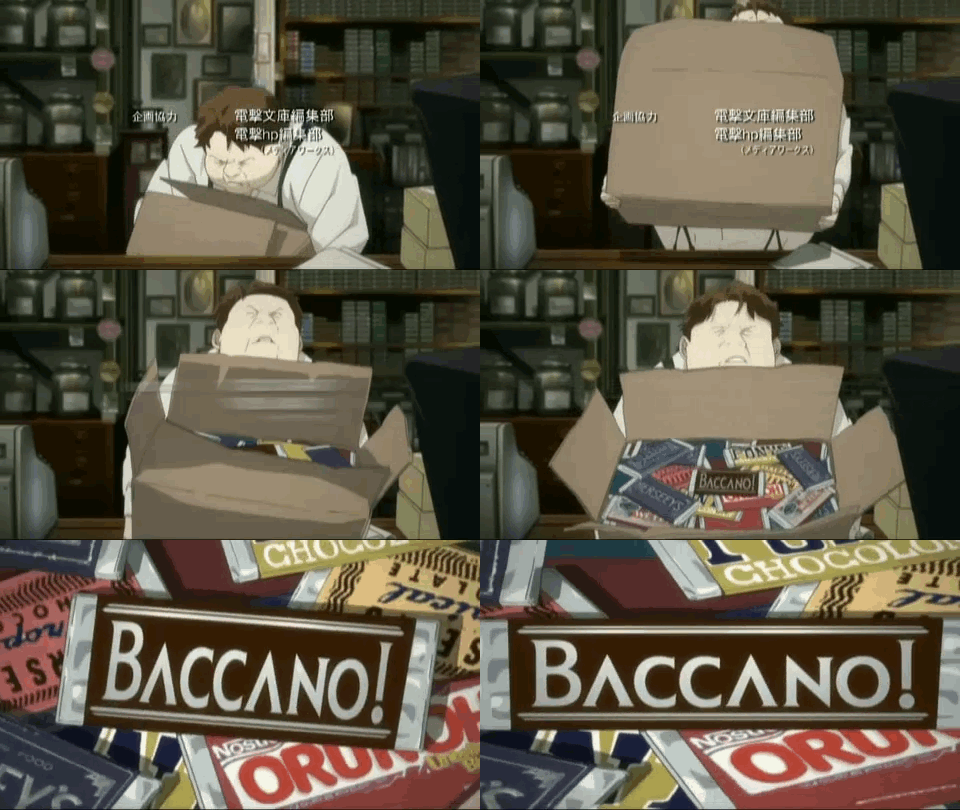
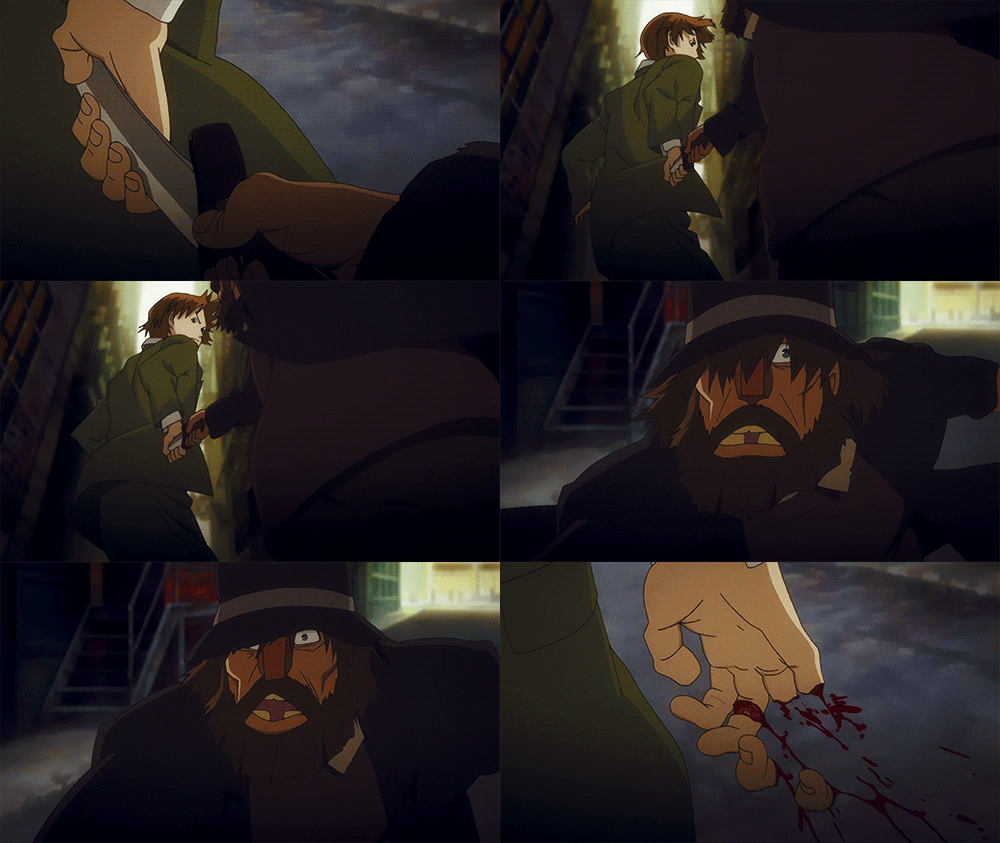
Baccano and its spiritual successor, Durarara, are two shows filled with dark concepts on paper. Baccano has mobster shootouts, torture, sadists and a whole lot of defingerings. Durarara has gangs, headless riders, suicidal thoughts and serial killers. It would be easy to make either series into a super serious battle to death sort of story.

Image result for Baccano gif
Don't worry, he'll be fine
But that wouldn’t be in keeping with the ‘why so serious’ spirit, would it?

Both Baccano and Durarara are just so much fun. And not even in a dark sense of humor sort of way. Baccano has such an entertaining, light hearted tone that it would almost fit in with the other Saturday Morning Cartoons. You know, if not for the blood. Yeah, it could take itself more seriously, but when half of your characters are immortal and the other half are kind of nuts, why worry about stakes? Its about how these people bounce off each other. Thieves like Issac and Miria steal by their own strange moral code and spread happiness to everyone around them. Jacuzzi Splot cries, but then goes in and kicks ass with his pyromaniac girlfriend. Ladd Russo kills a lot of people but he’s just so filled with puppy like excitement, it’s hard not to love him.

Image result for Baccano gif

This show isn’t about the black and whites of morals but rather all of those little greys in between. None of the characters fall on the lawful good section of the alignment spectrum--or the lawful spectrum at all--but that all makes them so much more fun.

Image result for Baccano gif

Durarara has more of a point than Baccano (which exists for the purpose of being shallow fun), and has its share of serious topics. It explores the desire for power, the effect of social media on the modern world, and of course, suicidal thoughts. But it all operates under a more optimistic view of ‘life happens and you get through it’. The world isn't really so awful as it seems.

Image result for Durarara gif

Image result for Durarara gif


Characters you would think are irredeemable love and live and laugh. They all have comedic moments. They have dramatic moments too. But in your heart, you know that the show is going to take an optimistic spin. It’s not the sort of show to kill off its cast of thousands.


Image result for Durarara gif

And on top of that it has some of the most ridiculous stuff. Durarara is not bound by the mechanics of reality and watching a man throw a fridge at another man has never been so funny. It has twisted love stories, many of which will even have you asking ‘why’? But you get the feeling Durarara is never making any moral judgments. It’s just showing a bunch of screwed up people living their lives.

Image result for Durarara gif

But why does it matter? Why are shows like these ultimately more effective than the ‘everything is dark’ Christopher Nolan approach? Because humor, however dark or ridiculous, is often the real coping mechanism we need. And optimism, honestly, is so much more valuable than cynicism. Baccano asks ‘why so serious’ and Durarara insists ‘the world isn’t as bad as you think’ and honestly, I get so much more hope and enjoyment from both of them.


Never take your stories or characters too seriously. Give them room to enjoy themselves and breathe. Sometimes issues are best explored through a little humor. Sometimes a good laugh over the craziness of life is worth more than tears.