Pages

Wednesday, June 8, 2016

Heroes and Heroism: The Anti-Hero vs. The Line

This week, let’s look at what many might consider the opposite of the moral center: the anti-hero. I’m a villain lover as many of you know from all my fangirling during the villain series I did a little while back. Which means I’m also a fan of a complex hero who walks the line between the dark side and the light. Simply put, an anti-hero is a hero in a story that lacks the typical heroic attributes. However, they are still considered a hero and not a villain because of a few key redeeming features.

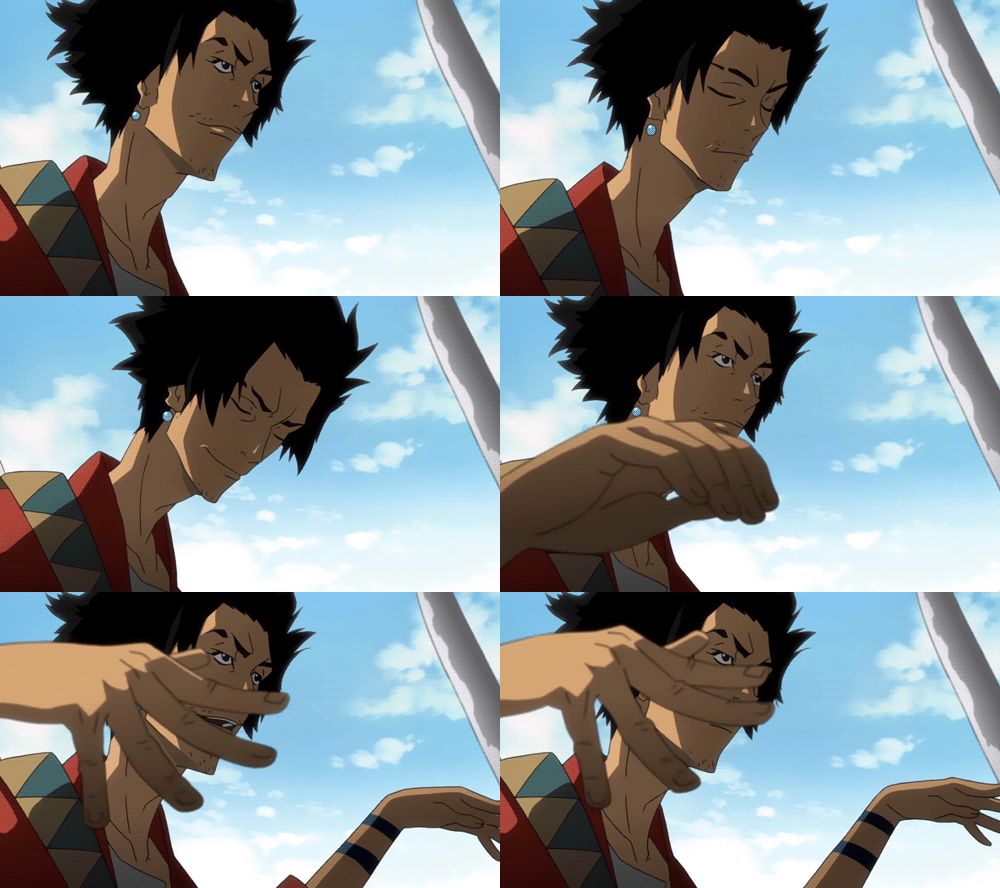
It follows then that the anti-hero’s main obstacle would be the moral line between good and evil. This line can affect them on an external or internal level. On an external level they might work outside of the normal moral bounds of society. They could be a thief or a cold blooded assassin. Or they could just be a general asshole. Mugen from Samurai Champloo is a good example of this. 

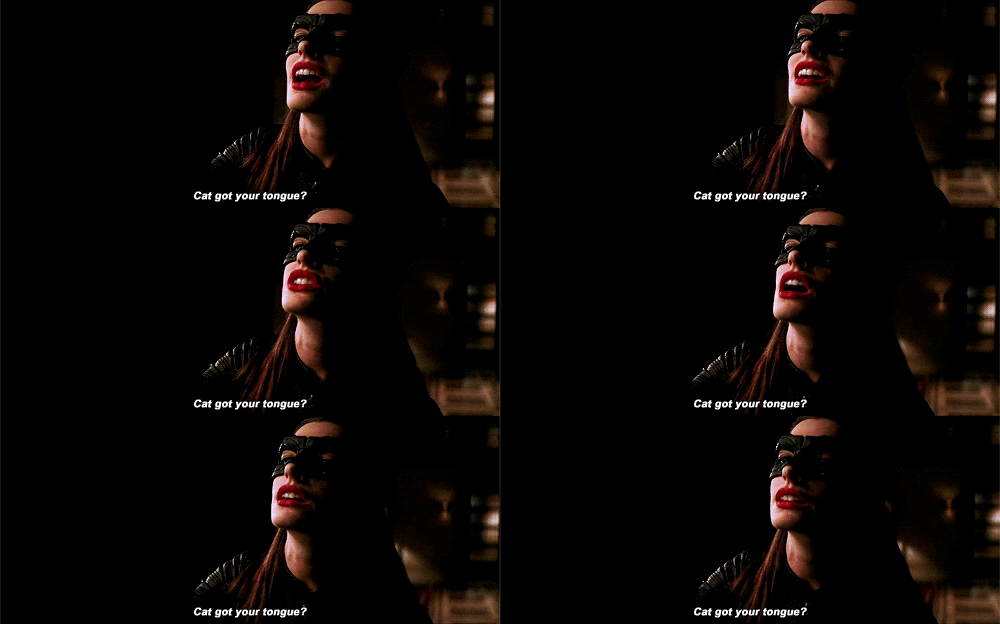
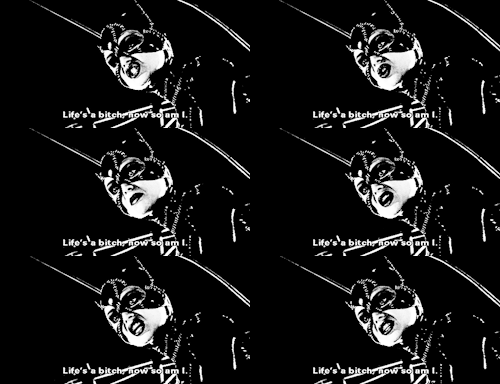
So is Cat Woman from the batman universe, who finds herself on the hero side of things as much as the villain side.


But that moral line also is present on an internal level. The hero might struggle with becoming a monster or, depending on what side of the line they tend to, going soft. Hei, the hero of Darker than Black, struggles with being a contractor, which are said to be monsters by nature. He works for a shady organization dealing with difficult contractors, but he often doesn’t follow orders directly, being softer than he lets on.


This moral line provides a lot of interesting conflicts, both internally and externally, but a key part of the antihero’s journey is that they ultimately do the heroic thing in the end. That’s what makes them an anti-hero rather than a tragic villain. Its this ultimate move toward the lighter side of thing that gives them their arc. 

Even if they’re still kind of an asshole, it’s the results of their actions that ultimately make a difference.

Friday, May 13, 2016

Hero Spotlight: Vash the Stampede and Astrid

Who’s ready for a spotlight on two moral characters who find everything they believe called into question by adverse circumstances? Sounds like a proper Friday pick me up, doesn't it?

The first character I want to spotlight today is Astrid, from the Gone series. Astrid is a brilliant and also religious student on Perdido beach. When all people over the age of 14 disappear from an area called the Faze, she is one of the older survivors and many look to her for guidance. In the beginning, despite a lot of terrible things happening, she remains resolute, keeping to her values and convincing herself that there must be a reason for this cataclysmic event.

But as things get tougher throughout the books, and she is put into some serious moral quandaries regarding her special needs little brother, Little Pete, Astrid gradually changes, gaining a more existential view on life and even being forced to break essential rules that she believes would send her straight to hell if her God existed. To watch the slow crumbling of her faith is heart breaking but also very relatable and as a Christian myself, I think it’s an interesting exploration on how hard times can cripple faith.

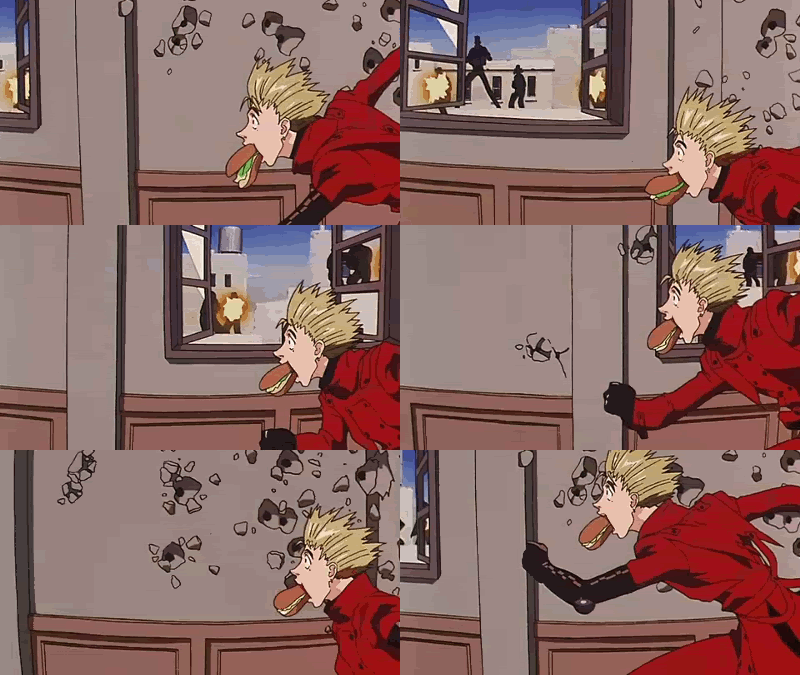
The second character I want to spotlight is Vash the Stampede, a wanted man known as the human typhoon, from Trigun. I've talked about Trigun in my lessons from anime segment here, but its definitely worth bringing up again for its main character. Who is a goof ball. 


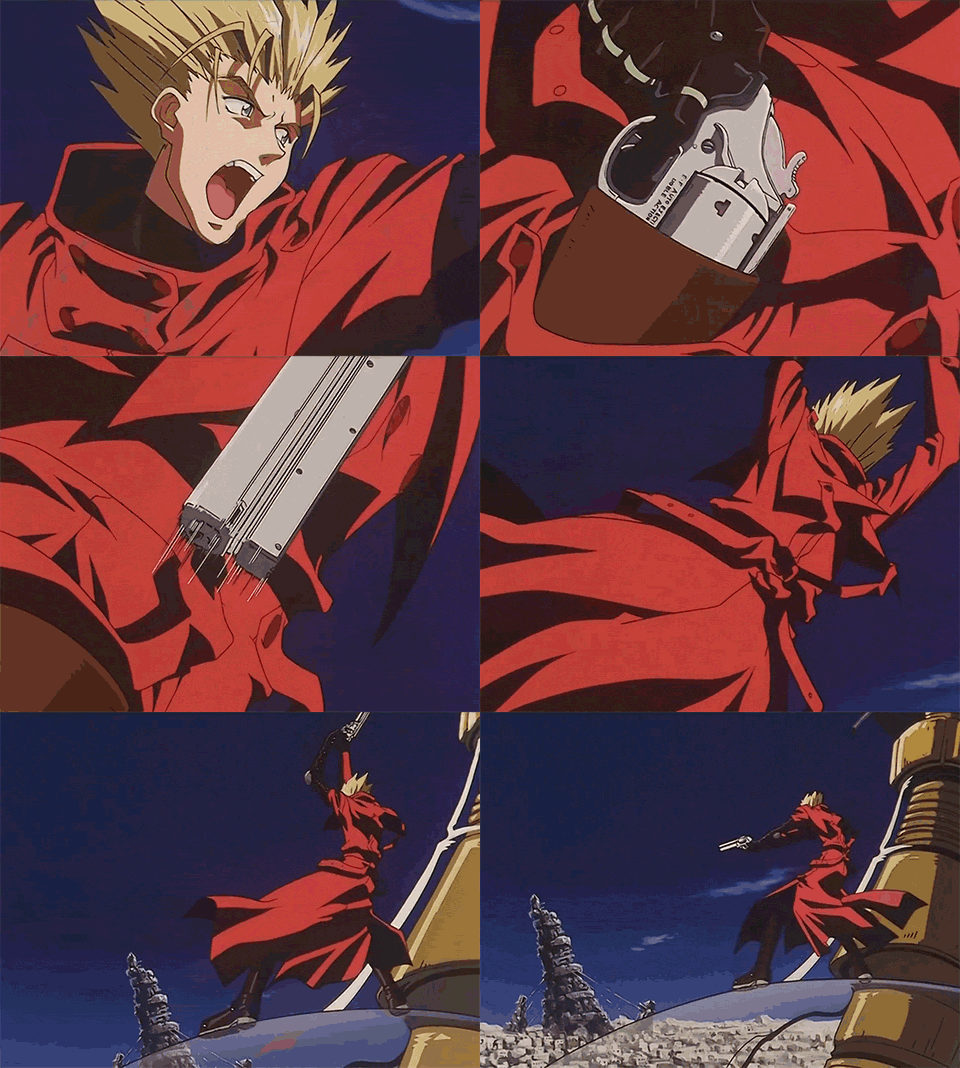
But he also has a destructive history because of the enemies that pursue him, trying to get a piece of the price on his head. Despite this, however, he has a strict moral code against killing people, valuing all human life. Even that of his enemies. He downright refuses to kill and because of his incredible skill, he is often able to escape impossible situations, against the odds, without breaking his rule. And unlike Batman who is still pretty violent, Vash is a genuinely peaceful dude who would just as soon have a quiet life.

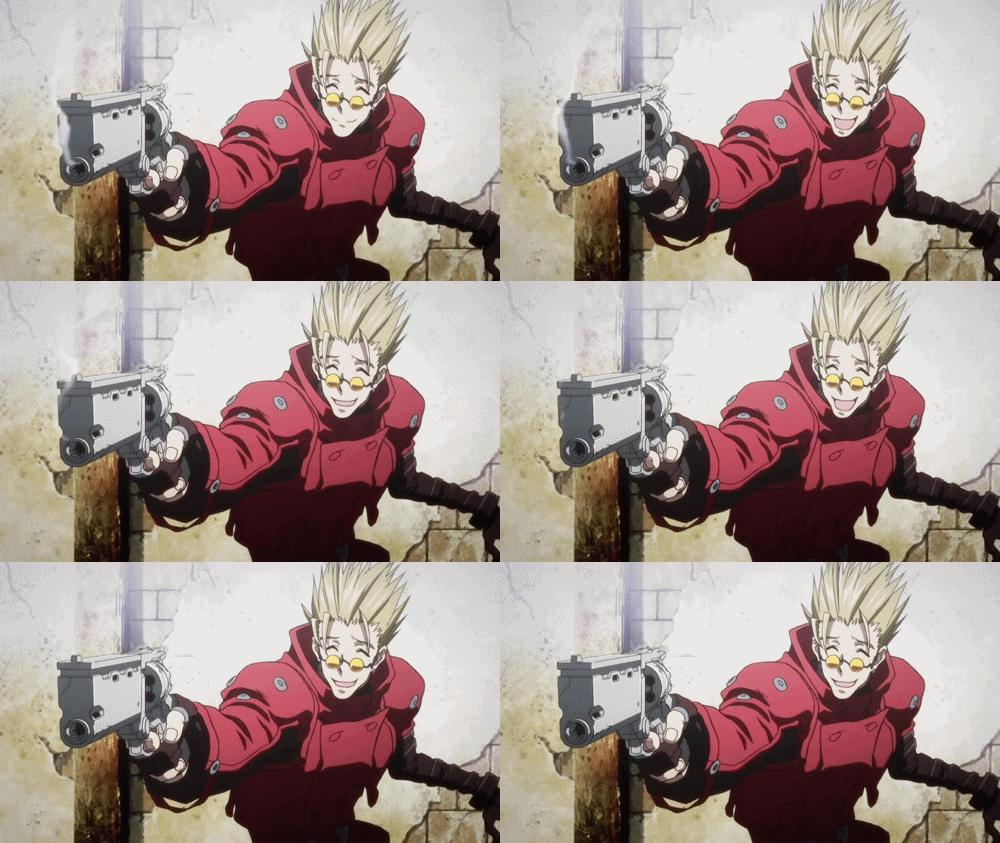
Just look at that smile. Adorable

With each enemy Vash faces, it would seem easier to just kill them but Vash is admirable in how much he refuses to. But when, at some point, he is forced to break is rule in a heart wrenching scene, he falls into depression and must learn to live with himself. Its some incredible stuff and a great observation of moral grey areas. As Vash’s enemy Knives says, if you save the butterfly, the spider dies. You cannot save everyone, and sometimes a choice must be made.


Vash is a sometimes frustrating character for how steadfast he is, but we still love him for it. As the moral center he works well and I appreciate that the show chose to break him down to see what he was made of.


At his core, he is still made of love and peace, moral grey areas or not.

And I cannot overstate how much of a goofball he is
Both of these characters are a good example of a moral center going through tough times. One of them comes out of the ordeal more negatively than the other, but in times of crisis, a character can go either way with their beliefs, continuing to embrace them, or abandoning them for a new code. Both are reasonable methods to explore your moral center characters.

Hope you enjoyed and next week we take a look at the opposite of the moral center- the anti hero. Until then, happy writing!

Wednesday, May 11, 2016

Heroes and Heroism: The Moral Center vs. the Moral Grey Area

Now this right here is one of my favorite tropes. We’ve talked about the brawny heroes and the brainy heroes but what about the moral center? The moral center is often defined as the most virtuous of the heroes, always working to do what is right, no matter what. They have a very defined sense of justice and morality, and often have firm convictions. They will always stand up for what they believe, for good or for ill.

These are often very emotional characters at heart, and they keep the group together through tough times. They are very empathetic and caring, but often get flack for being too soft. In contrast, they also can get flack for being too harsh, if they judge others based on how the measure up to their convictions.

So what then is the Moral Center’s greatest enemy? Simply put: a moral grey area. This is the kind of situation that comes along and there is no easy answer. The situation doesn’t fit perfectly into the box set up by their beliefs and they must figure out how to overcome it, with mixed results. In this case, there are two possible outcomes- Either their values are changed forever, or their values ultimately triumph.


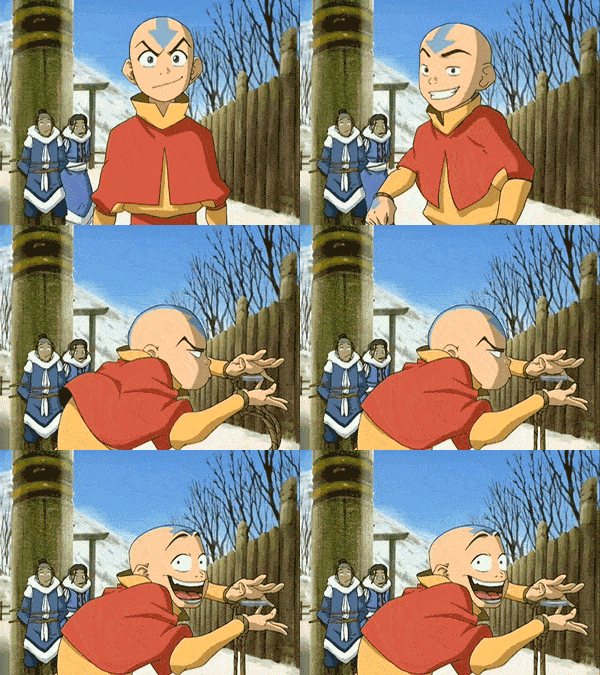
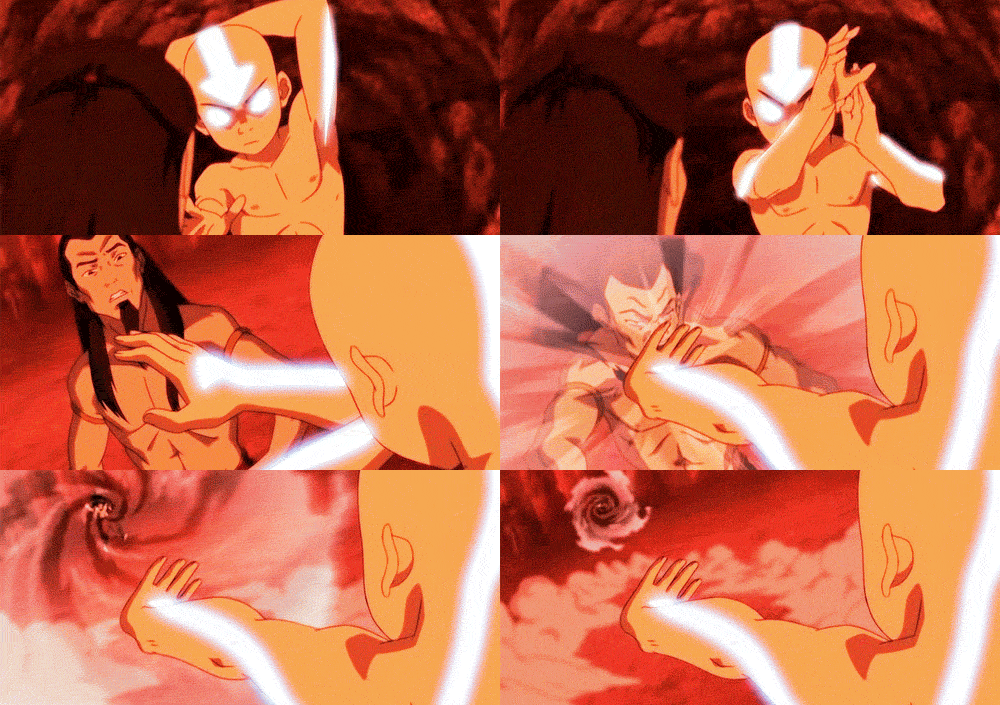
Aang, for example, a moral, airbending monk from Avatar: the last Airbender, most confront his aversion to killing people when he is tasked with killing the Fire Lord. Is it alright for him to break his beliefs if it means getting rid of a dangerous threat?


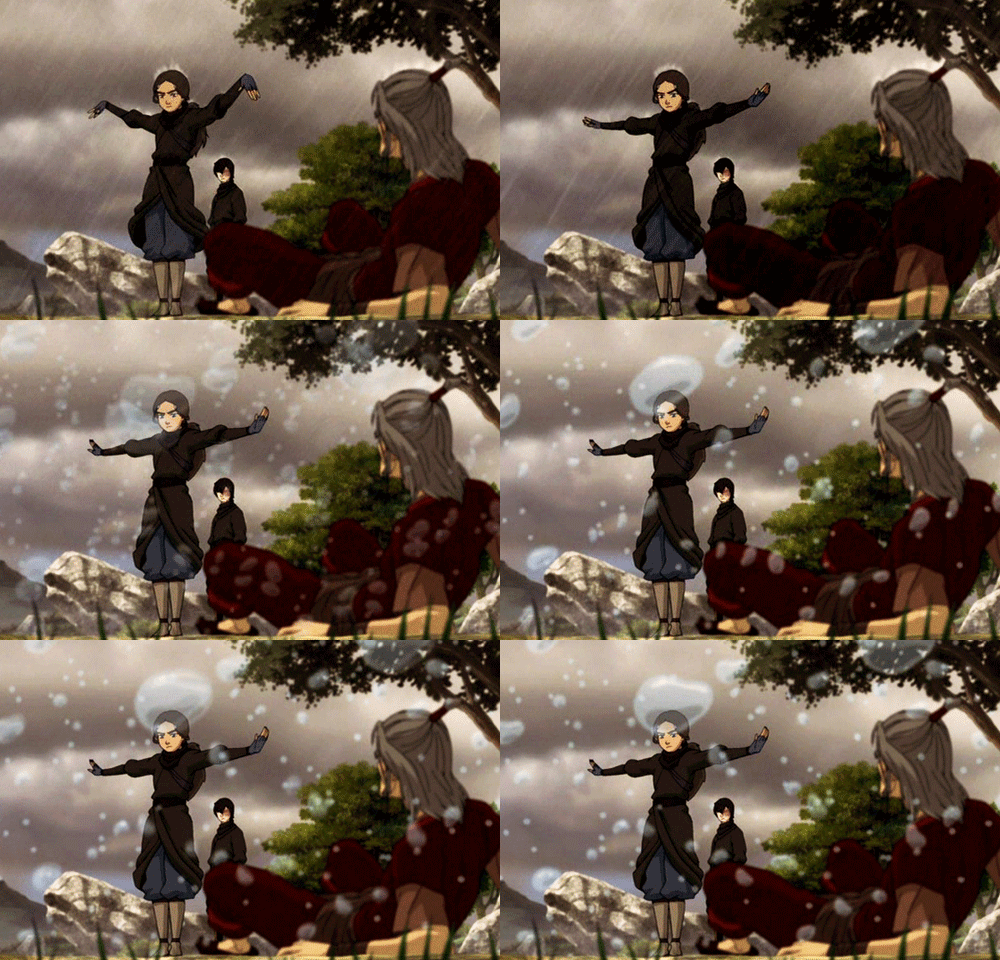
This show, in fact, has more than one moral center, as Katara often finds herself as the heart of the group, keeping everyone positive and together. But she is tested when she must face the man who killed her mother and choose between the revenge she so badly wants and what she knows is right.


Then there is Alphonse Elric from Fullmetal Alchemist. 


He is the moral center to his brother’s ambitious, intellectual nature, but he will do anything to help his brother and him return their bodies to normal. But will he be willing to sacrifice others for their cause?

These kinds of tough situation really show what your character is made of and if their beliefs are more flimsy than they let on, they will likely crack. Or perhaps they will stand strong under the pressure. This archetype is also great for observing the moral grey areas of everyday life, because while absolutes are easier to understand, we can’t pretend that everything fits into simple boxes. And that’s just one reason why I enjoy this archetype so much.


On Friday we’ll take a look at two characters who are truly changed by their confrontation with the moral grey area. Until then, happy writing!

Sunday, May 8, 2016

Hero Spotlight: Cecila/ Marco and Cassia/ Ky

This week on the spotlight we look at two of my favorite pairs of lovers. And while I talked in length about how popular this trope is in young adult fiction, I should mention that its hard to get me invested in this sort of plot. I like my romance as a spice in my fiction rather than the main course. Something along the lines of Harry Potter or Mistborn (Yes, I can work this series into literally anything). What’s more I often find that stories with romance as the core have a hard time stretching themselves out and giving themselves an engaging plot. One of my main problems with Twilight was just how meandering it was. I felt like the book could have been cut down to a much shorter, succinct story and have been better for it.

However, with that said, these are two books where the romance is the core, and they still manage to keep my attention.

First, Ceilia and Marco in Erin Morgenstern's, The Night Circus. This book is like dark chocolate to me. The beautiful prose paint the world of the mysterious Night Circus, the arena for a fight to the death between the pupils of two renown magicians. But of course, these pupils end up falling for each other, and striving to find a way around their fate.

Setting and atmosphere aside, the reason why these characters work is they stand well on their own. Ceilia and Marco both have a ton of personality to the side. Ceilia is gutsy, passionate and very powerful. She’s the natural magician, exhibiting potential from a young age. Marco however is more controlled and studious. He’s the hard worker. They both have different means to achieve their feats but they’re both powerful in their own right. However, instead of fighting to break the other, they turn the competition into a way to create different wonders throughout the circus for each other. Like extravagant love letters.

I also appreciate how Ceilia and Marco don’t have a weird misunderstanding in the third act that causes them to turn on one another. The conflict surrounding them is enough, and they don’t need any more conflict between each other. Ultimately, the way they handle their resolution is smart and beautiful. I fall head over heels for this book.

The second book we’re talking about in this spotlight is a dystopian. Its really difficult to pull of the lover heroes in a dystopian because often, the stakes are so much higher. Take this tweet from this perfect account:


However this particular dystopian makes the smart choice by starting small. I’m talking about Ally Condie's Matched and the star crossed lovers Cassia and Ky. The plot of the first book is almost entirely revolved around a romance hinged plot. Cassia is matched with her best friend Xander but due to a mix up, she may actually be matched with a boy named Ky. And that is the crux of the conflict. It’s nothing society breaking yet (like in the later books). So it makes sense why this is the largest conflict at hand.

I love Cassia because she was a relatively reasonable heroine put in a genuine dilemma and this is one of the few occasions when a love triangle actually seemed to make sense (and I don’t say that easily). Cassia has hobbies and feels like a fully fleshed out person. And I absolutely adore Ky, who I found to be an amazingly interesting and reasonable guy as well. I love it when the lovers are actually reasonable human beings and don’t get in pointless fights to drag out the plot.

Better than that, these two worked well together, and it was one of the rare times the love triangle went in the direction I wanted it to. The romance becomes more of a sub plot in later books when bigger conflicts come to the surface, and while it still plays an important role, the characters had their priorities in order.

And maybe these spotlights give you an idea of how to pull off the Lover characters: Characters that stand well on their own, chemistry based on interests, reasonable handling of conflicts, and priorities in order. Because with the Star crossed lover plot, the outside world is often plenty of conflict to keep your book interesting. And these are two couples who had me on the edge of my seat whispering ‘kiss’ the whole way through.

Wednesday, May 4, 2016

The Lovers vs. The Cost of Love

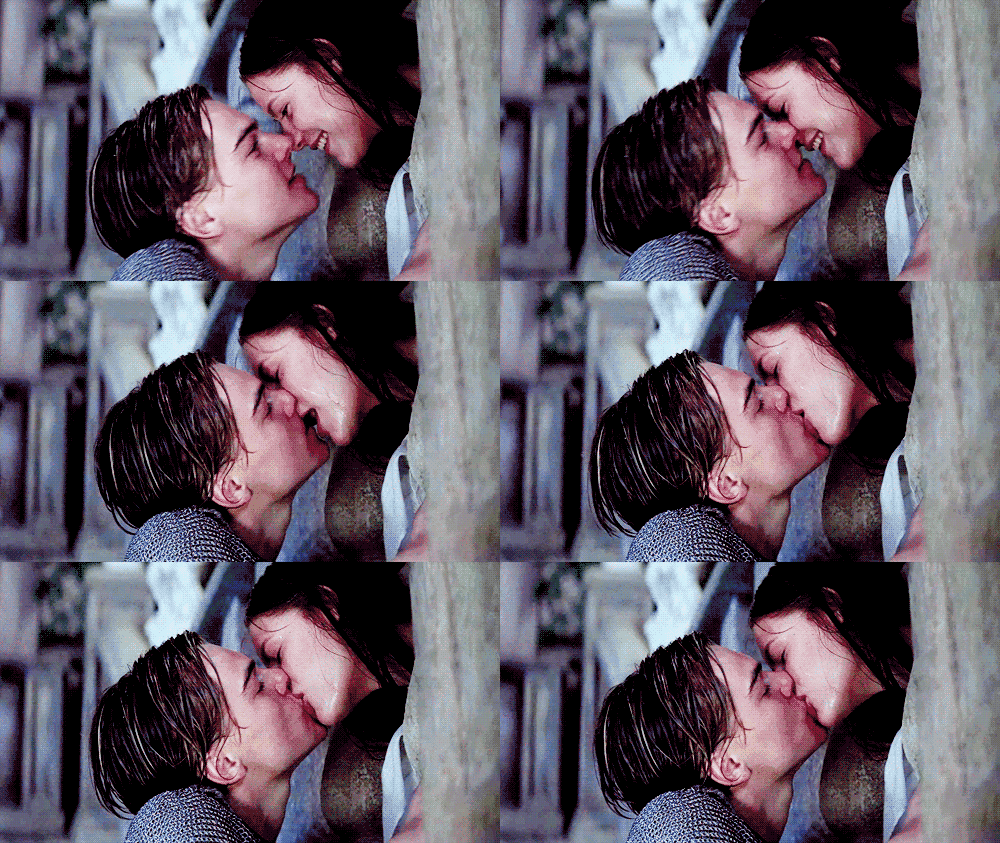
This week we look at a type of hero that often comes in pairs. The lovers. The star-crossed lovers is a trope as old as time. Guinevere and Lancelot. Romeo and Juliet. These are the two main characters that adore each other even though everyone says they shouldn’t.

And usually one of them is played by Leonardo Dicaprio
The obstacle the lovers have to struggle against is a bit obvious. Their ‘differences’ form the main bar to their relationships, and these differences can take a lot of forms. For instance, an ever present fiance or arranged marriage for the sake of duty can bar one of the lovers (usually the heroine) like in Titanitc.
And isn't he a charmer?
Sometimes the lovers come from feuding families like in Romeo and Juliet, different races like in the musical adaptation West Side Story or different income brackets like Jasmine and Aladdin. Or even different species entirely like in Twilight and so many other paranormal romance novels.

Sometimes the whole of society itself is against our lovers, as is often the case in dystopian romances when the relationship is not sanction or, worse, is on opposite sides of a life or death competition.
The key however, is these are all outer differences. The lovers themselves connect on some fundamental way, and their internal similarities make them perfect for each other. Theoretically. I mean all that Romeo and Juliet had was very powerful lust. In fact in many of these love stories, the love tends toward the shallower. All that matters is that they’re really in love. Of course this trope can be pulled off right (which we’ll discuss more in the spotlight).

Its not hard to see why this trope is popular, especially in YA fiction. Many teenagers are getting into their first relationships, sometimes with intense parental disapproval. And lets face it, its tempting to fantasize and ‘us against the world’ scenario to justify your relationship. Even if said relationship only lasts for a few months.

Ah high school. How I don’t miss you.

Regardless, this is a powerful hero type because it involves two people instead of one and it is based very strongly in emotion. So if it’s played right, you can have your audience crying in their seats.


GET ON THE DAMN RAFT JACK!

Friday, April 29, 2016

Hero Spotlight: L and Hermione

Today let’s look at two examples of great intellectual characters, one who meets their intellectual match in the form of a person, and one whose intellect is tested by more extenuating circumstances.


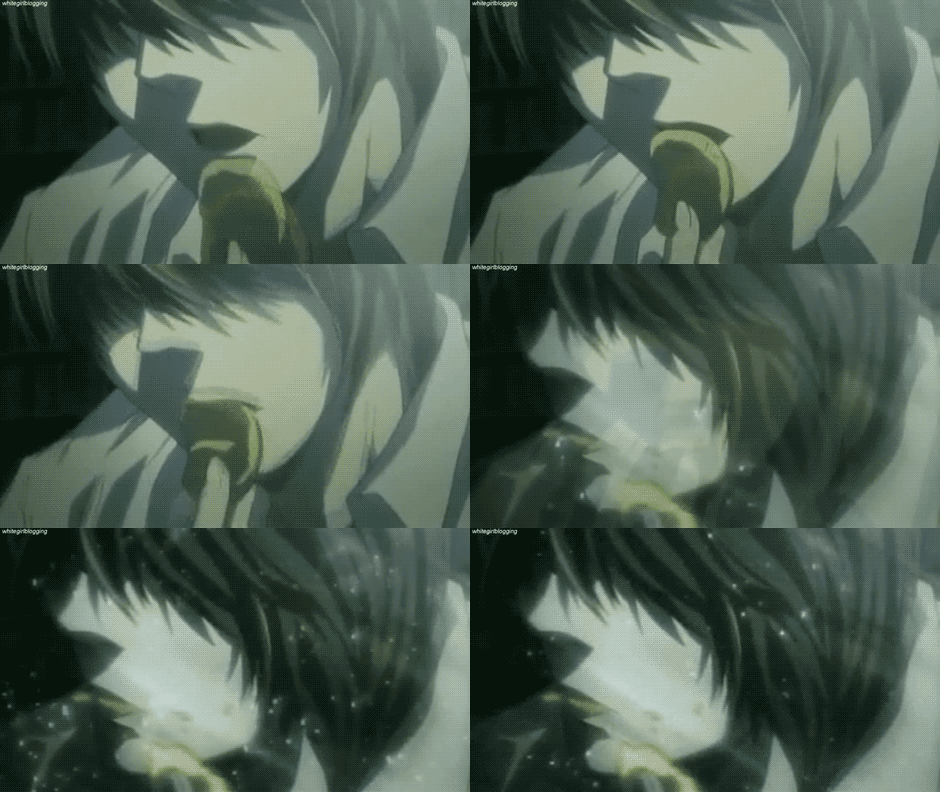
First let’s look at L. Yes just L. L is the hero of an anime called Deathnote. I know some of you may be thinking that Light is the hero, but he is clearly the villain in this pair. This sherlockian relationship is what happens when Moriarty is your main character. And he gets a magical notebook that can kill anyone just with a name. And he likes potato chips.


Yeah, this was my first anime.


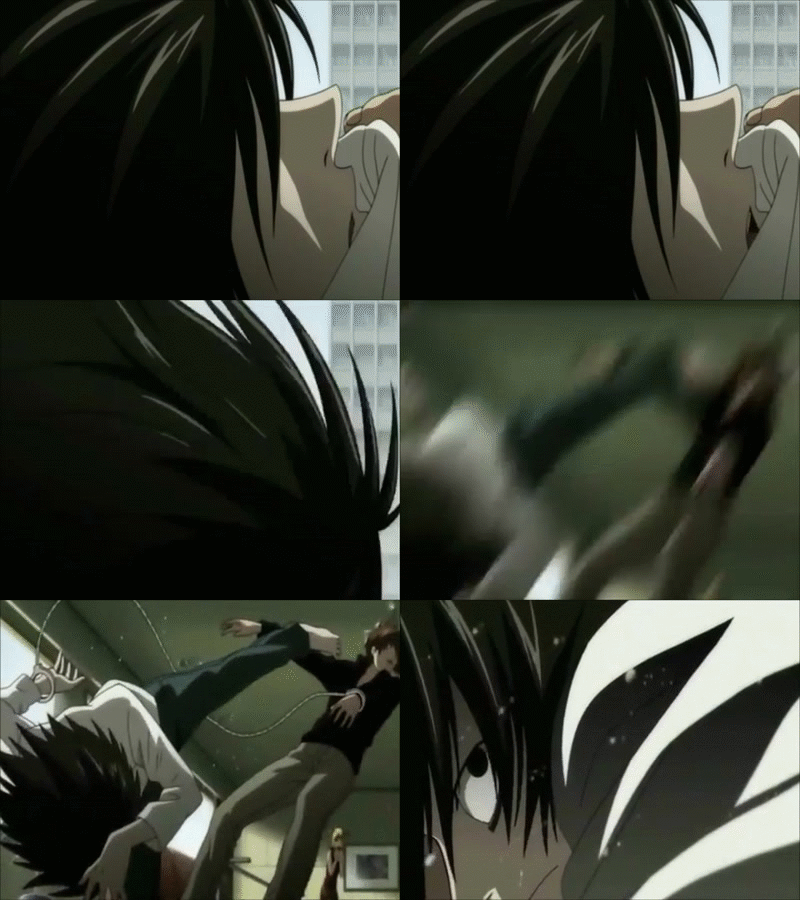
L, however, is the detective assigned to his case and the entire first season of Deathnote is devoted to their amazing back and forth. He is intellectually similar to Light but distinguished from him in his commitment to Justice. L at many turns, is too smart for Light and it takes a stunningly complex, long, overarching plan for the villain to finally get the jump on him. L is an awkward sort of genius utterly committed to justice, or what he believes is justice, but it’s also clear he respects Light in a lot of ways.
Despite kicking him in the face
Since the anime isn’t from L’s perspective, we don’t get to see into this head, but we root for him until the end. L remains one of my favorite anime characters. Episode 25 is exceedingly painful for me. Those who have watched the anime know why.



Another character near and dear to my heart is Hermione. Any bookish girl who grew up reading Harry Potter looked up to Hermione in all of her brilliant awesomeness. And while of course she is brave and tough and many other things, her chief quality is her amazing brain. She knows just about everything about magic and is at the top of all of her classes. And of course, this intellect gets her friends out of trouble many times. They would actually be dead without her.


Hermione’s intellect is constantly tested by the situations around. Sometimes her brain power isn’t enough, which she even admits in the first book. And she’s certainly not the best at everything. Harry beats Hermione in potions with the help of the Half Blood Prince’s book and she struggles in divination. Her greatest fear is failing her classes. In many ways, her intellectual match can also be her high expectations for herself.


But what makes Hermione such a strong character is her bravery. She is a Gryffindor after all, and even in spite of these fears and failures, she fights tirelessly to protect her friends, eventually evolving from a know-it-all, to a woman wise beyond her years.

And she punches Draco in the face

That's all for now! See you next week as we tackle our next hero archetype: the lovers. Until then, happy writing!

Wednesday, April 27, 2016

Heroes and Heroism: The Intellectual vs. Their Intellectual Match

Last week we looked at the fighter so lets jump to the other end of the spectrum to those heroes that rely on brain rather than brawn. This is one of my favorite heroic types: The intellectual. 

The intellectual is, in many ways, the opposite of the fighter. They are more reserved and prefer analyzing a situation before rushing into it. Their greatest asset is their brains. And they have no problem bringing others down a peg with their superior knowledge.


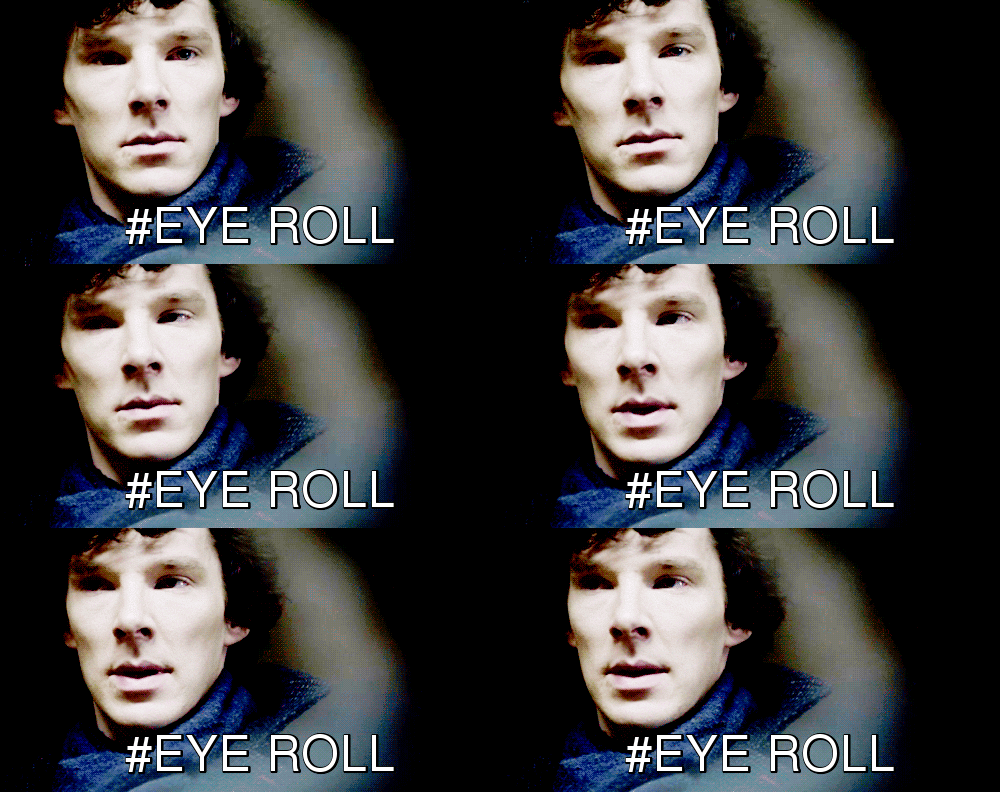
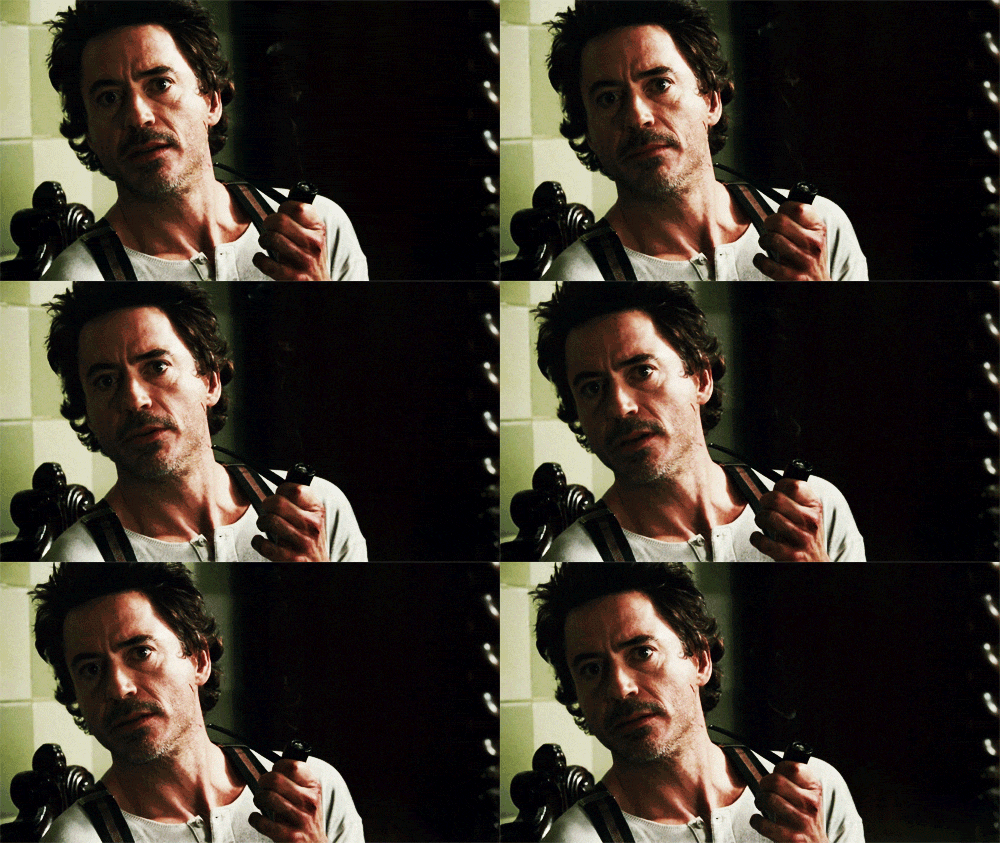
There are a million and two examples of the intellectual in fiction, movies and TV. Of course there are many, many different versions of the great Sherlock Holmes, from Robert Downey Jr.


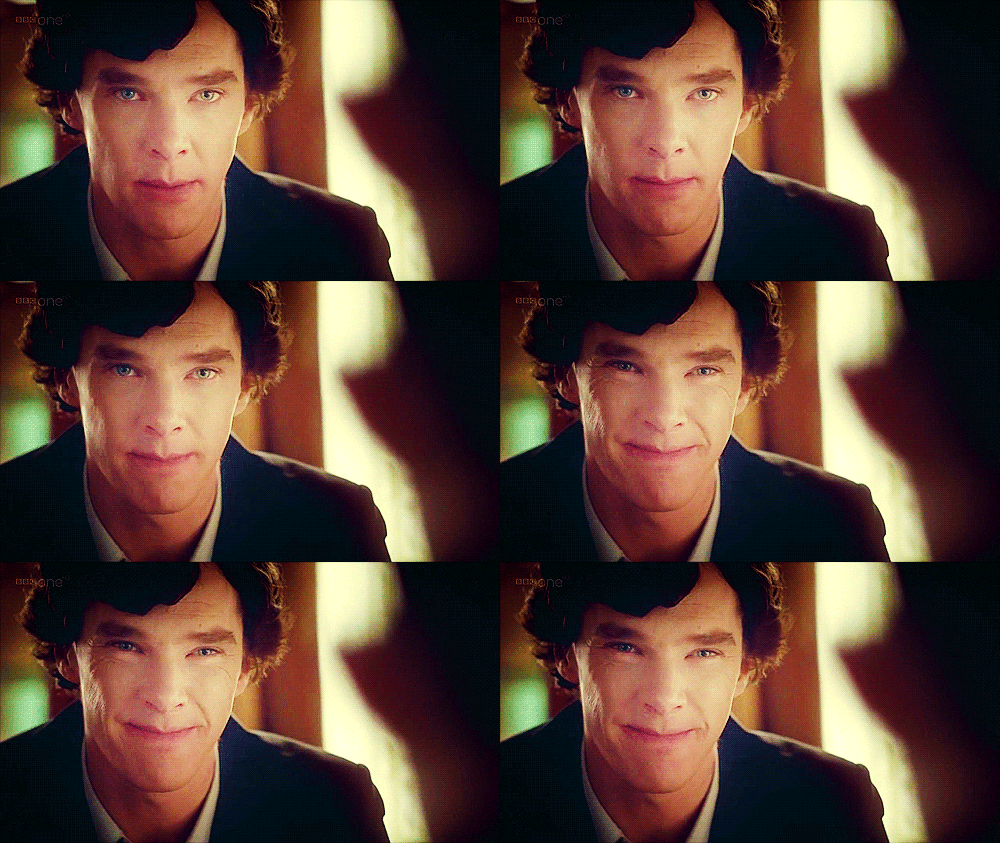
To Benedict Cumberbatch 

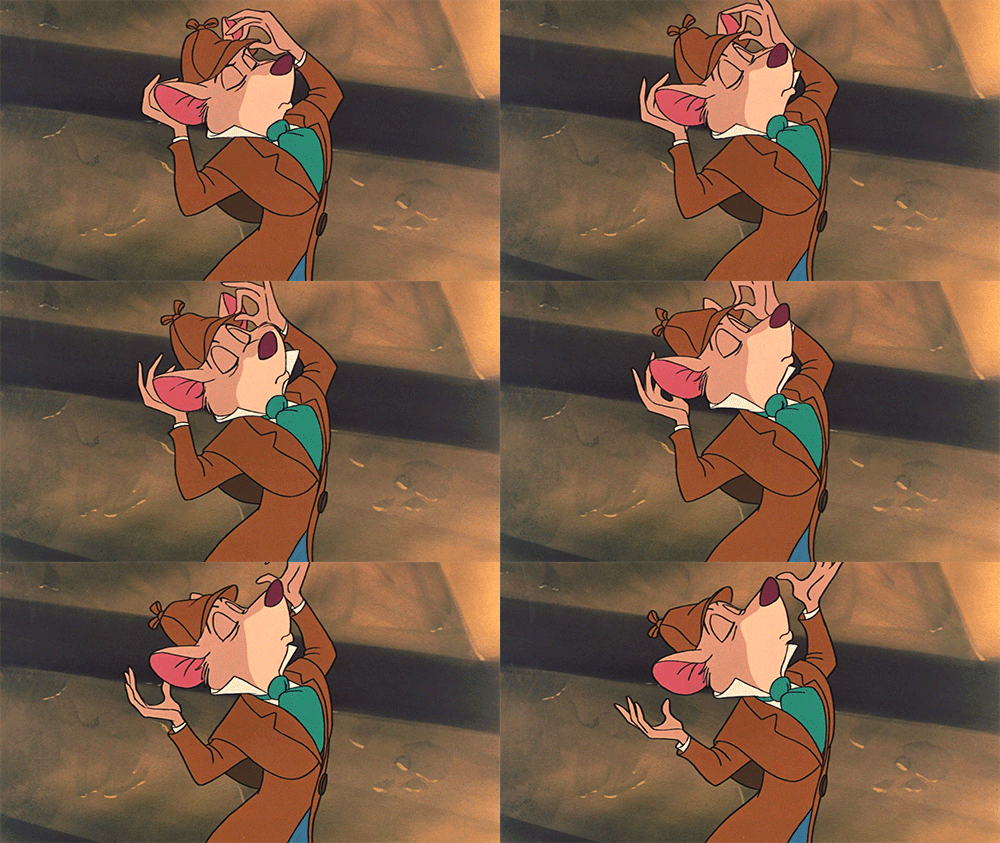
To the Disney version starring mice (main character is not named Sherlock, but he is basically Sherlock). 


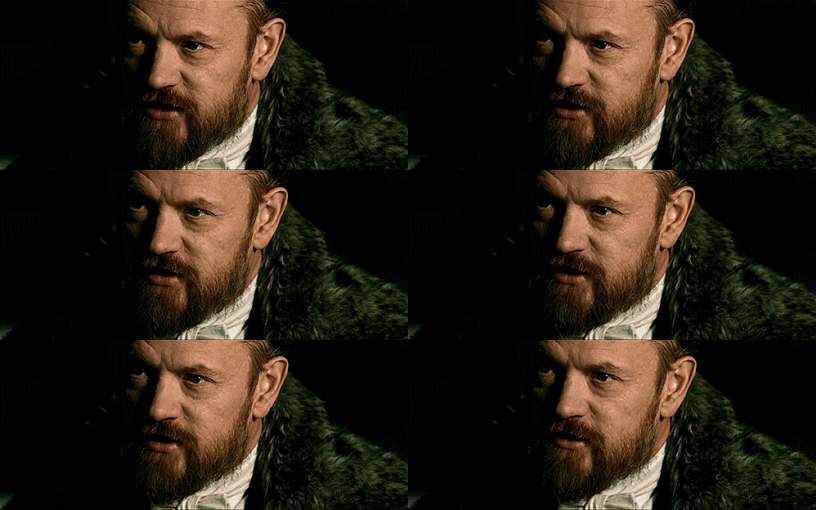
And all of them have their Moriarty, who puts them in their place and tests their intellect more than ever before.


But there are so many more shades to the intellectual archetype than Sherlockian heroes. Hermione is also an example of an intellectual as from the very beginning, her greatest strength is her bookishness and cleverness which saves her friends on many occasions. 

Sazed from Mistborn belongs to a culture of intellectuals, the Terrisman who collect history, religions, science and other areas of studies by way of Freuchemy.

So what ends up ultimately being the downfall of these heroes who are so brainy? They meet their intellectual match.

Now this could be a human being of course. A renown super villain or psychotic, smart enough to evade the hero and even out think him. The scary thing about this kind of intellectual match is it points out just how similar the hero and the villain are. This kind of match up can make the hero doubt their own humanity and wonder what really makes them so different. And I love complex psychological exploration like that.

But the intellectual match doesn’t have to be a villain. Sazed experiences an existential crisis after losing someone important to him. He decides none of his vast knowledge means anything anymore. The intellectual match can be circumstances beyond the hero’s control. Circumstances that make their vast knowledge irrelevant.


All of these situations put our brainy heroes through a test and, just like the fighters, they must overcome and become stronger than before.

Join me on Friday as we take a look at two very different intellectual characters! Until then, happy writing!